llenas
“llenas” means “full” in Spanish. It has 2 different meanings depending on context:

full
Also: busy
📝 In Action
Las bolsas de la compra están llenas.
A1The shopping bags are full.
Mis clases están llenas de estudiantes nuevos.
A2My classes are full of new students.
Después de la comida, nos sentimos llenas.
A2After the meal, we (females) feel full.
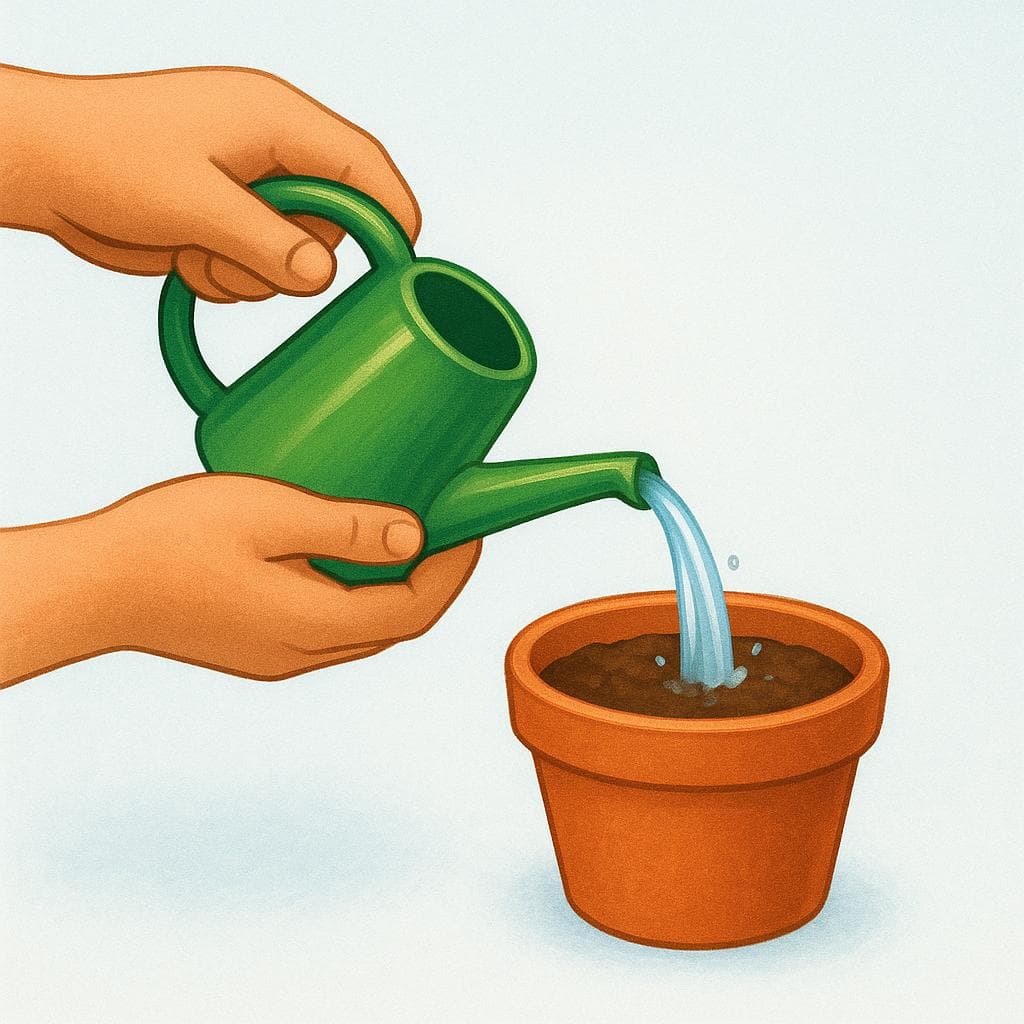
you fill
Also: you are filling
📝 In Action
¿Con qué llenas el termo cada mañana?
A1What do you fill the thermos with every morning?
Tú llenas el formulario con tu información.
A2You fill out the form with your information.
Dicen que tú llenas la habitación de energía positiva.
B1They say that you fill the room with positive energy.
Indicative
Present
Imperfect
Preterite
Subjunctive
Present Subjunctive
Imperfect Subjunctive
✏️ Quick Practice
Quick Quiz: llenas
Question 1 of 2
Which sentence uses 'llenas' as an action (a verb)?
📚 More Resources
👥 Word Family▼
📚 Etymology▼
The word comes from the Latin term *plenus*, meaning 'full.' Over time, the initial 'pl-' sound evolved into the Spanish 'll-,' giving us the modern root *llen-*.
First recorded: 13th century
Cognates (Related words)
💡 Master Spanish
Take your Spanish to the next level. Read 200+ illustrated and narrated Spanish stories tailored to your level with the Inklingo app!
Frequently Asked Questions
What is the difference between 'llenas' and 'llena'?
'Llenas' (plural) has two uses: it's the adjective describing multiple feminine things (e.g., 'las jarras llenas'), OR it's the verb form 'you fill' (tú llenas). 'Llena' (singular) can be the adjective describing one feminine thing ('la jarra llena') or the verb form 'he/she/it fills' ('él llena').
How do I know if 'llenas' is the verb or the adjective?
If it follows a noun or verb like 'están' (are), it's the adjective describing the noun (e.g., 'Las mesas están llenas'). If it follows the pronoun 'tú' (you) and is followed by an object, it's the verb (e.g., 'Tú llenas el cubo').