lunar
“lunar” means “mole” in Spanish. It has 2 different meanings depending on context:


mole, beauty spot
Also: birthmark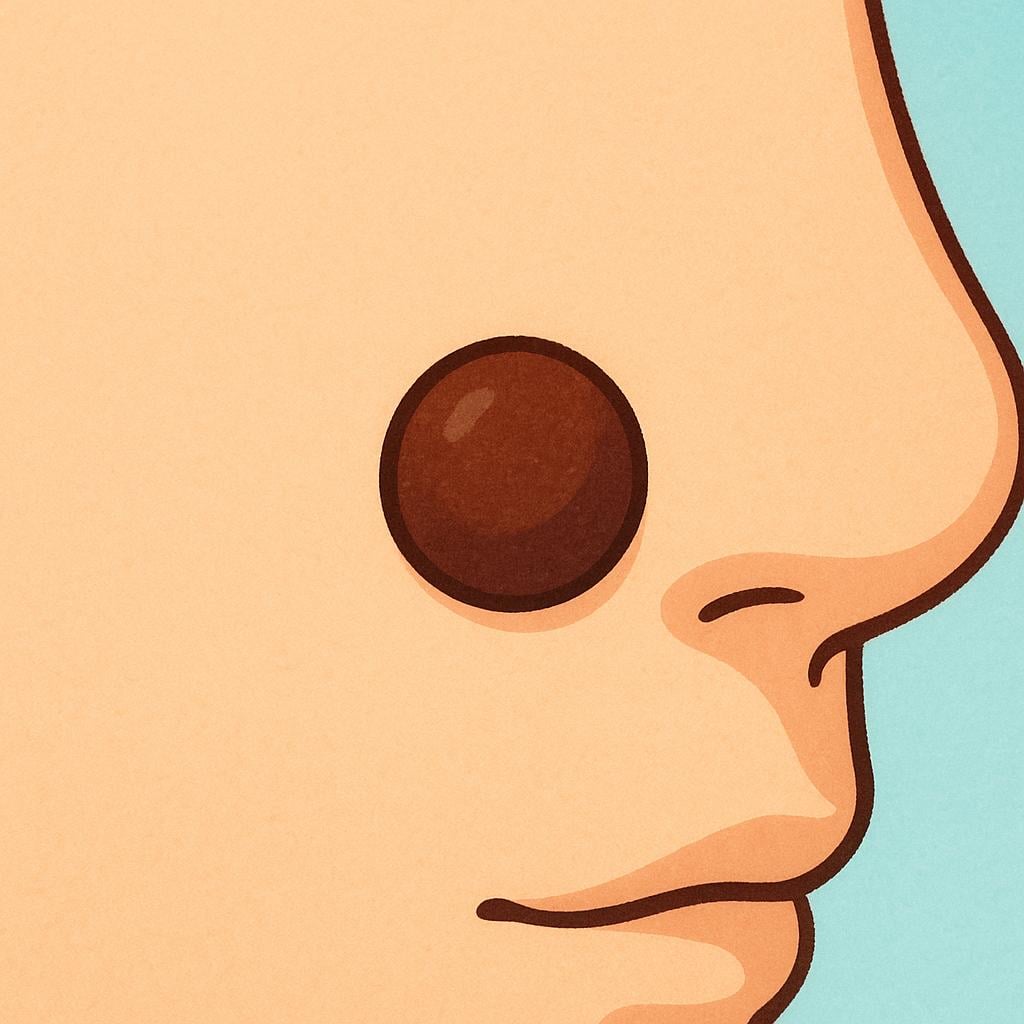
📝 In Action
Mi abuela tiene un lunar grande justo debajo del ojo.
A2My grandmother has a large mole right under her eye.
Ella se dibujó un pequeño lunar con lápiz para verse más elegante.
B1She drew a small beauty mark with a pencil to look more elegant.
Hay que revisar los lunares que cambian de forma.
B2You have to check moles that change shape.
lunar
Also: of the moon
📝 In Action
Estamos estudiando el ciclo lunar y sus fases.
B2We are studying the lunar cycle and its phases.
La gravedad lunar es mucho menor que la terrestre.
C1The lunar gravity is much less than Earth's.
El paisaje lunar es desolado y fascinante.
B2The moonscape (lunar landscape) is desolate and fascinating.
Translate to Spanish
✏️ Quick Practice
Quick Quiz: lunar
Question 1 of 1
Which sentence uses 'lunar' to mean 'a spot on the skin'?
📚 More Resources
👥 Word Family▼
📚 Etymology▼
The word 'lunar' actually has two different roots in Spanish, which is why it has two unrelated meanings! The noun ('mole') comes from a Latin root related to 'spot' or 'mark.' The adjective ('lunar/of the moon') comes directly from the Latin word *luna*, meaning 'moon.'
First recorded: 13th century (in its adjective form)
Cognates (Related words)
💡 Master Spanish
Take your Spanish to the next level. Read 200+ illustrated and narrated Spanish stories tailored to your level with the Inklingo app!
Frequently Asked Questions
Is 'lunar' masculine or feminine?
When 'lunar' is used as a noun meaning 'mole,' it is always masculine ('el lunar'). When it is used as an adjective meaning 'lunar/of the moon,' it modifies both masculine and feminine nouns but its spelling doesn't change (e.g., 'el eclipse lunar' and 'la órbita lunar').
How do I say 'sun spot' in Spanish?
If you mean a spot on the skin caused by the sun, you would typically use 'mancha solar' or 'mancha de sol.' If you mean a sunspot on the sun itself (astronomy), you would use 'mancha solar'.