matamos
“matamos” means “we kill” in Spanish (Present tense, habitual action).
we kill, we killedAlso: we are killing, we turn off (a light/engine)
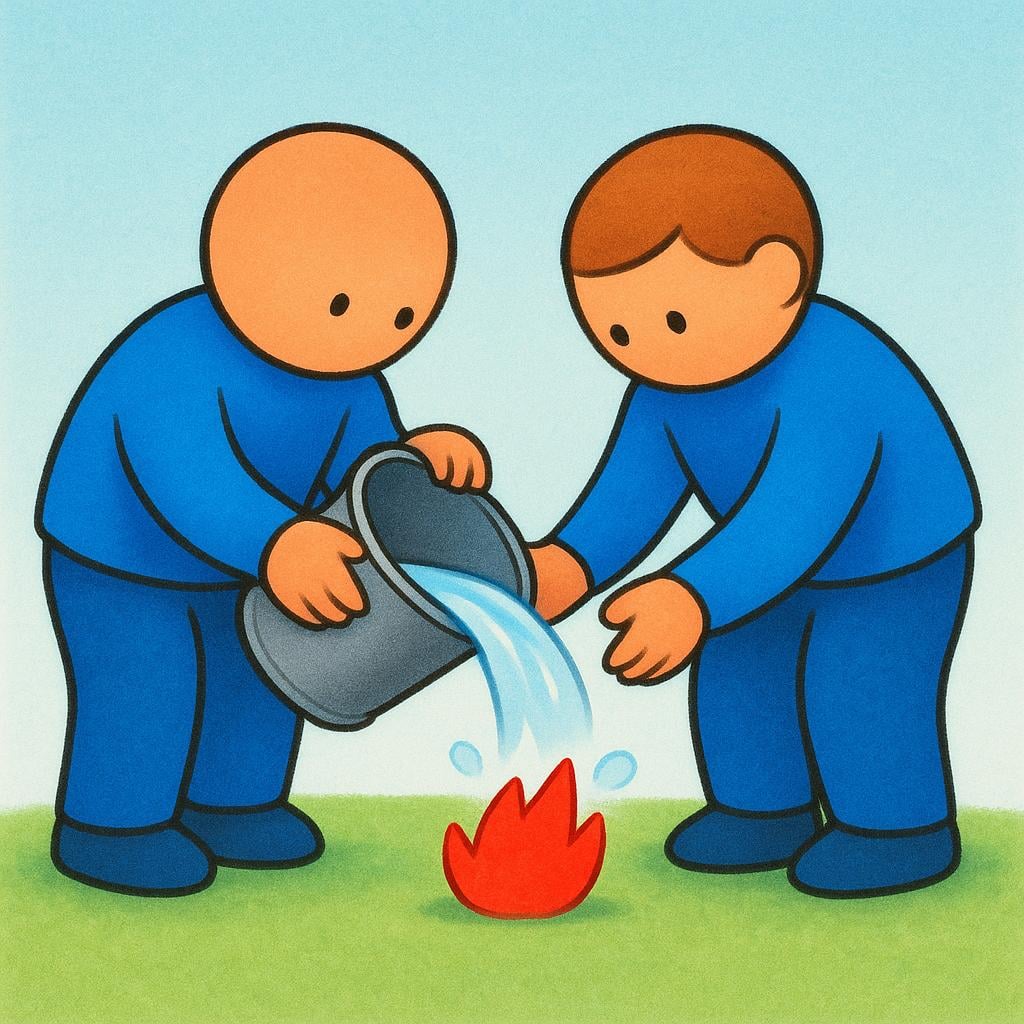
📝 In Action
Todos los veranos matamos las plagas del jardín.
A2Every summer we kill the pests in the garden.
Ayer matamos dos horas esperando el tren.
B1Yesterday we killed two hours waiting for the train.
Si matamos la luz, podremos ver las estrellas.
B2If we turn off the light, we will be able to see the stars.
Word Connections
Indicative
Present
Imperfect
Preterite
Subjunctive
Present Subjunctive
Imperfect Subjunctive
✏️ Quick Practice
Quick Quiz: matamos
Question 1 of 2
In the sentence 'Cada año matamos la mala hierba del jardín,' what tense is 'matamos'?
📚 More Resources
👥 Word Family
🎵 Rhymes
📚 Etymology
The word comes from the Latin verb *mactare*, which originally meant 'to honor by sacrifice' or 'to offer up.' Over time, the meaning shifted to the more general and modern sense of 'to kill.'
First recorded: Around the 13th century in Spanish texts.
Cognates (Related words)
💡 Master Spanish
Take your Spanish to the next level. Read 200+ illustrated and narrated Spanish stories tailored to your level with the Inklingo app!
Frequently Asked Questions
If 'matamos' means both 'we kill' and 'we killed,' how do I know which one to use?
You rely on context! Look for time markers: words like 'ayer' (yesterday), 'la semana pasada' (last week) tell you it's the past. Words like 'siempre' (always), 'cada día' (every day), or if no time is mentioned, indicate the present action.
Is 'matamos' the same as 'matemos'?
No. 'Matamos' is used when stating a fact (Present or Past Indicative). 'Matemos' is the form used for wishes, doubts, or suggestions, often translated as 'that we kill' or 'let's kill' (Present Subjunctive/Imperative).