muro
“muro” means “wall” in Spanish. It has 2 different meanings depending on context:
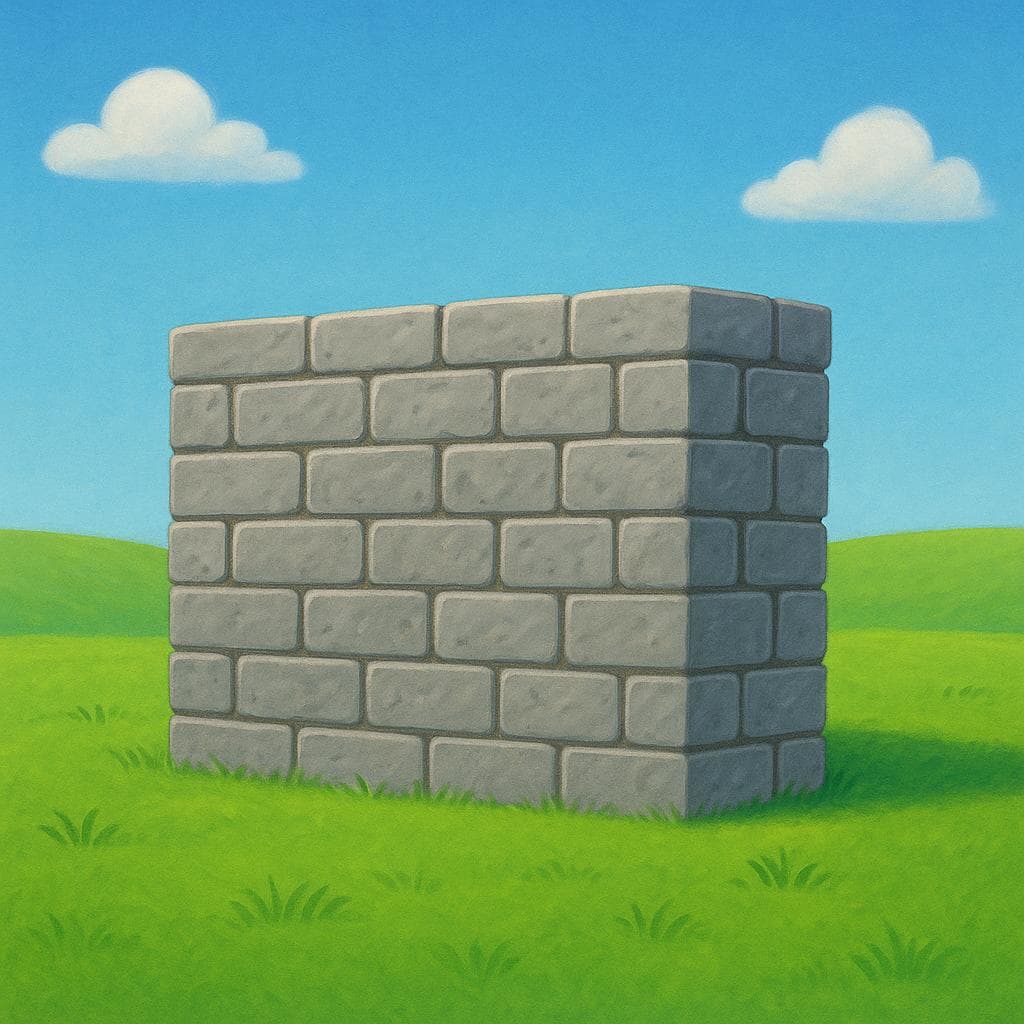

wallAlso: retaining wall, dam
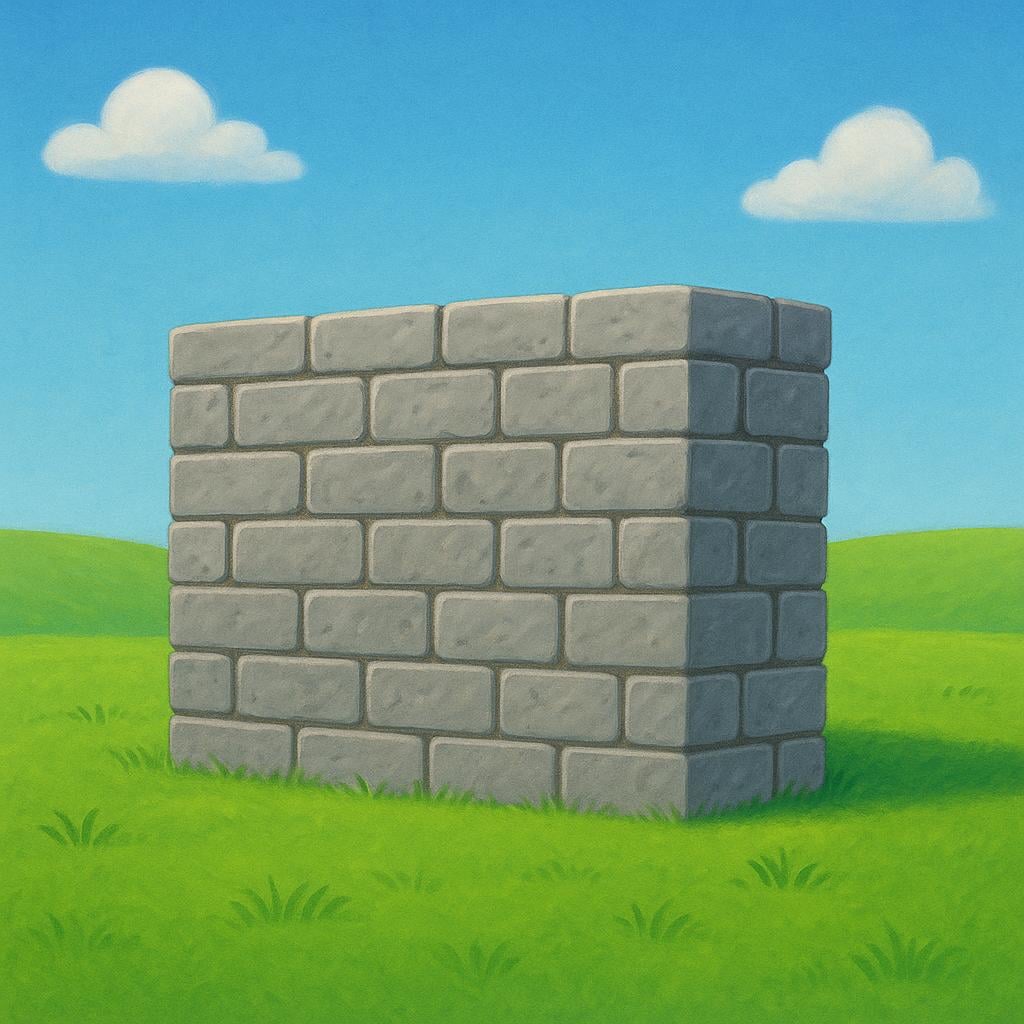
📝 In Action
El muro del jardín es muy alto y de piedra.
A1The garden wall is very high and made of stone.
Tuvieron que construir un muro de contención para evitar el deslizamiento de tierra.
B1They had to build a retaining wall to prevent the landslide.
Word Connections
barrier, wall of silenceAlso: deadlock

📝 In Action
Hemos llegado a un muro en las negociaciones de paz.
B2We have hit a wall in the peace negotiations.
El presidente se encontró con un muro de resistencia en el congreso.
C1The president encountered a wall of resistance in congress.
Word Connections
Translate to Spanish
Words that translate to "muro" in Spanish:
✏️ Quick Practice
Quick Quiz: muro
Question 1 of 1
Which sentence correctly uses 'muro' for a figurative meaning?
📚 More Resources
📚 Etymology
Comes directly from the Latin word *mūrus*, which meant 'wall' or 'city wall.' This shows it has historically been used for large, strong structures, unlike the more general Latin word for an interior wall (*paries*, which gave us 'pared').
First recorded: Before the 10th century (in Romance languages)
Cognates (Related words)
💡 Master Spanish
Take your Spanish to the next level. Read 200+ illustrated and narrated Spanish stories tailored to your level with the Inklingo app!
Frequently Asked Questions
¿Cuál es la diferencia entre 'muro' y 'pared'?
Both words mean 'wall,' but 'muro' refers to a thick, strong, structural, or exterior wall (like a boundary or defensive wall). 'Pared' is the general, everyday term, usually referring to the thinner, interior walls inside a building.
Does 'muro' ever refer to a political border?
Yes, 'muro' is the correct term for large, high, or controversial border barriers, such as 'el Muro de Berlín' (the Berlin Wall).