Inklingo

notado

/noh-TAH-doh/

noticed (in perfect tenses)

A small child kneeling down and pointing excitedly at a bright red ladybug resting on a large green leaf, showing that the ladybug has been discovered.

The ladybug has been notado (noticed) by the child.

notado(Verb)

A2regular ar

noticed (in perfect tenses)

?

as the past participle

Also:

observed

?

used with 'haber'

,

remarked

?

used with 'haber'

📝 In Action

Hemos notado tu ausencia en la reunión.

A2

We have noticed your absence from the meeting.

¿Habías notado que la puerta estaba abierta?

B1

Had you noticed that the door was open?

Ella dice que no ha notado nada extraño.

A2

She says she hasn't noticed anything strange.

Word Connections

Synonyms

  • observado (observed)
  • visto (seen)

Common Collocations

  • haber notadoto have noticed

💡 Grammar Points

Building Perfect Tenses

This form ('notado') is always paired with a form of the helping verb 'haber' (to have) to talk about actions completed in the past, like 'he notado' (I have noticed) or 'habíamos notado' (we had noticed).

❌ Common Pitfalls

Changing the Ending

Mistake: "Using 'notado' with 'haber' and changing the ending (e.g., 'Hemos notados')."

Correction: The past participle used with 'haber' never changes its ending: it is always 'notado' (or 'notado,' 'comido,' etc.). Say: 'Hemos notado la diferencia.'

⭐ Usage Tips

The Core Meaning

The verb 'notar' is usually about using your senses or intellect to detect something subtle—a change, a feeling, or a detail.

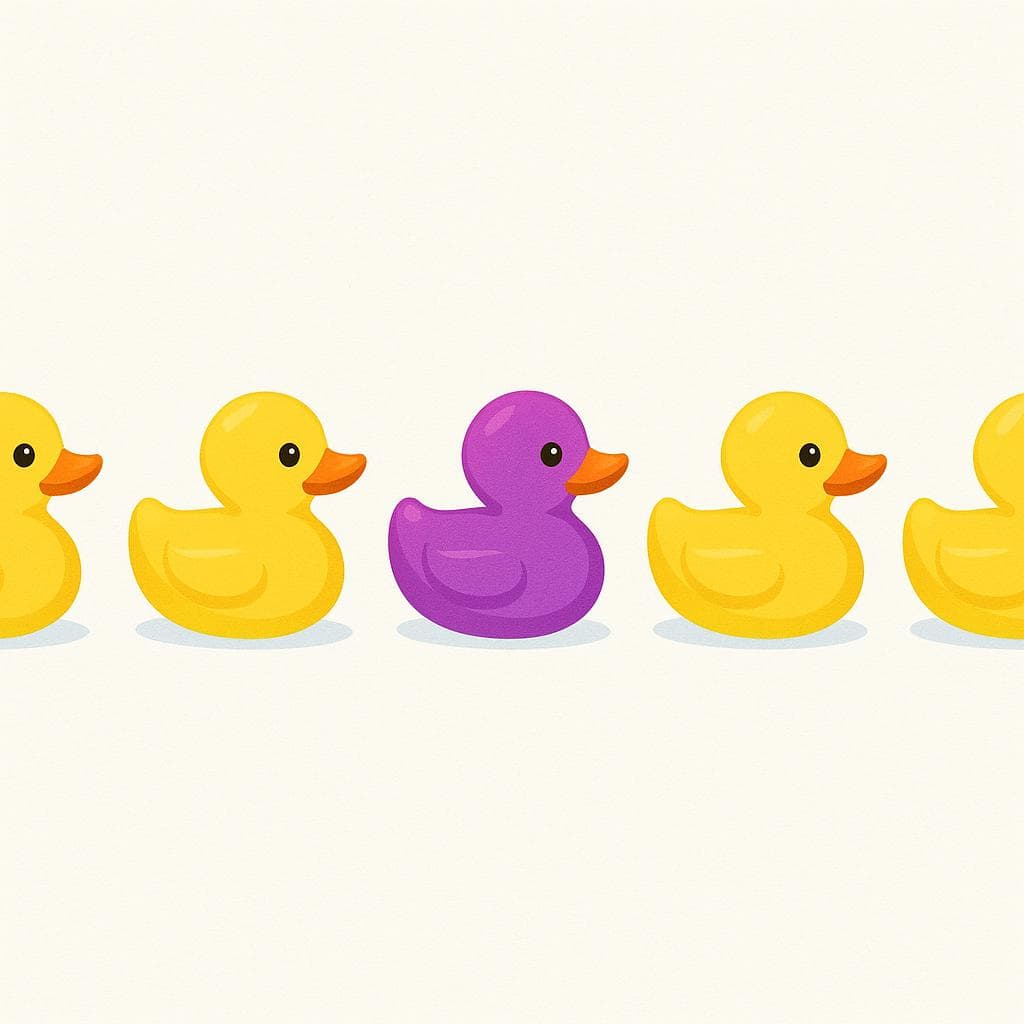
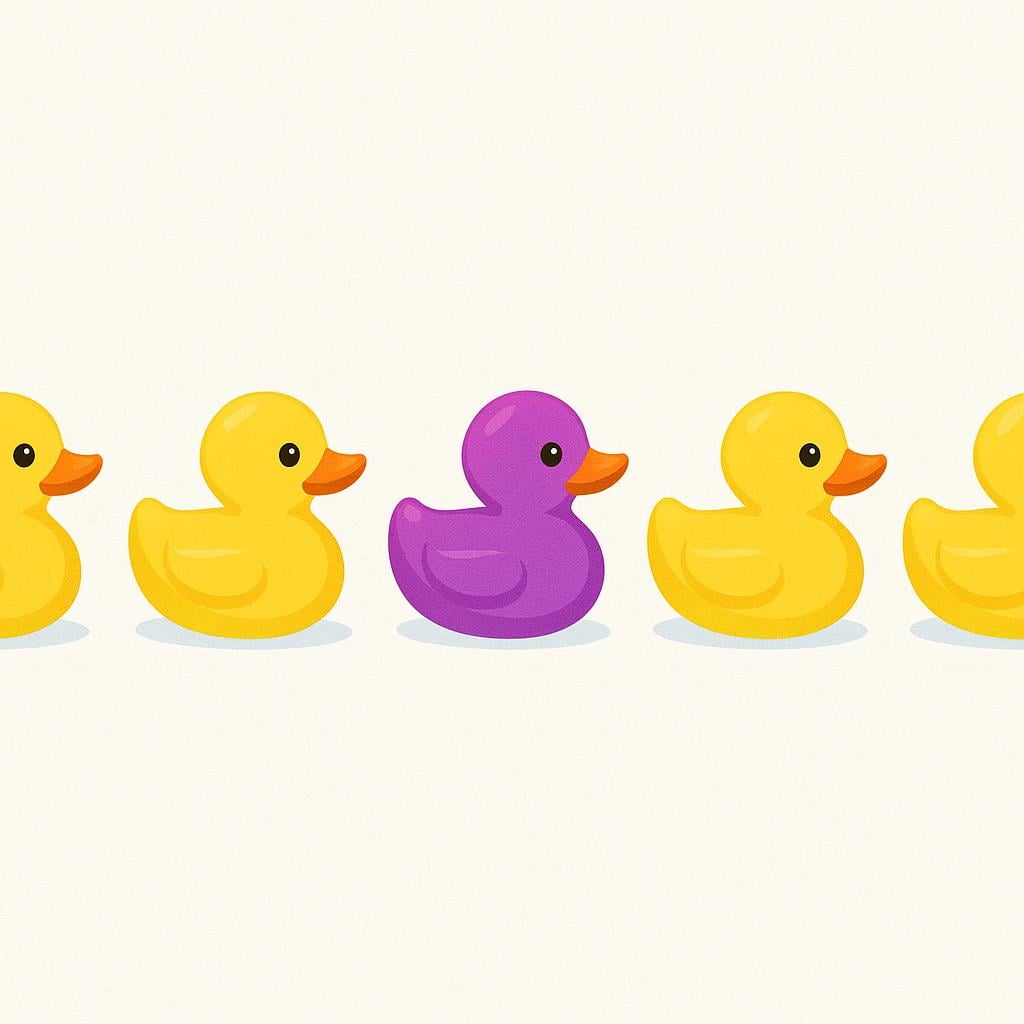
A line of identical yellow rubber ducks, interrupted by one distinct, bright purple rubber duck standing out prominently.

The purple duck is notado (noticed) because it is so different from the rest.

notado(Adjective)

mB1

noticed

?

observed or detected

Also:

marked

?

conspicuous or standing out

,

apparent

?

visible

📝 In Action

El error fue notado por el profesor.

B1

The error was noticed by the professor.

Su esfuerzo no pasó desapercibido, fue muy notado.

B2

His effort did not go unnoticed, it was very much noticed (or apparent).

Word Connections

Synonyms

  • visible (visible)
  • percibido (perceived)

Antonyms

  • desapercibido (unnoticed)

Common Collocations

  • ser notadoto be noticed

💡 Grammar Points

Matching the Noun

When used as an adjective, 'notado' must change its ending to match the thing it describes in gender and number: 'el cambio notado' (masc. sing.), 'la diferencia notada' (fem. sing.), 'los errores notados' (masc. plural).

❌ Common Pitfalls

Confusing Roles

Mistake: "Using 'notado' as an adjective without matching the noun (e.g., 'la regla notado')."

Correction: Remember to match the ending to the noun: since 'regla' is feminine, you must say 'la regla notada.'

⭐ Usage Tips

Passive Voice

This adjective often appears after the verb 'ser' (to be) to form the passive voice, indicating that something received the action of being noticed: 'Fue notado por todos' (It was noticed by everyone).

✏️ Quick Practice

💡 Quick Quiz: notado

Question 1 of 2

Which sentence correctly uses 'notado' as part of a compound tense?

📚 More Resources

Word Family

nota(note, grade, mark) - noun

Frequently Asked Questions

What is the difference between 'notado' and 'nota'?

'Notado' is the form of the verb 'notar' (to notice), while 'nota' is a noun meaning 'note,' 'grade,' or 'mark.' They share the same root, but one describes an action (noticed) and the other describes a thing (a note).

When does 'notado' change its ending?

It changes its ending (to -a, -os, or -as) only when it is acting as an adjective (e.g., 'El cambio notado'). When it is used with the verb 'haber' to form perfect tenses (e.g., 'He notado'), the ending is always 'notado' and never changes.