oido
“oido” means “ear” in Spanish. It has 2 different meanings depending on context:
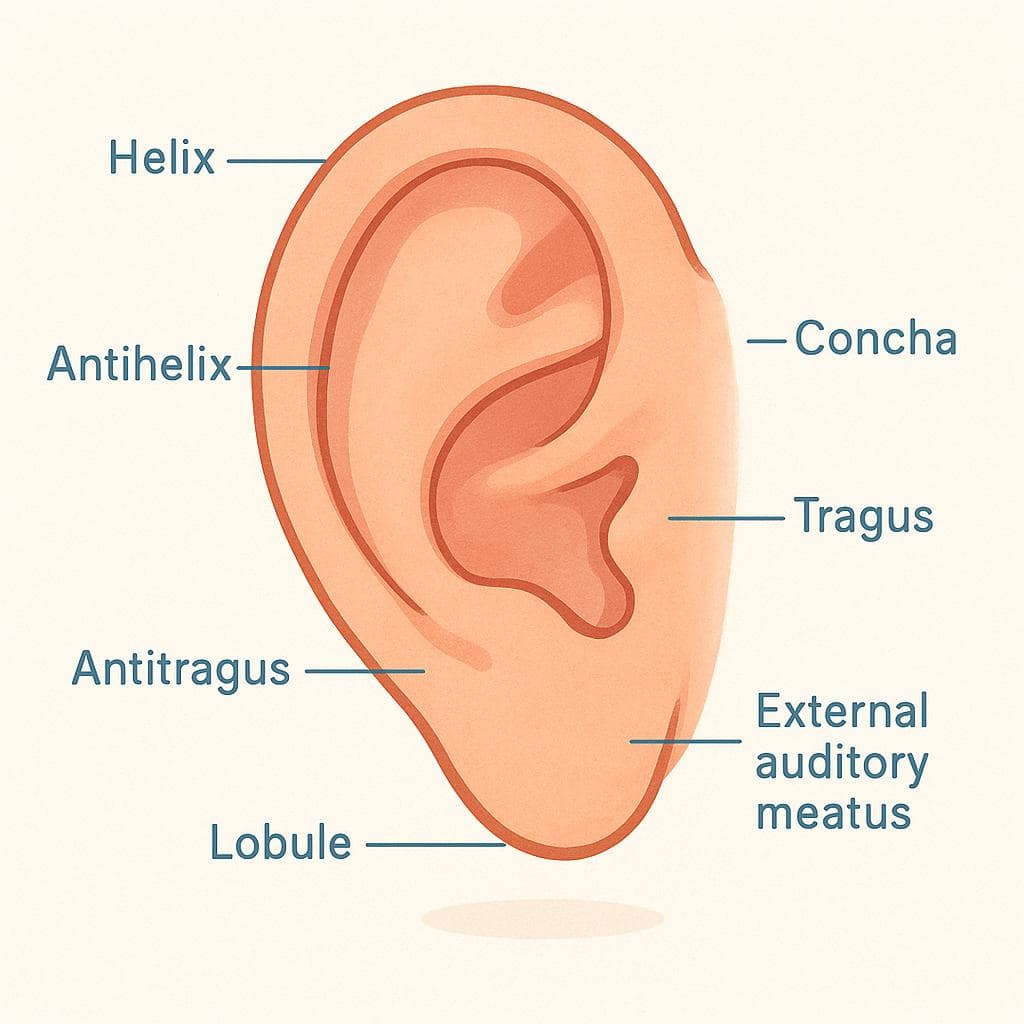

ear, hearingAlso: inner ear, pitch/tune

📝 In Action
El doctor revisó mi oído porque me dolía.
A1The doctor checked my ear because it was hurting me.
Necesitas buen oído para tocar el violín.
B1You need good hearing (a good ear) to play the violin.
Word Connections
heardAlso: listened to

📝 In Action
Nunca he oido una historia tan increíble.
A2I have never heard such an incredible story.
La canción oido en la radio era muy pegadiza.
B1The song heard on the radio was very catchy.
Word Connections
Translate to Spanish
Words that translate to "oido" in Spanish:
✏️ Quick Practice
Quick Quiz: oido
Question 1 of 1
Which sentence uses 'oido' as the physical body part?
📚 More Resources
👥 Word Family
📚 Etymology
Comes from the Latin word *audītus*, which meant 'the act of hearing' and was also the past participle of the verb *audīre* (to hear). Its meaning has been consistent for centuries, referring both to the sense and the result of the action.
First recorded: Around the 10th century in early Spanish texts.
Cognates (Related words)
💡 Master Spanish
Take your Spanish to the next level. Read 200+ illustrated and narrated Spanish stories tailored to your level with the Inklingo app!
Frequently Asked Questions
Should 'oido' have an accent mark?
Yes, correctly spelled in Spanish, the word is 'oído' (with an accent over the 'i'). This accent is necessary to show that the 'o' and the 'i' are pronounced as two separate syllables (o-í-do), not as a single diphthong sound.
How is 'oído' different from 'oreja'?
'Oído' refers to the sense of hearing or the internal ear structure. 'Oreja' refers only to the visible, external flap of the ear on the side of the head.