pelotas
“pelotas” means “balls” in Spanish. It has 3 different meanings depending on context:

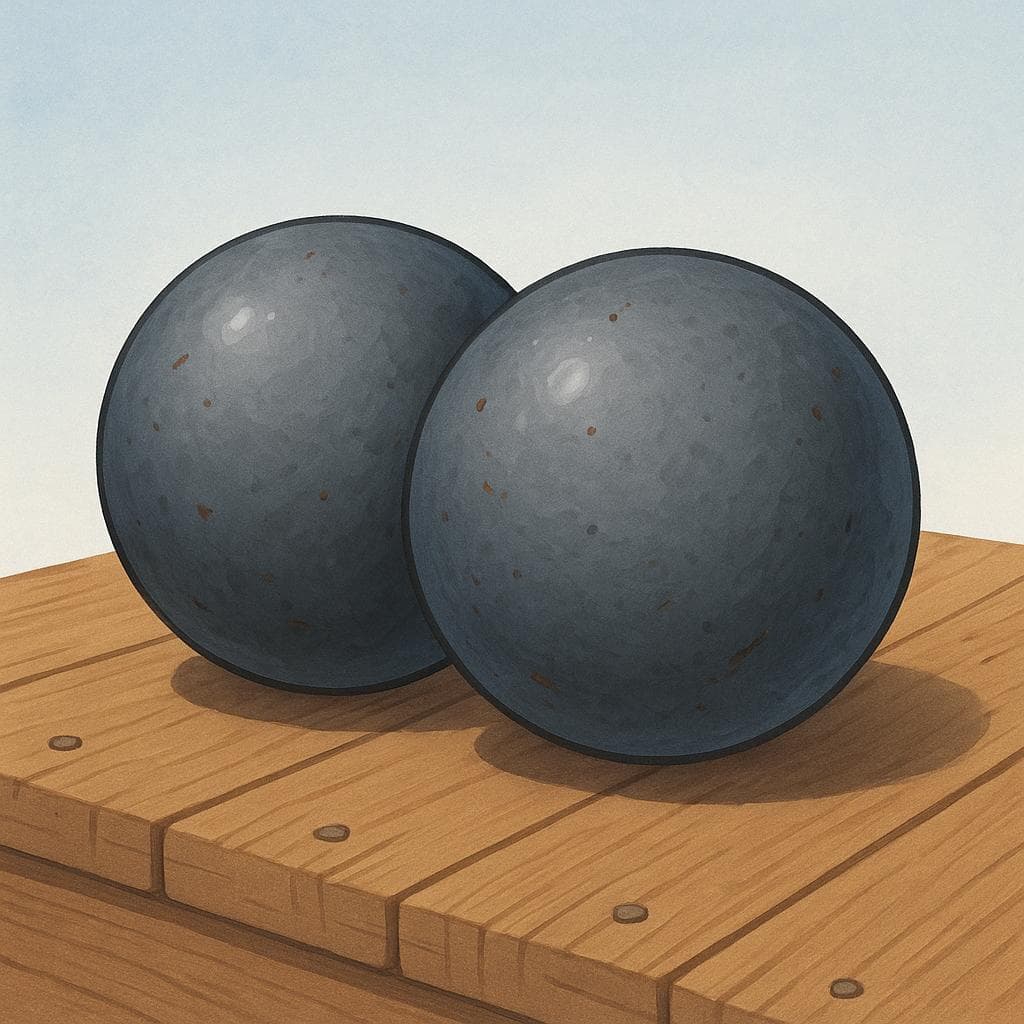

ballsAlso: spheres

📝 In Action
Necesitamos tres pelotas nuevas para el partido de tenis.
A1We need three new balls for the tennis match.
Los niños jugaban en el parque con sus pelotas de colores.
A2The children were playing in the park with their colored balls.
Word Connections
ballsAlso: guts

📝 In Action
Tienes que echarle pelotas si quieres enfrentarte al jefe.
C1You have to have guts (or 'balls') if you want to confront the boss.
¡Estoy hasta las pelotas de este ruido!
C2I'm fed up (literally, 'up to my balls') with this noise!
Word Connections
nothingAlso: nonsense

📝 In Action
¿Que si sabe cocinar? ¡Sabe pelotas!
C2Does he know how to cook? He knows nothing!
—¿Me vas a ayudar mañana? —¡Pelotas!
C2—Are you going to help me tomorrow? —No way! (or 'Nonsense!')
Word Connections
✏️ Quick Practice
Quick Quiz: pelotas
Question 1 of 2
Which sentence uses 'pelotas' in its neutral, literal meaning?
📚 More Resources
👥 Word Family
📚 Etymology
From the Spanish word 'pelota,' which comes from the Vulgar Latin *pilotta*, a diminutive of the Latin word *pila*, meaning 'ball' or 'game ball.'
First recorded: Medieval Spanish (as 'pelota')
Cognates (Related words)
💡 Master Spanish
Take your Spanish to the next level. Read 200+ illustrated and narrated Spanish stories tailored to your level with the Inklingo app!
Frequently Asked Questions
Is 'pelotas' the same as 'balones'?
They both mean 'balls,' but 'pelotas' usually refers to smaller balls (tennis, golf, general toys), while 'balones' refers to larger balls used in team sports like soccer or basketball.
Why is 'pelotas' feminine if it refers to male anatomy in slang?
'Pelota' (ball) is historically a feminine noun. When it was adopted as slang for testicles, it retained its original grammatical gender, even though the object it refers to is masculine.