pensábamos
“pensábamos” means “we were thinking” in Spanish (an ongoing thought or mental process in the past).
we were thinking
Also: we used to think, we thought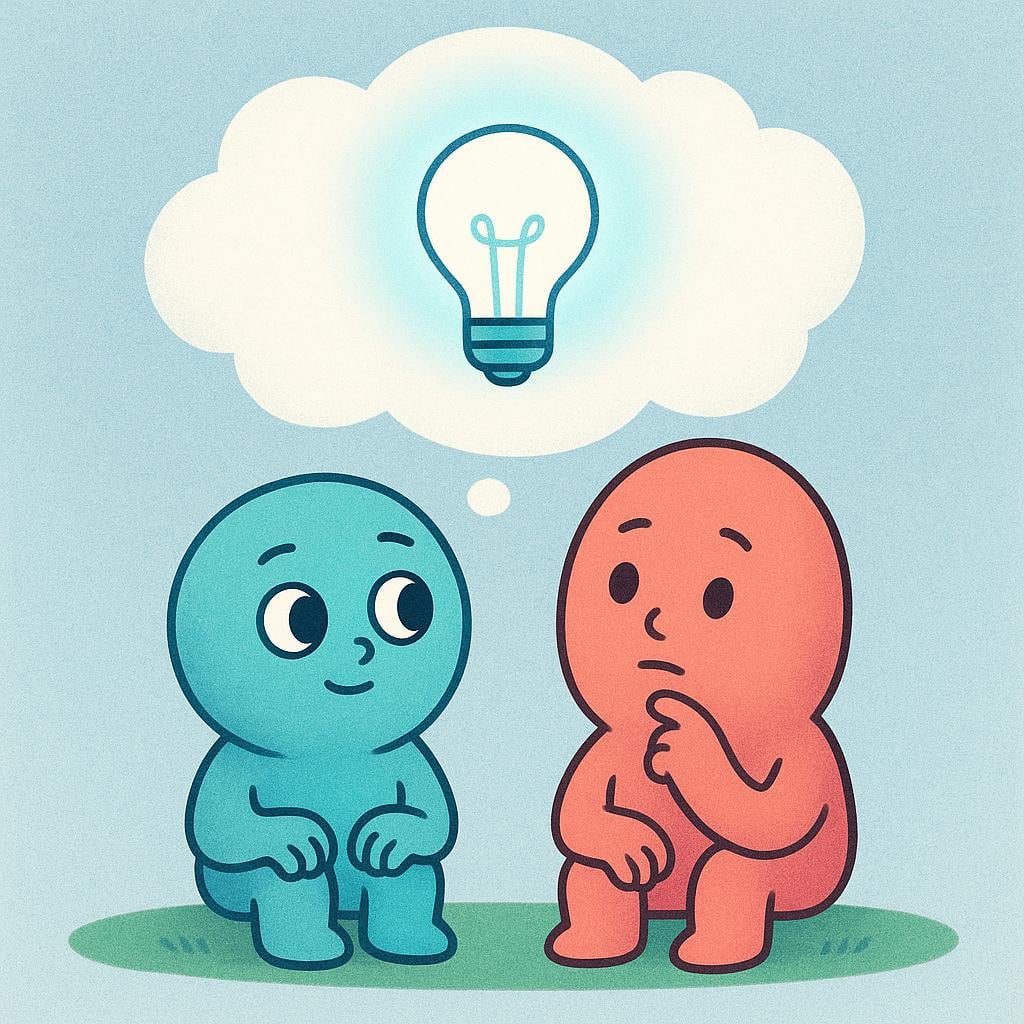
📝 In Action
Cuando éramos niños, pensábamos que volar era imposible.
A2When we were children, we used to think that flying was impossible.
Pensábamos en el problema mientras caminábamos por el parque.
B1We were thinking about the problem while we walked through the park.
No sabíamos dónde estaba, pero pensábamos que estaría cerca.
B2We didn't know where it was, but we thought it would be close.
🔄 Conjugations
subjunctive
imperfect
present
indicative
preterite
imperfect
present
✏️ Quick Practice
Quick Quiz: pensábamos
Question 1 of 2
Which English phrase best captures the meaning of 'Pensábamos que el concierto ya había terminado'?
📚 More Resources
👥 Word Family▼
🎵 Rhymes▼
📚 Etymology▼
The verb 'pensar' comes from the Latin verb *pensāre*, which originally meant 'to weigh' or 'to balance.' Over time, the meaning shifted from physically weighing something to mentally weighing or considering ideas.
First recorded: 10th century
Cognates (Related words)
💡 Master Spanish
Take your Spanish to the next level. Read 200+ illustrated and narrated Spanish stories tailored to your level with the Inklingo app!
Frequently Asked Questions
Why does 'pensar' change its stem in the present tense (pienso) but not in 'pensábamos'?
'Pensar' is a stem-changing verb (e→ie) only in the present tenses (present indicative and subjunctive). The imperfect tense, which creates 'pensábamos,' is always regular for all -ar verbs, meaning the stem 'pens-' never changes.
Is 'pensábamos' only used for mental thoughts?
While its primary meaning is mental, 'pensábamos' is also frequently used to talk about plans or intentions we had in the past: 'Pensábamos ir a la playa' means 'We were planning/intending to go to the beach.'