piensen
“piensen” means “(that) they think” in Spanish (Subjunctive mood, referring to 'ellos/ellas').
(that) they think, (that) you all think, think (command)Also: (that) they consider
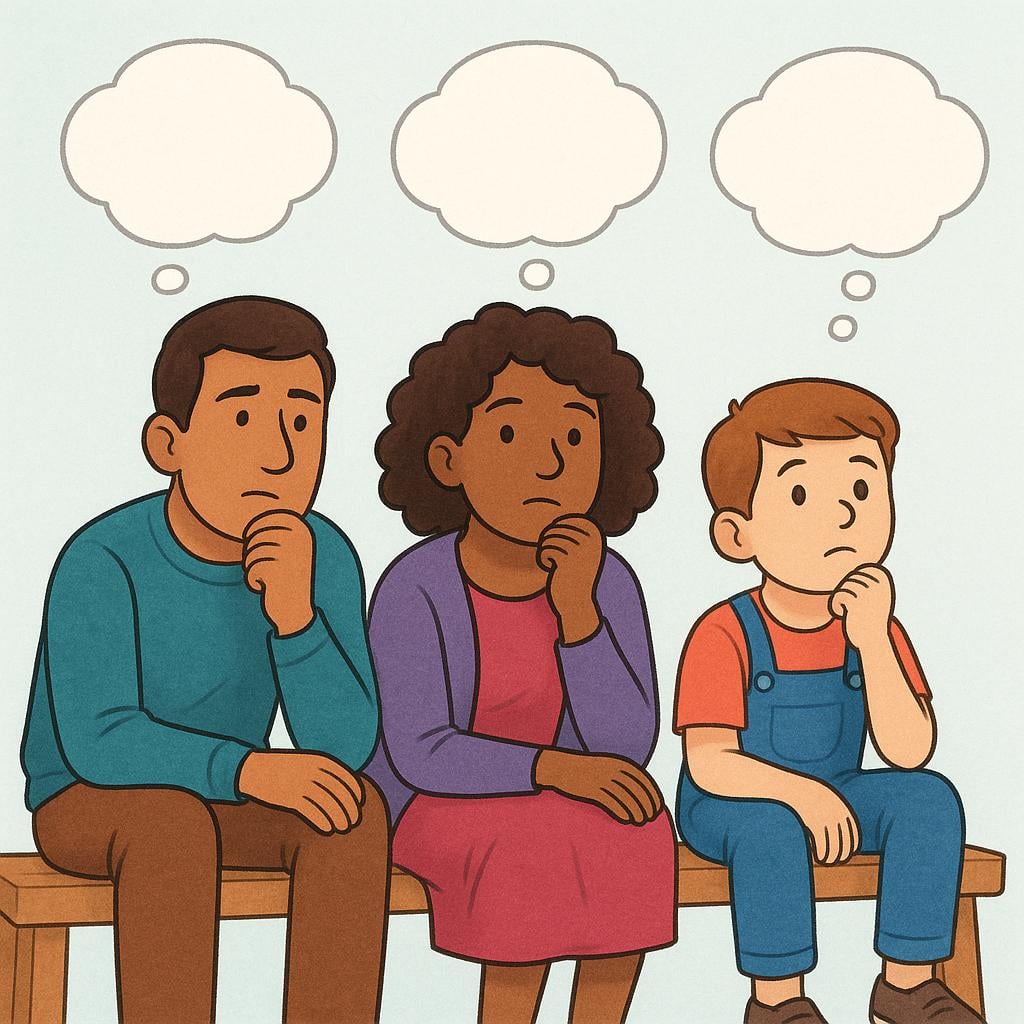
📝 In Action
Es crucial que piensen en las consecuencias antes de actuar.
B1It is crucial that they (or you all, formal) think about the consequences before acting.
Piensen un momento: ¿cuál es la mejor opción?
A2Think for a moment: what is the best option?
No creo que piensen lo mismo que nosotros.
B2I don't believe that they think the same thing as us.
Word Connections
Indicative
Present
Imperfect
Preterite
Subjunctive
Present Subjunctive
Imperfect Subjunctive
✏️ Quick Practice
Quick Quiz: piensen
Question 1 of 1
Which sentence correctly uses 'piensen' as a formal command?
📚 More Resources
👥 Word Family
📚 Etymology
Comes from the Latin verb *pensāre*, which originally meant 'to weigh' or 'to balance' things, before evolving into the concept of 'weighing an idea' or 'thinking.'
First recorded: Old Spanish (around 10th-11th century)
Cognates (Related words)
💡 Master Spanish
Take your Spanish to the next level. Read 200+ illustrated and narrated Spanish stories tailored to your level with the Inklingo app!
Frequently Asked Questions
Why does 'pensar' change to 'piensen'?
The verb 'pensar' is a stem-changing verb. The 'e' in the middle changes to 'ie' in most present tense forms (like 'pienso,' 'piensa,' and 'piensen'). This is a common irregularity in Spanish verbs.
Is 'piensen' always formal?
When used as a command (Imperative), yes, it is the formal plural command ('ustedes'). However, when used in the Subjunctive mood (e.g., 'Espero que piensen...'), it can refer to either a formal group ('ustedes') or simply 'they' ('ellos/ellas').