profundidad
“profundidad” means “depth” in Spanish. It has 2 different meanings depending on context:
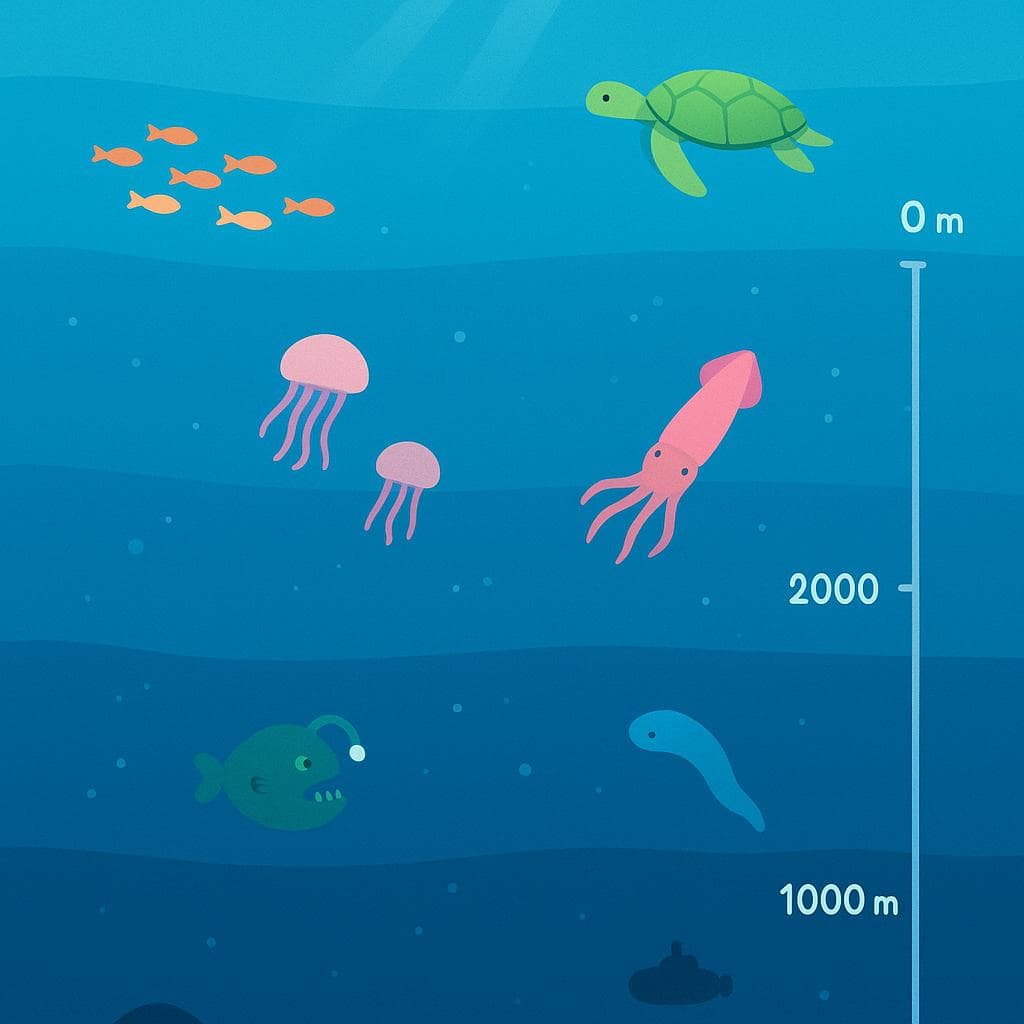

depthAlso: deepness

📝 In Action
La piscina tiene una profundidad de tres metros.
A2The pool has a depth of three meters.
Necesitas excavar el hoyo con más profundidad para plantar el árbol.
B1You need to dig the hole with more depth to plant the tree.
El buceador descendió a gran profundidad.
B2The diver descended to a great depth.
Word Connections
depth, profoundnessAlso: insight

📝 In Action
El autor analizó el tema con gran profundidad.
B2The author analyzed the topic with great depth (or profoundness).
Me impresionó la profundidad de su pensamiento.
C1I was impressed by the depth of his thought.
Sus palabras carecían de profundidad emocional.
B2His words lacked emotional depth.
Word Connections
Translate to Spanish
Words that translate to "profundidad" in Spanish:
✏️ Quick Practice
Quick Quiz: profundidad
Question 1 of 1
Which sentence uses 'profundidad' in its figurative (non-physical) sense?
📚 More Resources
👥 Word Family
📚 Etymology
Comes from the Latin word 'profunditas,' which itself is derived from 'profundus,' meaning 'deep' or 'profound.' The Spanish word kept the core meaning of measuring how far something goes down or how intense a feeling or idea is.
First recorded: Medieval Spanish (around 13th century)
Cognates (Related words)
💡 Master Spanish
Take your Spanish to the next level. Read 200+ illustrated and narrated Spanish stories tailored to your level with the Inklingo app!
Frequently Asked Questions
Is there a difference between 'profundidad' and 'hondura'?
They both mean 'depth.' 'Profundidad' is the most common and standard term, used for both physical measurement (like a hole or pool) and abstract ideas (like thought). 'Hondura' is often used specifically for the depth of water or a liquid.
How do I turn 'profundo' (deep) into the noun?
The adjective 'profundo' becomes the noun 'profundidad.' This is a common pattern in Spanish: adding '-idad' turns many adjectives into abstract feminine nouns (e.g., 'cruel' becomes 'crueldad', 'legal' becomes 'legalidad').