puñetazo
“puñetazo” means “punch” in Spanish (a physical blow with a closed fist).
punch
Also: thump, blow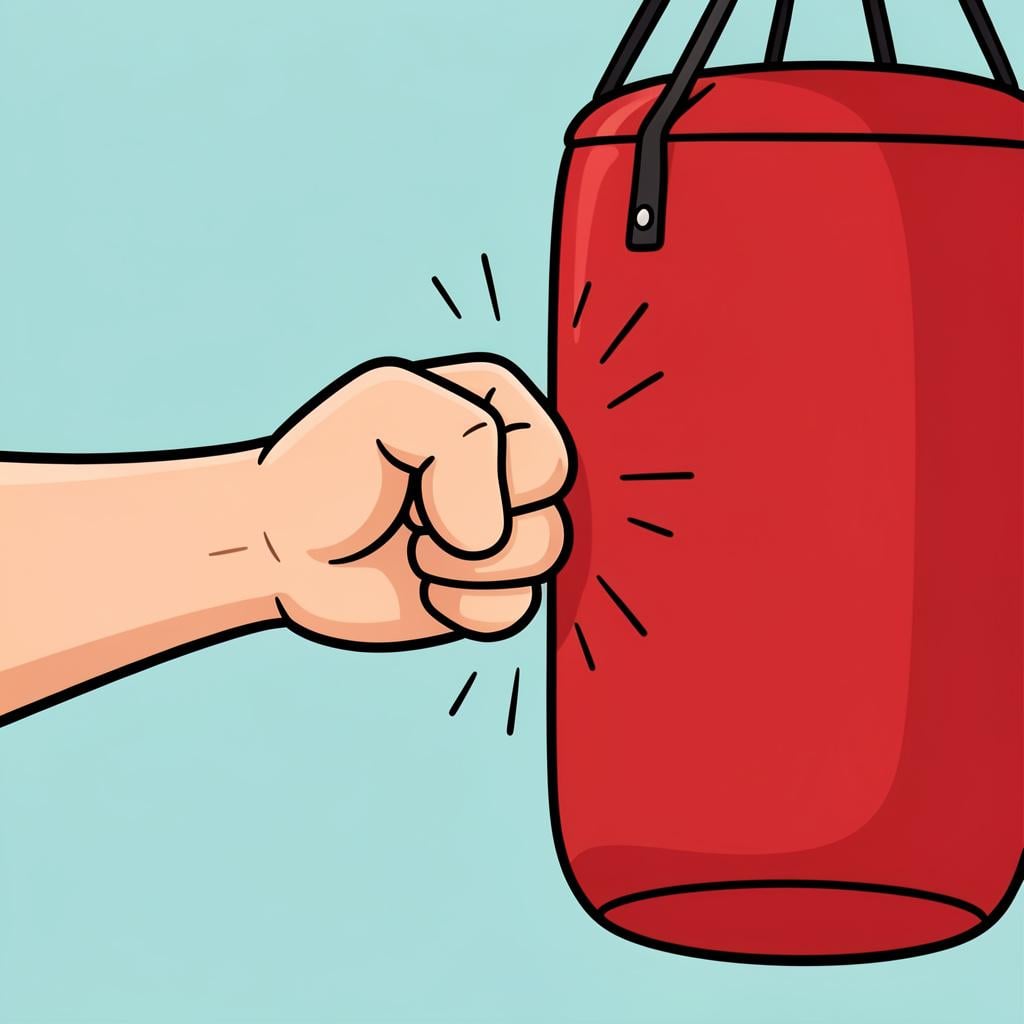
📝 In Action
El boxeador le dio un puñetazo muy fuerte.
A2The boxer gave him a very strong punch.
Le dio un puñetazo a la mesa por la frustración.
B1He punched the table out of frustration.
Su renuncia fue un puñetazo para el equipo.
B2His resignation was a huge blow to the team.
✏️ Quick Practice
Quick Quiz: puñetazo
Question 1 of 2
What is the most accurate translation for 'puñetazo'?
📚 More Resources
👥 Word Family▼
📚 Etymology▼
Formed from the Spanish word 'puño' (fist), which comes from the Latin 'pugnus', combined with the suffix '-azo' indicating a blow.
First recorded: 15th century
Cognates (Related words)
💡 Master Spanish
Take your Spanish to the next level. Read 200+ illustrated and narrated Spanish stories tailored to your level with the Inklingo app!
Frequently Asked Questions
Does 'puñetazo' always involve violence?
While it usually describes a physical strike, it can be used figuratively to describe a sudden, shocking event, like a 'blow' to one's ego or plans.
How is it different from 'cachetada'?
A 'puñetazo' is a hit with a closed fist (a punch), while a 'cachetada' is a hit with an open hand (a slap).