Inklingo

quejas

/KEH-has/

complaints

A frustrated child standing next to a broken toy and a puddle of spilled milk, frowning deeply with arms crossed, symbolizing multiple complaints.

The noun "quejas" refers to multiple 'complaints' or expressions of dissatisfaction.

quejas(noun)

fA2

complaints

?

expressions of dissatisfaction

Also:

grievances

?

formal or serious complaints

,

grumbles

?

informal or minor complaints

📝 In Action

El buzón de quejas está en la entrada.

A2

The complaints box is at the entrance.

Recibimos muchas quejas sobre el ruido.

B1

We received many complaints about the noise.

¿Tienes alguna queja específica sobre la comida?

A2

Do you have any specific complaint (singular) about the food?

Word Connections

Synonyms

  • reclamaciones (claims/demands)
  • protestas (protests)

Common Collocations

  • presentar una quejato file/make a complaint
  • libro de quejascomplaints book (official ledger)

💡 Grammar Points

Use with 'Tener'

To express having a complaint, Spanish speakers usually use the verb 'tener' (to have): 'Tengo una queja' (I have a complaint).

❌ Common Pitfalls

Confusing the Plural

Mistake: "Using 'queja' when meaning multiple complaints."

Correction: Remember that 'quejas' is the plural form, ending in -s, for more than one complaint.

⭐ Usage Tips

Formal vs. Informal

While 'quejas' is neutral, using 'reclamaciones' often implies a more formal process, like asking for money back.

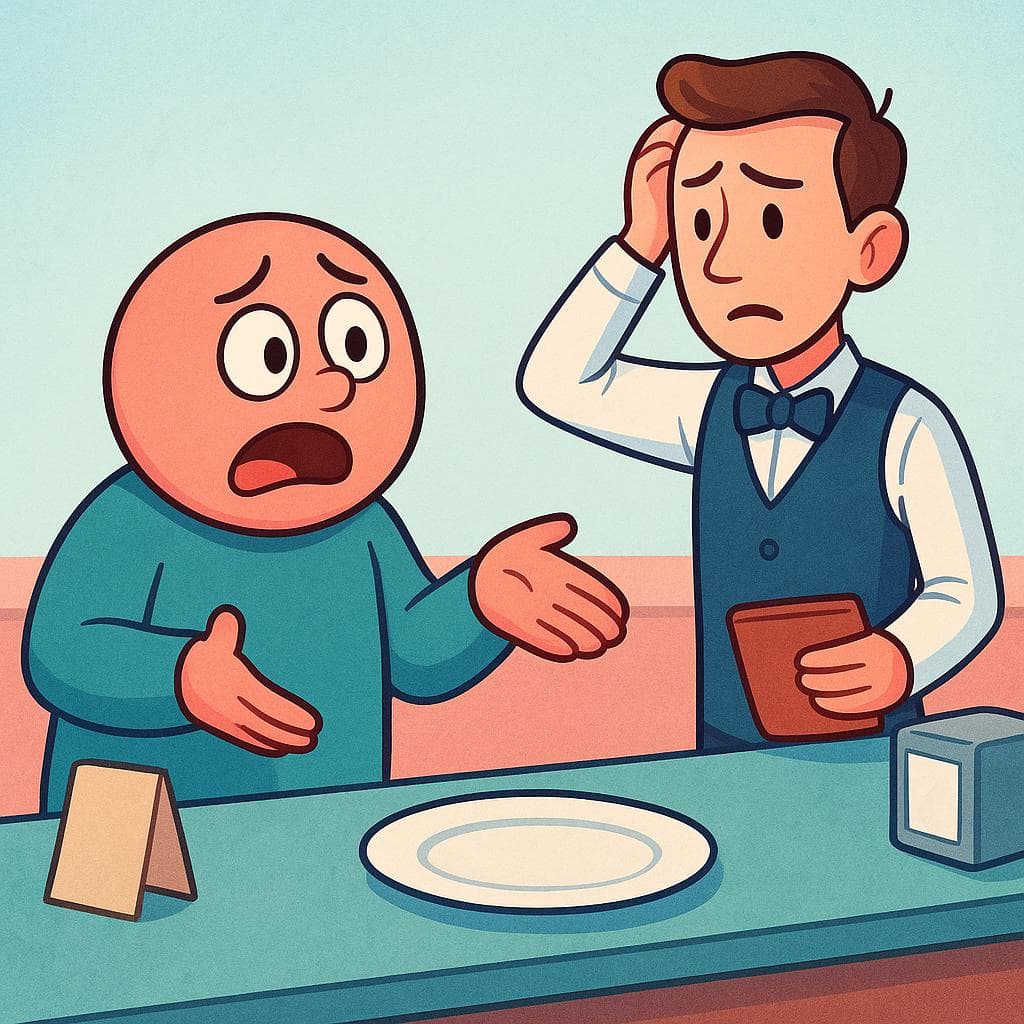
A cartoon figure with a distressed expression standing at a counter, gesturing dramatically toward an empty plate while speaking to a confused waiter, illustrating the act of complaining.

Used in the familiar singular present tense, "quejas" (tú) means 'you complain.'

quejas(verb)

B1regular ar

you complain

?

familiar singular present tense (tú)

Also:

you are complaining

?

familiar singular present tense (tú)

📝 In Action

¿Por qué te quejas tanto del frío?

B1

Why do you complain so much about the cold?

Si no te quejas, nadie sabrá que hay un problema.

B2

If you don't complain, nobody will know there's a problem.

Word Connections

Synonyms

  • lamentarse (to lament/moan)
  • protestar (to protest)

Antonyms

  • felicitar (to congratulate)

💡 Grammar Points

The Reflexive 'Se'

The verb 'quejar' is almost always used reflexively as 'quejarse' (to complain). This means you need the little pronoun 'te' before 'quejas': 'Te quejas' (You complain).

❌ Common Pitfalls

Forgetting the Pronoun

Mistake: "Saying 'Tú quejas' instead of 'Tú te quejas'."

Correction: Since 'quejarse' is reflexive, you must include the pronoun that matches the person: 'Yo me quejo,' 'Tú te quejas,' etc.

⭐ Usage Tips

Preposition 'De'

When you say what you are complaining about, use the preposition 'de' (of/about): 'Se queja del clima' (He complains about the weather).

🔄 Conjugations

indicative

present

él/ella/ustedqueja
yoquejo
quejas
ellos/ellas/ustedesquejan
nosotrosquejamos
vosotrosquejáis

imperfect

él/ella/ustedquejaba
yoquejaba
quejabas
ellos/ellas/ustedesquejaban
nosotrosquejábamos
vosotrosquejabais

preterite

él/ella/ustedquejó
yoquejé
quejaste
ellos/ellas/ustedesquejaron
nosotrosquejamos
vosotrosquejasteis

subjunctive

present

él/ella/ustedqueje
yoqueje
quejes
ellos/ellas/ustedesquejen
nosotrosquejemos
vosotrosquejéis

imperfect

él/ella/ustedquejara/quejase
yoquejara/quejase
quejaras/quejases
ellos/ellas/ustedesquejaran/quejasen
nosotrosquejáramos/quejásemos
vosotrosquejarais/quejaseis

✏️ Quick Practice

💡 Quick Quiz: quejas

Question 1 of 2

Which sentence correctly uses 'quejas' as the familiar verb form?

📚 More Resources

Word Family

queja(complaint (singular)) - noun

Frequently Asked Questions

Is 'quejas' always used in the negative sense?

Yes, 'quejas' always refers to expressions of dissatisfaction, criticism, or unhappiness. You wouldn't use it to describe positive feedback.

How is the noun 'queja' different from the verb form 'quejas'?

The noun 'queja' (singular) or 'quejas' (plural) is a thing—the actual complaint. The verb form 'quejas' is an action, meaning 'you complain' (when addressing a friend).