ronda
“ronda” means “round” in Spanish. It has 3 different meanings depending on context:

round, patrolAlso: tour, heat

📝 In Action
El guardia de seguridad hace una ronda cada hora.
A2The security guard does a patrol every hour.
Esta es la última ronda de negociaciones antes del acuerdo final.
B1This is the last round of negotiations before the final agreement.
Pasamos a la segunda ronda del torneo.
B2We moved on to the second round of the tournament.
Word Connections
round of drinks, handAlso: set

📝 In Action
¿Quién paga la próxima ronda?
B1Who is paying for the next round (of drinks)?
Perdí todas mis fichas en la última ronda de póker.
B1I lost all my chips in the last hand of poker.
Word Connections
circle dance, ringAlso: ring game

📝 In Action
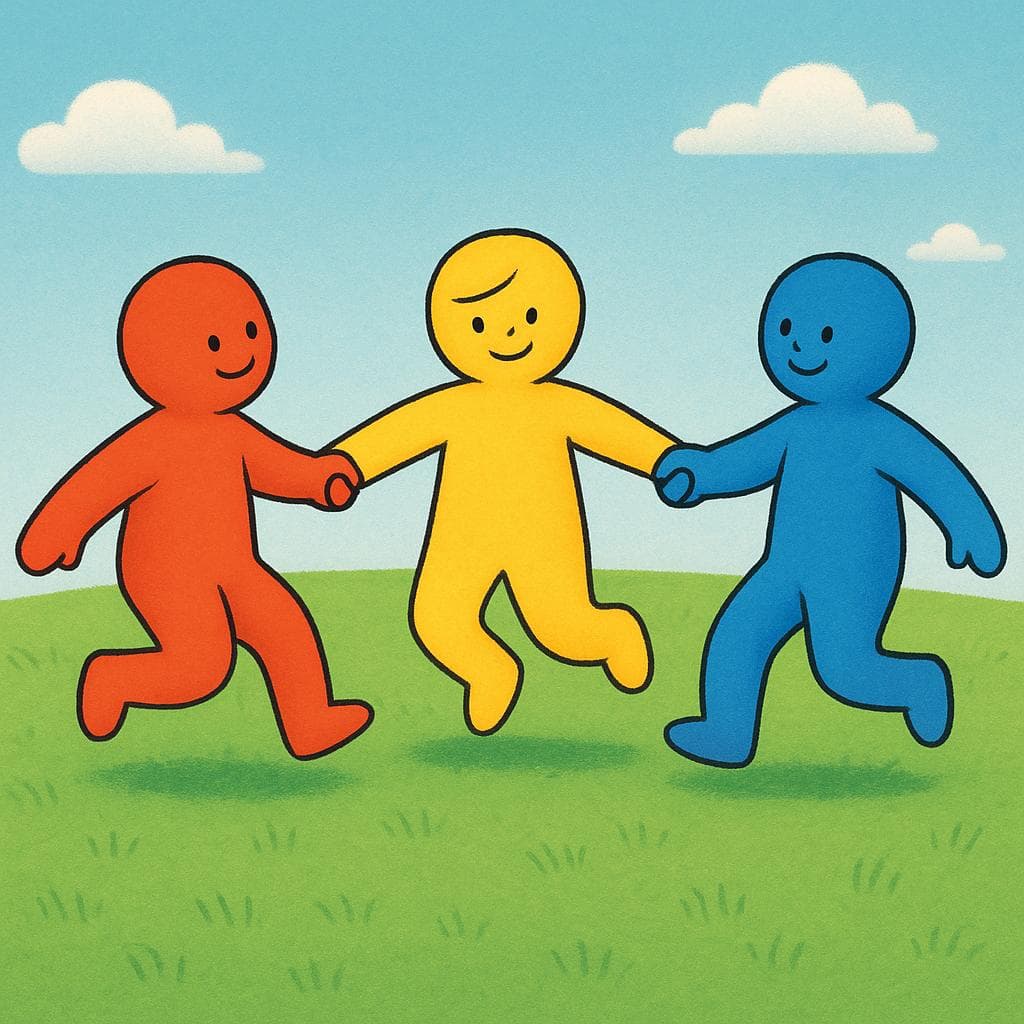
Los niños formaron una ronda para cantar la canción.
A2The children formed a ring (circle) to sing the song.
En la clase de folclore aprendimos una ronda tradicional.
B1In folklore class, we learned a traditional circle dance.
Word Connections
Translate to Spanish
✏️ Quick Practice
Quick Quiz: ronda
Question 1 of 2
Which meaning of 'ronda' is used when talking about buying drinks for friends?
📚 More Resources
👥 Word Family
🎵 Rhymes
📚 Etymology
Comes from the verb 'rondar,' meaning to go around or circle. This root ultimately traces back to Vulgar Latin words related to 'rotundus,' meaning 'round.' The idea of a 'ronda' is always about a path that circles back to the starting point.
First recorded: 13th century
Cognates (Related words)
💡 Master Spanish
Take your Spanish to the next level. Read 200+ illustrated and narrated Spanish stories tailored to your level with the Inklingo app!
Frequently Asked Questions
Does 'ronda' refer to a specific time of day?
Not necessarily, but it is often associated with the 'ronda nocturna' (night patrol). However, 'ronda' itself simply means a circuit or sequence, which can happen anytime, such as a 'ronda de preguntas' (round of questions).
How is 'ronda' different from 'turno'?
Both can mean 'turn,' but 'ronda' usually implies a complete circuit or sequence involving multiple steps (like a full game round or a full patrol), whereas 'turno' often means a single person's turn or a shift (like working the night shift).