siéntense
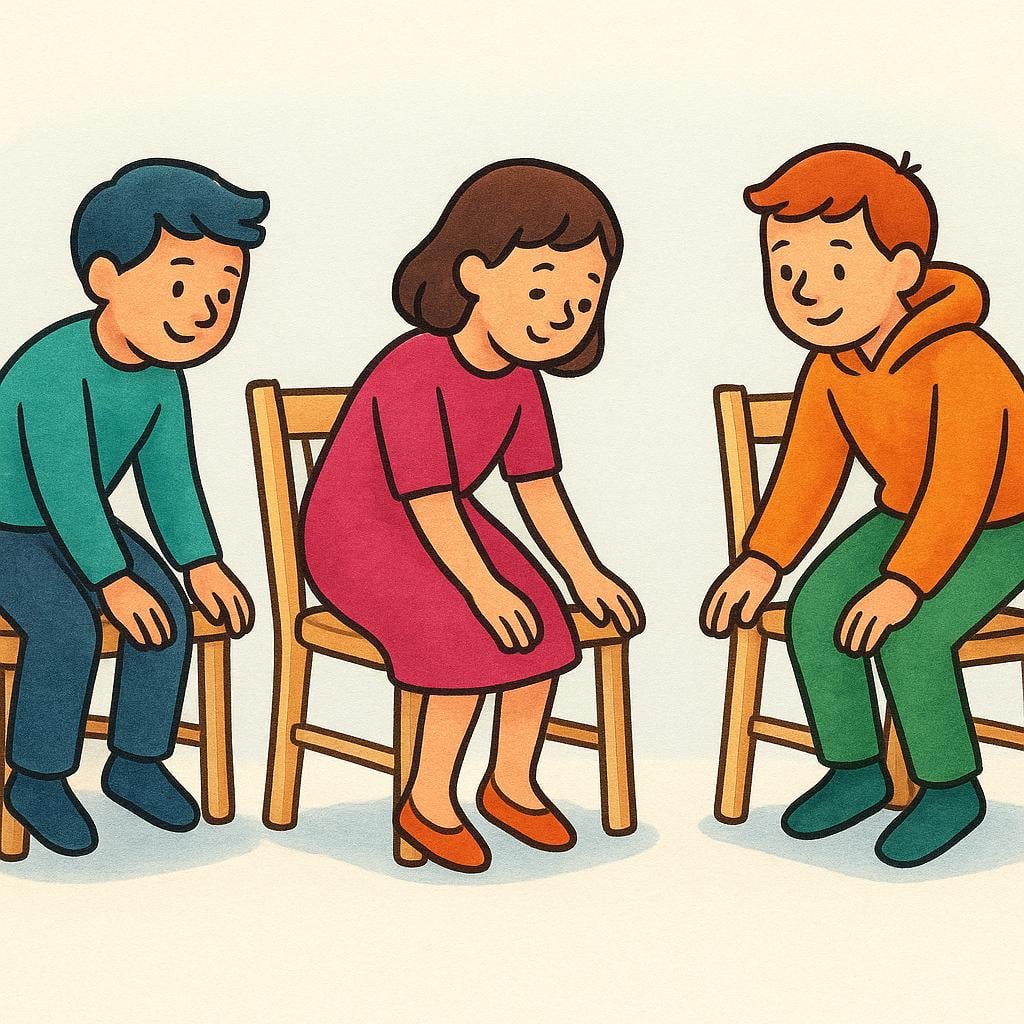
“siéntense” means “Sit down” in Spanish (Used when commanding a group of people (ustedes) to take a seat.).
Sit downAlso: Have a seat
📝 In Action
Bienvenidos a la clase. Por favor, siéntense.
A1Welcome to the class. Please, sit down.
Siéntense, que la reunión está a punto de empezar.
A2Sit down, the meeting is about to start.
No se queden parados, siéntense donde quieran.
B1Don't stay standing, sit down wherever you like.
Word Connections
Indicative
Present
Imperfect
Preterite
Subjunctive
Present Subjunctive
Imperfect Subjunctive
Translate to Spanish
Words that translate to "siéntense" in Spanish:
✏️ Quick Practice
Quick Quiz: siéntense
Question 1 of 2
If you are addressing your entire family (multiple people) in Mexico, which command would you use?
📚 More Resources
🎵 Rhymes
📚 Etymology
This word comes from the Latin verb *sentire* (to feel or perceive). Over time, the meaning evolved to 'to feel located' and eventually 'to sit.' The modern Spanish form is a combination of the command form of *sentar* (to seat) and the reflexive pronoun 'se' (themselves).
First recorded: The root verb *sentar* dates back to the early Romance period.
Cognates (Related words)
💡 Master Spanish
Take your Spanish to the next level. Read 200+ illustrated and narrated Spanish stories tailored to your level with the Inklingo app!
Frequently Asked Questions
Why does 'siéntense' have an accent mark?
The accent mark is necessary because when you attach the pronoun 'se' to the end of the verb form, the natural stress of the word tries to shift. The accent mark ('sién') tells you to keep the strong emphasis on the first syllable, just like in the original verb form.
What is the difference between 'siéntense' and 'tomen asiento'?
Both mean 'sit down.' 'Siéntense' is the common, everyday command derived from the verb 'to sit oneself.' 'Tomen asiento' literally means 'take a seat' and is usually considered slightly more formal or polite.