títere
“títere” means “puppet” in Spanish. It has 2 different meanings depending on context:
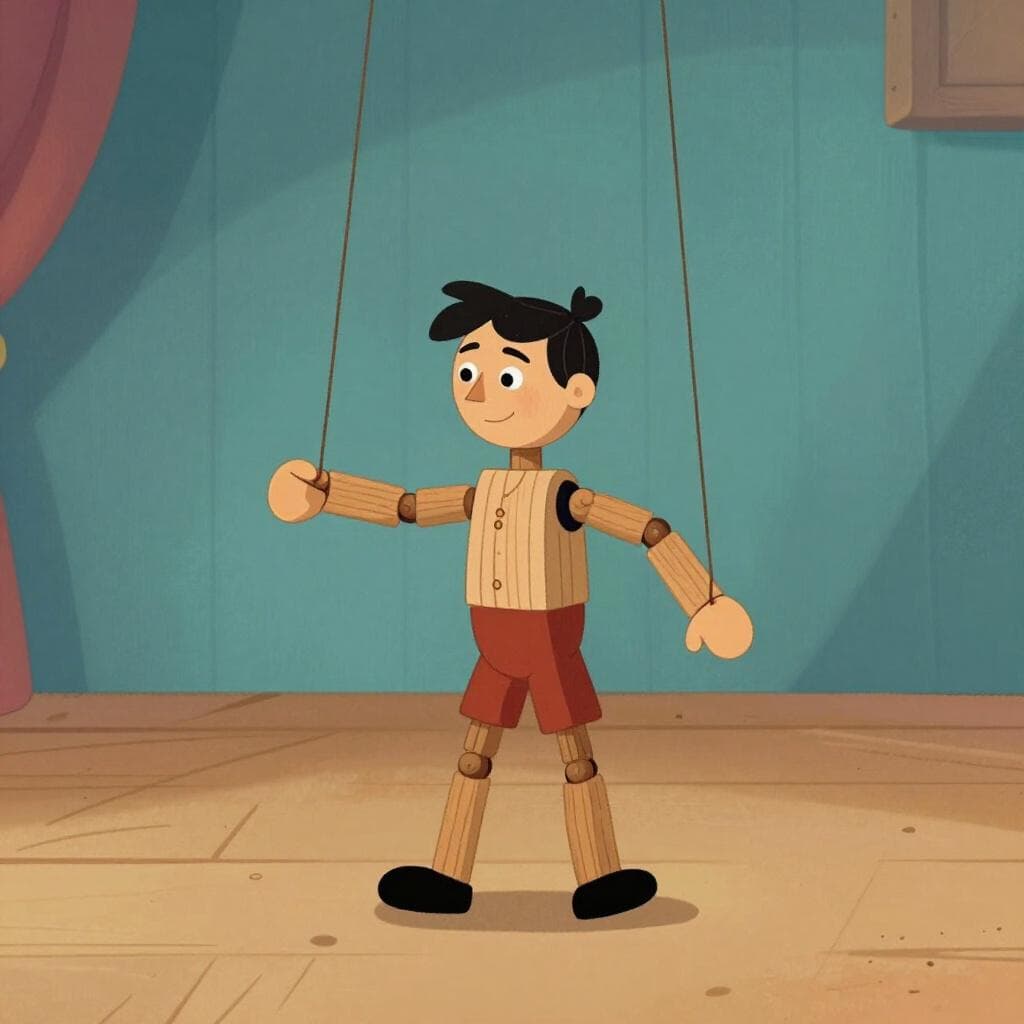
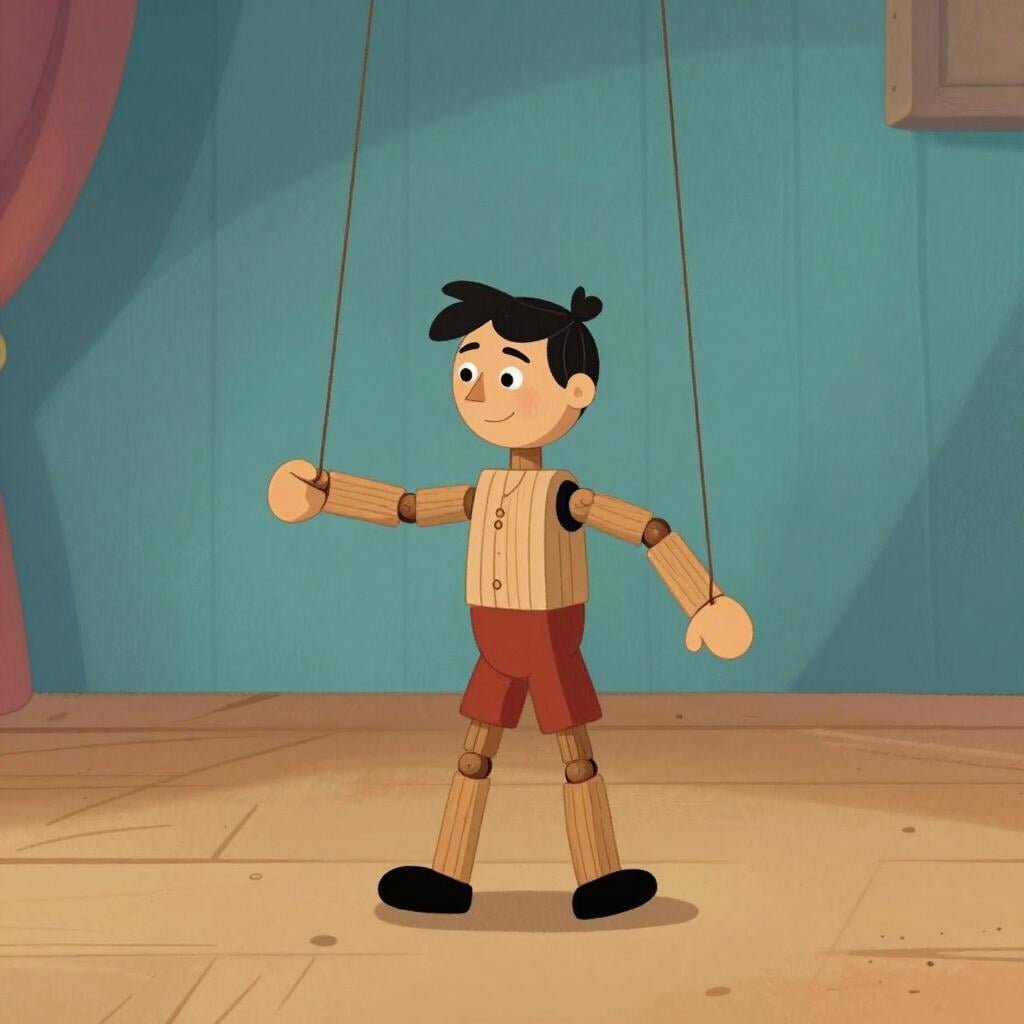
puppetAlso: marionette
📝 In Action
El niño juega con un títere de calcetín.
A1The boy is playing with a sock puppet.
Vimos una obra de títeres en la plaza.
A2We saw a puppet show in the square.
El titiritero mueve los hilos del títere con mucha habilidad.
B1The puppeteer moves the puppet's strings with great skill.
Word Connections
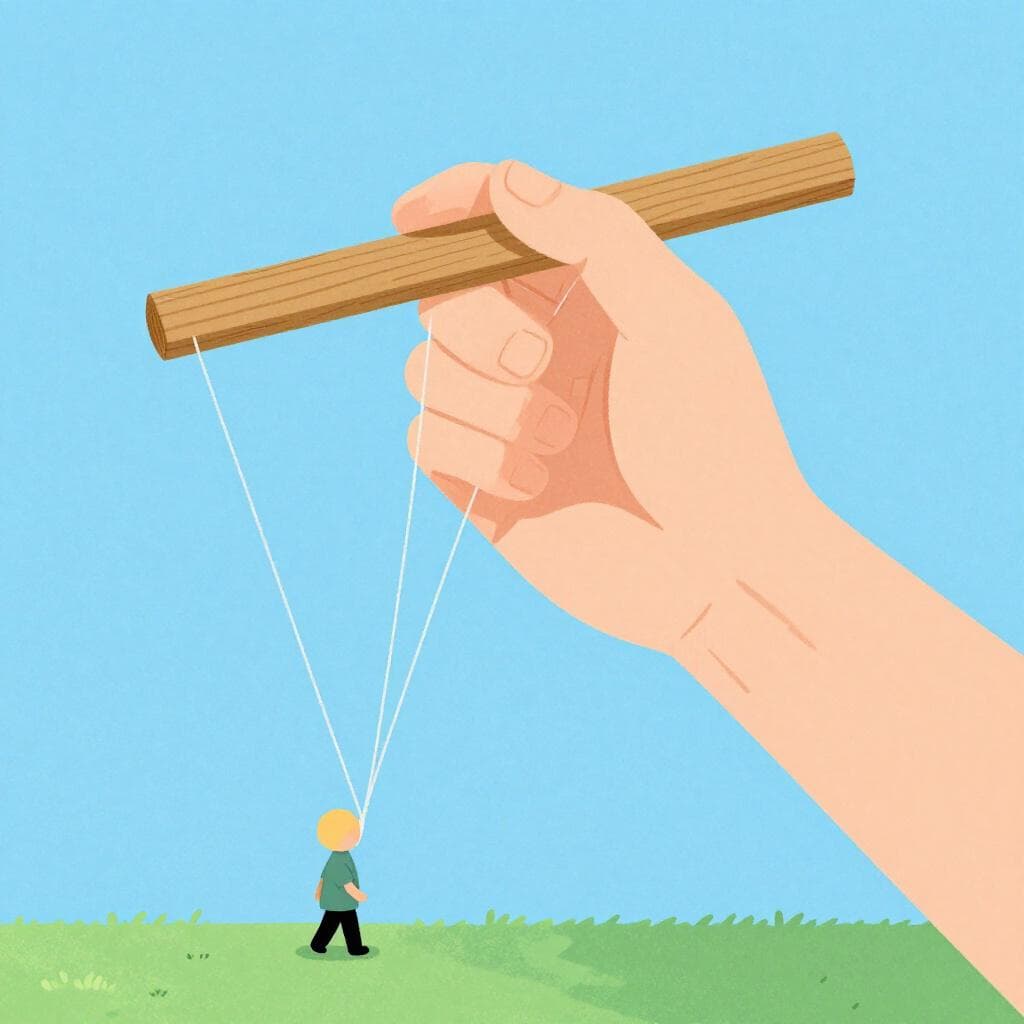
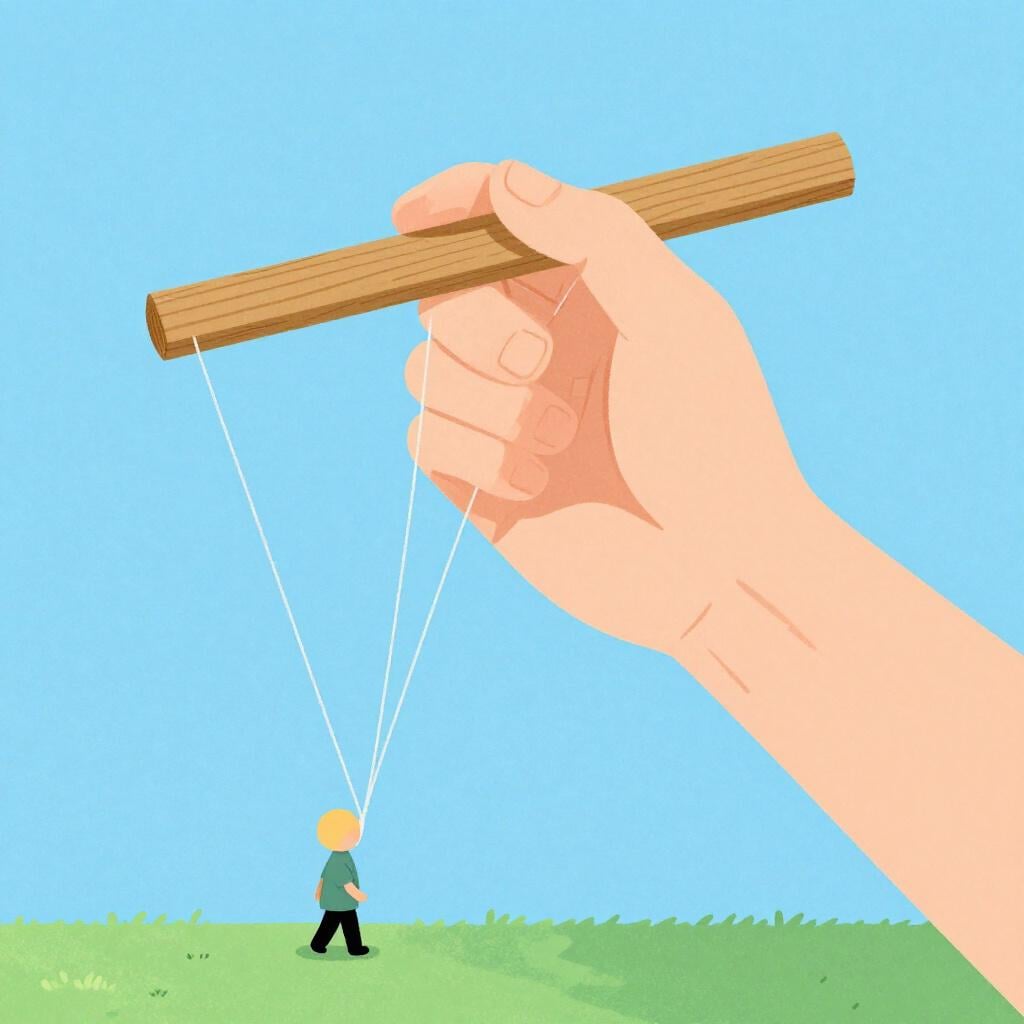
puppetAlso: pawn
📝 In Action
No quiero ser un títere en sus manos.
B1I don't want to be a puppet in their hands.
Muchos creen que el presidente es solo un títere del partido.
B2Many believe the president is just a puppet of the party.
Lo trataron como a un títere durante toda la negociación.
C1They treated him like a pawn throughout the entire negotiation.
Word Connections
✏️ Quick Practice
Quick Quiz: títere
Question 1 of 3
If you are at a 'teatro de títeres', what are you watching?
📚 More Resources
👥 Word Family
🎵 Rhymes
📚 Etymology
Likely onomatopoeic, imitating the high-pitched 'ti-ti' sound made by a special whistle (called a cerbatana) that old-fashioned puppeteers used to change their voices.
First recorded: 16th century
Cognates (Related words)
💡 Master Spanish
Take your Spanish to the next level. Read 200+ illustrated and narrated Spanish stories tailored to your level with the Inklingo app!
Frequently Asked Questions
Is 'títere' and 'marioneta' the same thing?
Mostly! 'Títere' is the general word for any puppet (hand, finger, string). 'Marioneta' specifically refers to those controlled by strings from above.
Can I use 'títere' to describe a stuffed animal?
Not usually. A stuffed animal is a 'peluche'. Use 'títere' only if the toy is designed to be moved/animated by a person.
Why is the word related to 'shivering' (titiritear)?
The quick, jerky movements of a puppet are similar to how a person shakes when they are cold, which is why the two words share a similar sound and root.