vaquero
“vaquero” means “cowboy” in Spanish. It has 2 different meanings depending on context:
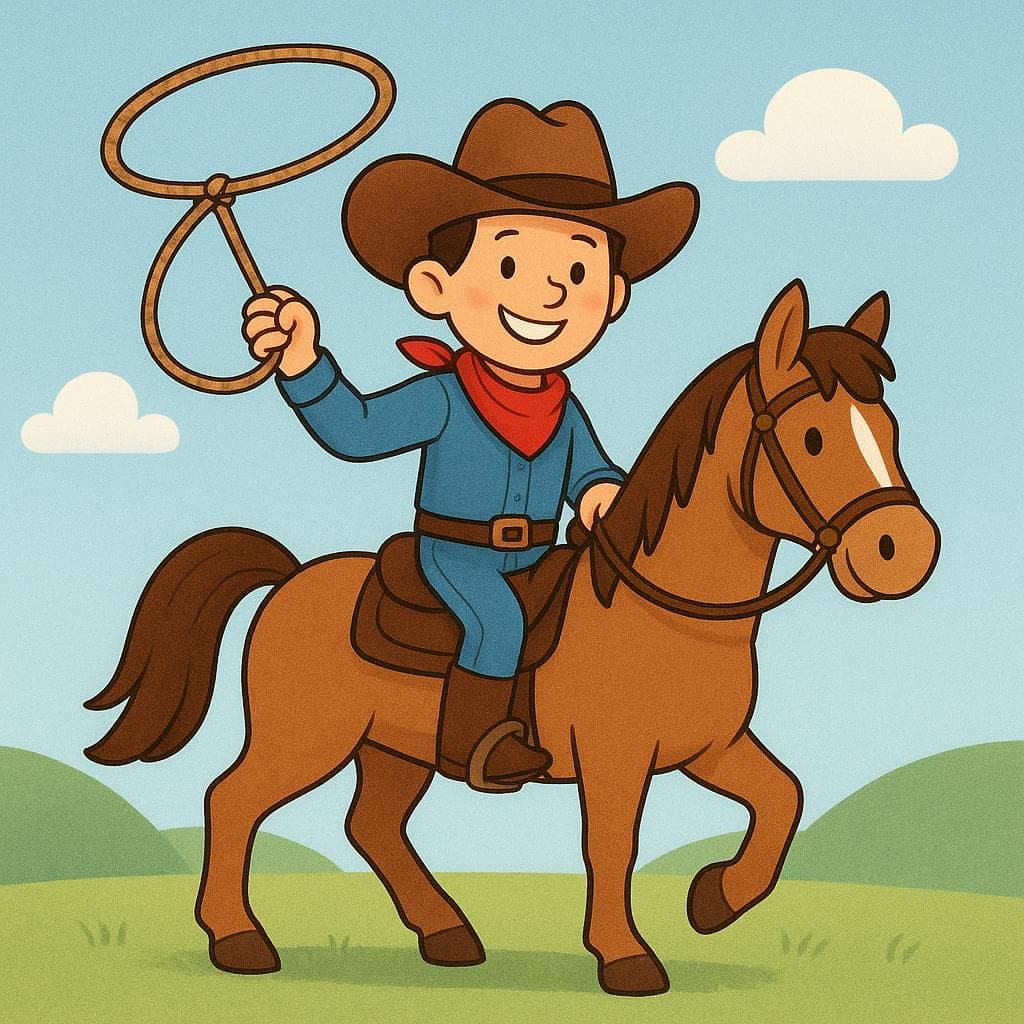

cowboy, rancher
Also: stockman
📝 In Action
El vaquero montó su caballo al amanecer para revisar el ganado.
B1The cowboy mounted his horse at dawn to check the cattle.
Mi abuelo era vaquero en Texas.
A2My grandfather was a rancher in Texas.
denim, jean
Also: cowboy-style
📝 In Action
Necesito comprar unos pantalones vaqueros nuevos.
A1I need to buy some new denim pants (jeans).
Ella llevaba una camisa vaquera con botones de perla.
A2She was wearing a denim shirt with pearl buttons.
Translate to Spanish
✏️ Quick Practice
Quick Quiz: vaquero
Question 1 of 1
Which sentence correctly uses 'vaquero' to describe clothing?
📚 More Resources
👥 Word Family▼
📚 Etymology▼
'Vaquero' is formed simply by combining the Spanish word 'vaca' (cow) with the suffix '-ero,' which usually indicates a person who works with something or a place related to it. Essentially, it means 'a person of the cows.'
First recorded: 15th century (referring to herders)
Cognates (Related words)
💡 Master Spanish
Take your Spanish to the next level. Read 200+ illustrated and narrated Spanish stories tailored to your level with the Inklingo app!
Frequently Asked Questions
Is 'vaqueros' (plural) a noun or an adjective when talking about pants?
It can be both! It's technically an adjective in 'pantalones vaqueros' (denim pants), but in common conversation, Spanish speakers often drop 'pantalones' and just say 'Me puse mis vaqueros' ('I put on my jeans'), making 'vaqueros' function as a noun.
How is 'vaquero' related to the English word 'buckaroo'?
'Buckaroo' is actually an English corruption of the Spanish word 'vaquero.' When English-speaking settlers arrived in the American West, they borrowed and adapted the Spanish term for the cattle herders they encountered.