víbora
“víbora” means “viper” in Spanish. It has 2 different meanings depending on context:


viper
Also: adder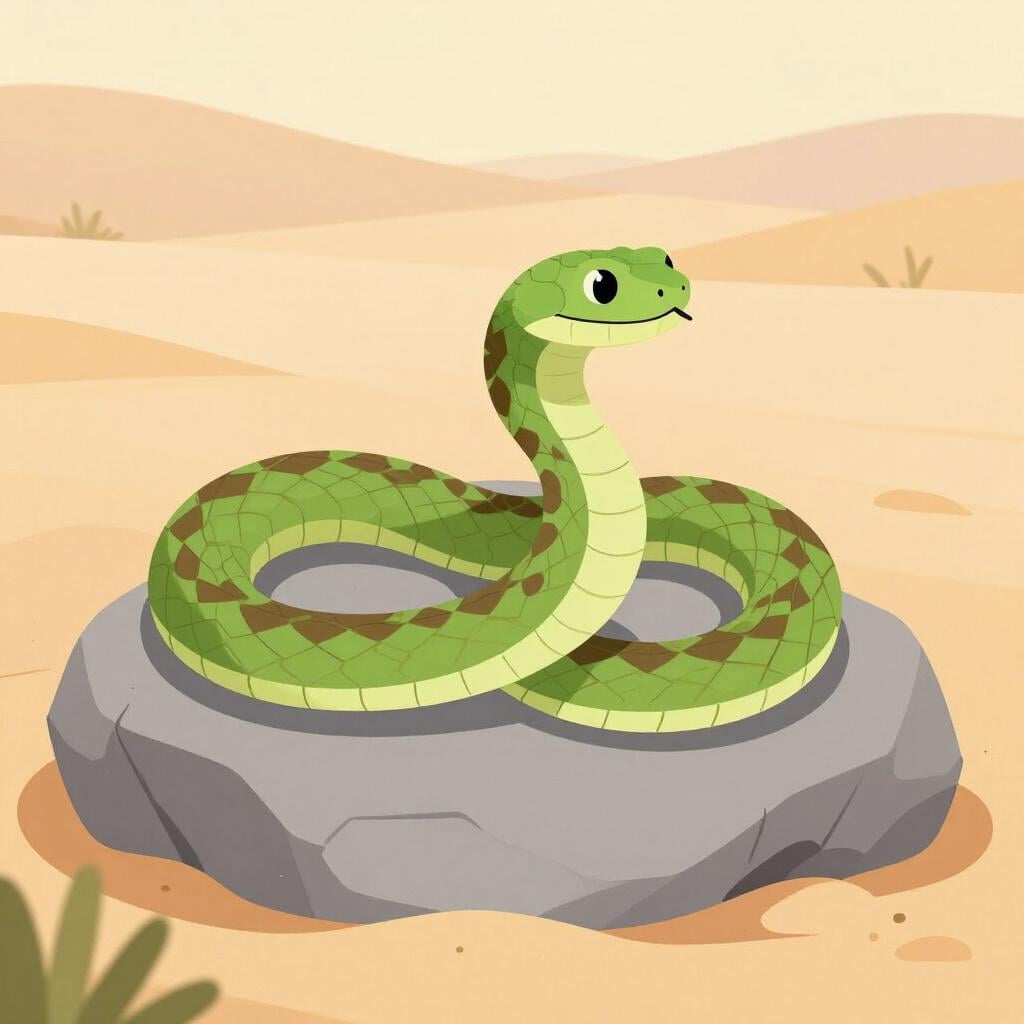
📝 In Action
Ten cuidado al caminar por las rocas, podría haber una víbora.
A2Be careful when walking on the rocks; there might be a viper.
La víbora es una serpiente venenosa con colmillos largos.
B1The viper is a poisonous snake with long fangs.
El biólogo identificó a la víbora por su cabeza triangular.
B2The biologist identified the viper by its triangular head.
snake
Also: spiteful person
📝 In Action
No confíes en él, es una víbora que solo busca lastimar.
B1Don't trust him; he's a snake who only looks to hurt people.
Su tía es una víbora; siempre está criticando a todo el mundo.
B2His aunt is a snake; she's always criticizing everyone.
¡Qué comentario más venenoso! Eres una víbora.
C1What a poisonous comment! You're such a snake.
Vocabulary Collections
Translate to Spanish
✏️ Quick Practice
Quick Quiz: víbora
Question 1 of 3
If you want to say a male snake is a viper, how do you say it?
📚 More Resources
👥 Word Family▼
🎵 Rhymes▼
📚 Etymology▼
From the Latin 'vipera', which was a shortened version of 'vivipara'. This literally means 'living-birth' because, unlike most snakes that lay eggs, vipers give birth to live babies.
First recorded: 13th century
Cognates (Related words)
💡 Master Spanish
Take your Spanish to the next level. Read 200+ illustrated and narrated Spanish stories tailored to your level with the Inklingo app!
Frequently Asked Questions
Is a 'víbora' always dangerous?
In the animal kingdom, yes; vipers are venomous snakes. Figuratively, it refers to someone who is emotionally harmful or untrustworthy.
Can I use 'víbora' for a man?
Yes! You can say 'Él es una víbora' to describe a man who is spiteful or gossips maliciously. Note that you still use 'una' (feminine).
What is the difference between 'víbora' and 'serpiente'?
'Serpiente' is the general word for any snake. 'Víbora' refers specifically to vipers, which are characterized by their venom and triangular heads.