

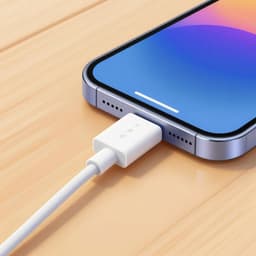
Using 'Cobrar' instead of 'Cargar'
Mistake: “Saying 'Necesito cobrar mi teléfono'.”
Correction: Necesito cargar mi teléfono.
kar-GAHR mee seh-loo-LAHR
The most standard way to talk about charging your phone in most of the Americas. It uses the common word for mobile phone, 'celular'.
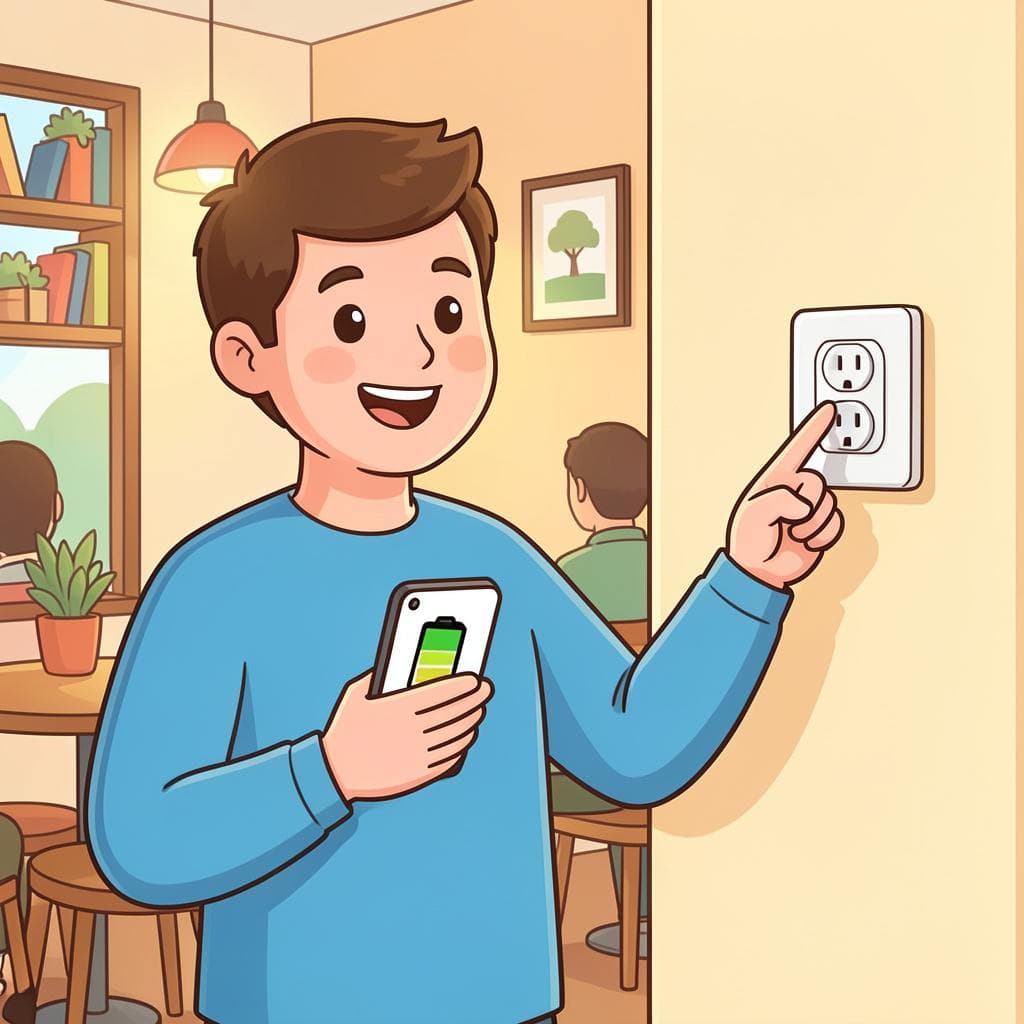
Knowing how to ask for a charge is essential for modern travelers!
Charge my phone — in Spanish
kar-GAHR ehl MOH-veel
In Spain, the word for 'cell phone' is 'móvil' rather than 'celular'.
poh-NEHR ah kar-GAHR ehl seh-loo-LAHR
This literally means 'to put the phone to charge'.
DAHR-leh KAHR-gah ahl teh-LEH-foh-noh
A more colloquial way to say 'give some charge to the phone'.
ehn-choo-FAHR ehl seh-loo-LAHR
This means 'to plug in the phone'.
meh PREHS-tahs oon kar-gah-DOHR
This means 'Can you lend me a charger?'.
Different ways to refer to your device and the act of charging based on where you are.
| Phrase | Region | Best For | Avoid When |
|---|---|---|---|
| Cargar el móvil | neutral | Visiting Madrid or Barcelona. | In Mexico or Colombia (sounds very European). |
| Cargar el celular | neutral | Anywhere in Latin America. | In Spain (though they will understand you). |
| Enchufar el teléfono | casual | Specifically talking about the plug. | Formal business writing. |
The words are phonetic, but remember to roll the 'r' slightly in 'cargar'.
It's a simple verb + noun structure very similar to English.
Mainly just knowing the regional difference between 'móvil' and 'celular'.
Necesito cargar mi celular, ¿hay un enchufe por aquí?
I need to charge my phone, is there an outlet around here?
Mi móvil no tiene batería, tengo que cargarlo.
My phone has no battery, I have to charge it.
Disculpe, ¿podría cargar mi teléfono detrás de la barra?
Excuse me, could I charge my phone behind the bar?
Spanish speakers are split on what to call a mobile phone. In Latin America, it's almost always 'celular'. In Spain, it's almost always 'móvil'. If you use the 'wrong' one, people will still understand you, but you'll immediately sound like a tourist!
In many Spanish-speaking countries, it's very common to ask a bartender or waiter to charge your phone behind the counter if you can't find an outlet. It’s generally considered a normal favor to ask, provided the place isn't too busy.
Mistake: “Saying 'Necesito cobrar mi teléfono'.”
Correction: Necesito cargar mi teléfono.
Mistake: “Trying to translate 'charge' as in 'charging into battle'.”
Correction: Use 'cargar'.
In many Latin American countries, especially Argentina and Mexico, people informally call their phone 'el celu'. Saying 'Cargar el celu' makes you sound very natural and casual.
If you need to charge your phone, the most important word to know is 'enchufe' (outlet/socket). Ask '¿Dónde hay un enchufe?' to find the power source.
Spain is very consistent with the word 'móvil'. Using 'celular' sounds distinctly American (from the Americas).
Mexicans often use 'pila' for battery and 'conectar' as a synonym for charging.
Argentines love to shorten words; 'celu' is much more common than the full word in daily life.
Sí, claro. El enchufe está allí abajo.
Yes, of course. The outlet is down there.
Muchas gracias, muy amable.
Thank you very much, that's very kind.
¿Es iPhone o Android?
Is it an iPhone or Android?
Es un iPhone, ¿tienes cable Lightning?
It's an iPhone, do you have a Lightning cable?
Think of 'Cargar' as giving your phone a 'cargo' of electricity. It carries the energy just like a cargo ship carries goods.
This is the natural next step when you need to actually get the device to charge.
This explains why you need to charge your phone in the first place.
Question 1 of 2
You are in Madrid and your phone is at 1%. What should you ask for?
Knowing a phrase is one thing — using it at the right moment is another. Read 200+ illustrated and narrated Spanish stories to see phrases in the contexts where they actually belong.
No, you can use 'cargar' for anything that holds an electrical charge, like a laptop (portátil), tablet, or even an electric car.
In many Spanish-speaking cultures, it's quite common at cafes or restaurants. However, with strangers on the street, it's better to ask where a public charging station or a cafe is located.
That's perfectly fine! 'Teléfono' is universal and understood everywhere, even if it's slightly less specific than 'celular' or 'móvil'.
Strengthen the grammar behind this phrase:
Find similar phrases to expand your Spanish vocabulary:
Browse our complete collection of Spanish phrases organized by situation, from basic greetings to advanced conversations. Perfect for travelers, students, and anyone learning Spanish.
View All Spanish Phrases →