

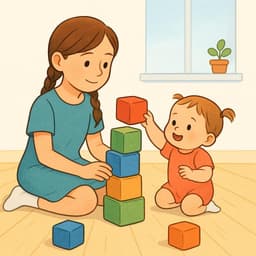


Confusing Gender: 'Hermano' vs 'Hermana'
Mistake: “Saying 'mi hermano' when referring to a female sister.”
Correction: Always use 'mi hermana' for a sister.
mee ehr-MAH-nah
This is the most direct, standard, and universally understood way to say 'my sister' in Spanish. It's appropriate for any situation, formal or informal.
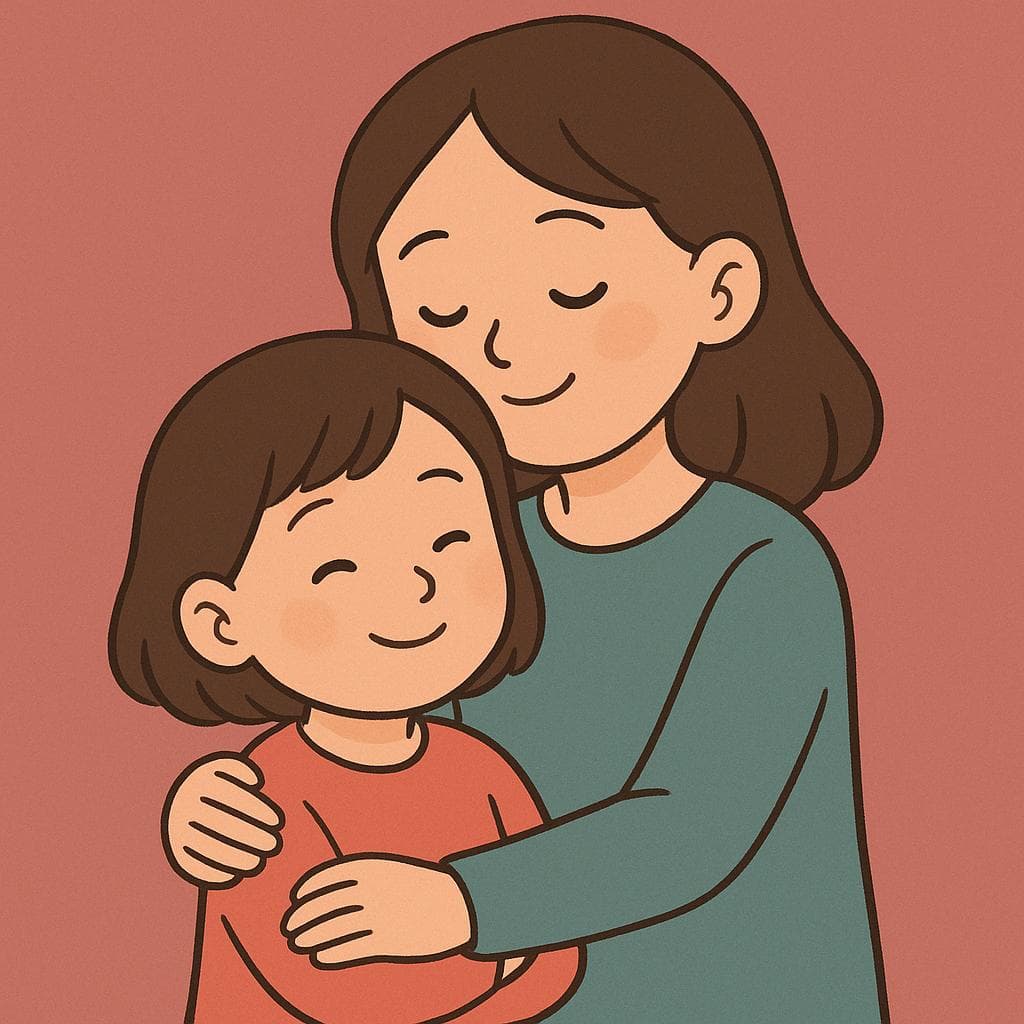
Whether you call her 'mi hermana', 'mi hermanita', or 'mi carnala', the bond with a sister is special.
my sister — in Spanish
mee ehr-mah-NEE-tah
This is an affectionate term meaning 'my little sister'. The '-ita' ending is a diminutive, which adds a sense of love, affection, and closeness.
mee ehr-MAH-nah mah-YOHR
This specifically means 'my older sister' or 'my elder sister'. It's used to clarify the birth order.
mee ehr-MAH-nah meh-NOHR
This specifically means 'my younger sister'. It's the counterpart to 'hermana mayor'.
mee kar-NAH-lah
A very common slang term in Mexico, derived from 'carne' (flesh), implying 'my own flesh and blood'. It's like saying 'my sis' or 'my ride-or-die'.
MAH-nah
A very informal, clipped version of 'hermana'. It's often used to address your sister directly.
mee MEH-dee-ah ehr-MAH-nah
This means 'my half-sister', referring to a sister with whom you share one parent.
mee ehr-mah-NAHS-trah
This means 'my step-sister', referring to the daughter of your step-parent.
Here’s a quick comparison of the most common ways to refer to your sister.
| Phrase | Formality | Best For | Avoid When |
|---|---|---|---|
| mi hermana | Neutral | Any situation. It's the universal, standard term. | Never incorrect, but might sound a bit plain in very affectionate contexts. |
| mi hermanita | Informal | Showing affection and closeness with family and friends. | Very formal settings where personal affection isn't relevant. |
| mi hermana mayor/menor | Neutral | Clarifying birth order or distinguishing between sisters. | When the age difference doesn't matter and you want to be more concise. |
| mi carnala | Casual (Slang) | Very informal chats with friends, especially in Mexico. | Formal situations, talking to strangers, or outside of regions where it's used. |
Fairly easy. The main challenges are remembering the 'h' is silent and the single tap of the 'r' sound, which is softer than the English 'r'.
Very simple. It's just a possessive adjective ('mi') followed by a noun ('hermana'). No verbs or complex structures involved.
Slightly nuanced. Knowing when to use affectionate terms like 'hermanita' or regional slang like 'carnala' is the main cultural challenge.
Mi hermana vive en Buenos Aires.
My sister lives in Buenos Aires.
Te presento a Sofía, mi hermana mayor.
I'd like you to meet Sofia, my older sister.
¡Feliz cumpleaños, hermanita! Te quiero mucho.
Happy birthday, little sis! I love you very much.
Voy a salir con mi carnala esta noche.
I'm going out with my sis tonight.
Family is the cornerstone of most Spanish-speaking cultures. Referring to your sister is a very common part of daily conversation, and the way you refer to her (e.g., using affectionate terms) can say a lot about your relationship.
Adding '-ita' to the end of 'hermana' to make 'hermanita' is incredibly common. This diminutive suffix adds affection and warmth. It's used for sisters of all ages, not just ones who are literally 'little'.
Regional slang like 'carnala' in Mexico signifies a deep, informal bond that goes beyond just being siblings. It implies a relationship of deep trust and friendship, like a 'partner in crime' or 'best bud'.
Mistake: “Saying 'mi hermano' when referring to a female sister.”
Correction: Always use 'mi hermana' for a sister.
Mistake: “Pronouncing the 'h' in 'hermana' like in the English word 'her'.”
Correction: The 'h' is always silent in Spanish. The word starts with the 'e' sound: /ehr-MAH-nah/.
Mistake: “Saying 'mi hermana vieja' to mean 'my older sister'.”
Correction: Use 'mi hermana mayor'.
If you have more than one sister, or if the age difference is relevant to your story, using 'mi hermana mayor' (my older sister) and 'mi hermana menor' (my younger sister) adds helpful clarity.
Don't be shy about using 'hermanita'. It’s a very natural and common way to show affection. You can use it when talking about her or even when talking directly to her.
If you have more than one sister, the phrase becomes plural: 'mis hermanas'. The possessive adjective changes from 'mi' to 'mis' to agree with the plural noun.
The use of 'carnala' is a hallmark of Mexican informal speech. It conveys a very deep sense of camaraderie and family loyalty. Spanglish is also more common in some areas.
While 'hermanita' is used, it might be slightly less frequent than in Latin America. Slang is very different; terms like 'carnala' are not used.
The 'vos' form is used instead of 'tú' for 'you', which affects surrounding verbs but not the phrase 'mi hermana' itself. The overall feel of the language is heavily influenced by Italian.
'Nana' is a unique and common informal term for a sister. The speech is famously fast, so listening comprehension can be a challenge for learners.
Hermana
WhatsApp, text messages, social media posts.
Felicidades hna! 🎉
Congrats sis! 🎉
Te quiero mucho, hermana
Used at the end of affectionate messages on WhatsApp or social media.
Gracias por todo! TQM hna ❤️
Thanks for everything! Love you lots, sis ❤️
¿Tienes hermanos?
Do you have siblings?
Sí, tengo una hermana.
Yes, I have a sister.
Mucho gusto.
Nice to meet you.
Igualmente.
Likewise. / You too.
¿Cómo se llama tu hermana?
What's your sister's name?
Se llama [Ana].
Her name is [Ana].
This silly visual story connects the English sound to the Spanish word, making the pronunciation easier to remember.
The biggest difference is how Spanish uses a single plural word, 'hermanos', to mean 'siblings' (sisters and brothers). English lacks a common single-word equivalent. Additionally, the frequent and natural use of affectionate diminutives like 'hermanita' is much more integrated into everyday Spanish than 'sis' or 'little sister' is in English.
Why it''s different: English speakers often look for a direct one-to-one translation. While 'hermanos' means 'brothers', it is also the default term for 'siblings' in general, even if the group includes sisters.
Use instead: To ask 'Do you have siblings?', you say '¿Tienes hermanos?'. This is correct even if the person only has sisters.
This is the direct male counterpart and uses the same structure.
Expands your vocabulary to the broader family unit.
This is a natural question to ask or be asked when discussing family.
Introduces the basic verb 'ser' (to be) in a common sentence structure.
Question 1 of 3
You want to introduce your older sister, Maria, to a new friend. What is the most appropriate way to say it?
Knowing a phrase is one thing — using it at the right moment is another. Read 200+ illustrated and narrated Spanish stories to see phrases in the contexts where they actually belong.
'Hermana' specifically means sister (feminine), while 'hermano' means brother (masculine). The ending '-a' or '-o' is key to distinguishing between them.
You use the plural masculine form, 'hermanos'. Even if you have one brother and five sisters, you refer to the group as 'mis hermanos'. If you only have sisters, you can say 'mis hermanas'.
Absolutely! 'Hermanita' is a term of endearment and isn't strictly about age. Using it for an older sister just shows you have a close, loving relationship.
No, it's primarily used in Mexico and some parts of Central America. In Spain, Argentina, or other regions, it would likely not be understood or would sound very strange.
They are two different words. A 'half-sister' (sharing one parent) is 'media hermana'. A 'step-sister' (related by a parent's marriage) is 'hermanastra'.
You make both the possessive adjective and the noun plural. It becomes 'mis hermanas'. For example, 'Mis hermanas son muy divertidas' (My sisters are very fun).
Strengthen the grammar behind this phrase:
Dive deeper into related topics:
Find similar phrases to expand your Spanish vocabulary:
Browse our complete collection of Spanish phrases organized by situation, from basic greetings to advanced conversations. Perfect for travelers, students, and anyone learning Spanish.
View All Spanish Phrases →