How to Say "i married" in Spanish
The Spanish word for “i married” is “casé” — A2 level. This is a very common word in everyday Spanish.
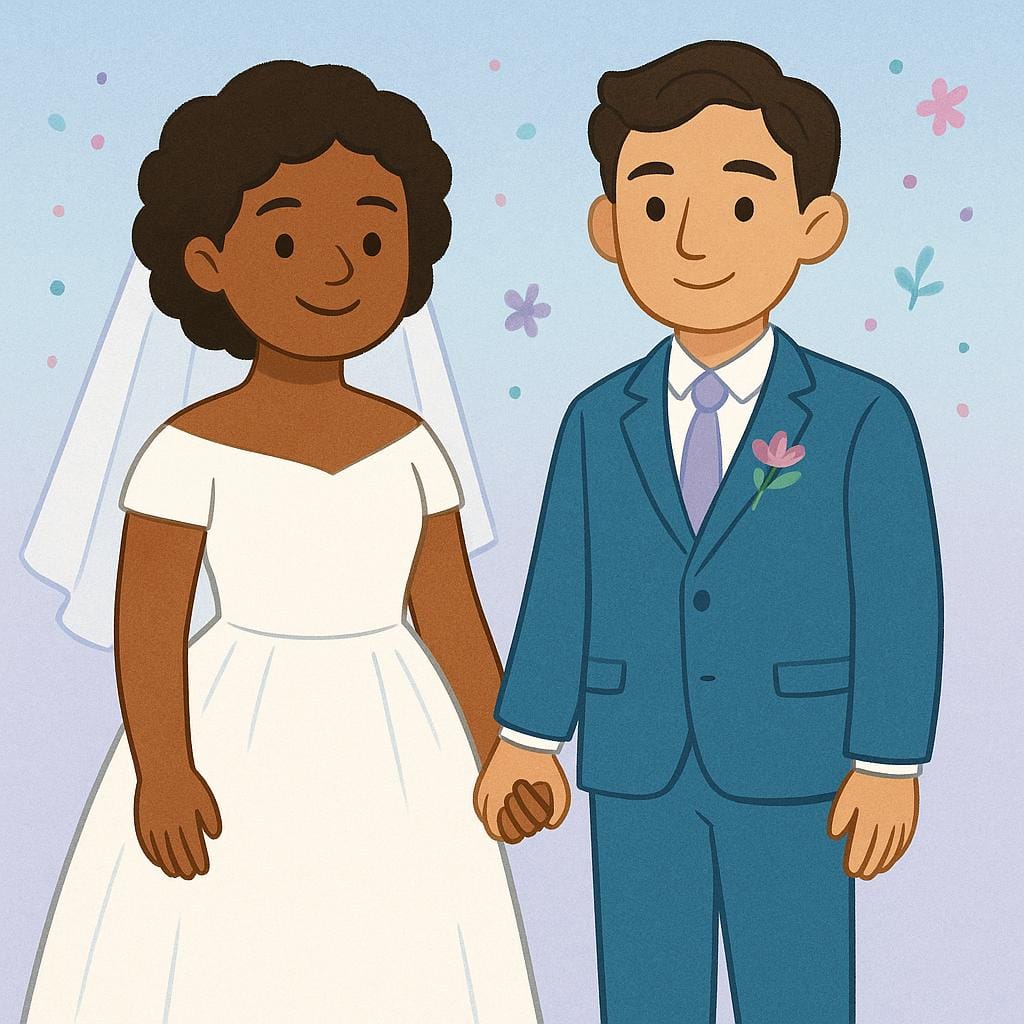
Examples
Me casé con mi pareja en una playa hermosa.
I got married to my partner on a beautiful beach.
Yo casé a mi hermana y su novio, fue un honor.
I married my sister and her boyfriend; it was an honor. (Meaning: I performed the ceremony)
Cuando era joven, no pensé que me casé tan pronto.
When I was young, I didn't think I would get married so soon.
The Role of the Accent
The accent mark on the 'é' is crucial! It tells you this is a completed action in the past ('I married'). Without it, 'case' means 'I marry' (present subjunctive) or is the noun 'case/container'.
The Difference Between 'Casar' and 'Casarse'
If you are the person getting married, you must use the reflexive form: 'Me casé' (I got married). If you just say 'Yo casé,' it usually means you were the official performing the ceremony.
Using the wrong form for 'I got married'
Mistake: “Yo casé con ella.”
Correction: Yo *me casé* con ella. (Remember the little word 'me' is needed when you are the one getting married.)
Learn Spanish with Inklingo
Interactive stories, personalized learning, and more.