How to Say "seagull" in Spanish
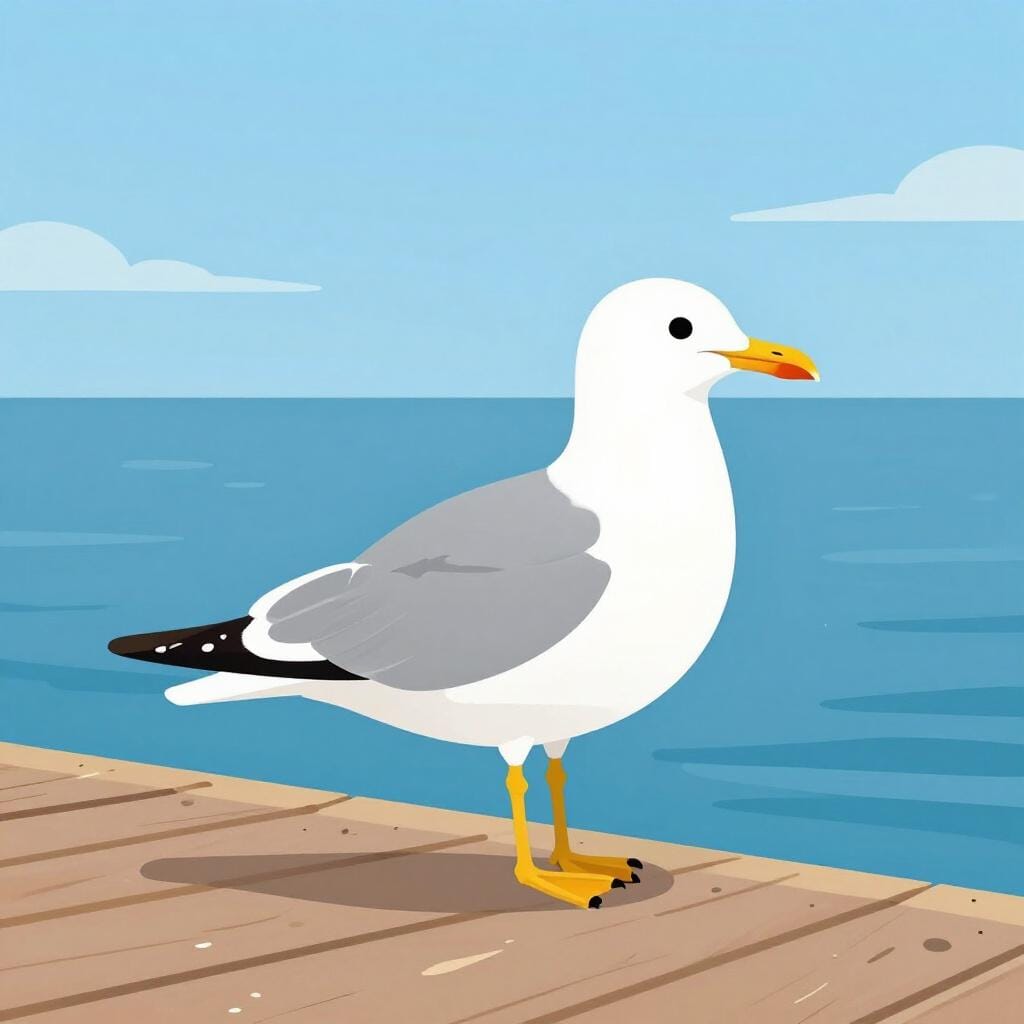
The Spanish word for “seagull” is “gaviota” — A2 level. This is a very common word in everyday Spanish.
Examples
Hay una gaviota en la arena.
There is a seagull on the sand.
Las gaviotas vuelan sobre el barco buscando comida.
The seagulls are flying over the boat looking for food.
Escuchamos el grito de las gaviotas desde nuestra habitación.
We heard the cry of the seagulls from our room.
Always Feminine
Even if the bird is male, the word is always 'la gaviota.' To talk about a male gull, you say 'la gaviota macho' (the male seagull).
Using 'La' and 'Las'
Because the word starts with a soft 'g' sound and ends in 'a', you always use 'la' for one and 'las' for many. It never changes to 'el' like some other words ending in 'a'.
The 'El' Trap
Mistake: “El gaviota está volando.”
Correction: La gaviota está volando. Even if you think the bird is male, the word itself is grammatically feminine.
Confusing with any bird
Mistake: “Mira esa gaviota en el bosque.”
Correction: Mira ese pájaro en el bosque. A 'gaviota' is specifically a seagull; use 'pájaro' for generic birds found inland.
Related Translations
Learn Spanish with Inklingo
Interactive stories, personalized learning, and more.