Koniugacja acariciar Tryb Subj. teraźniejszy
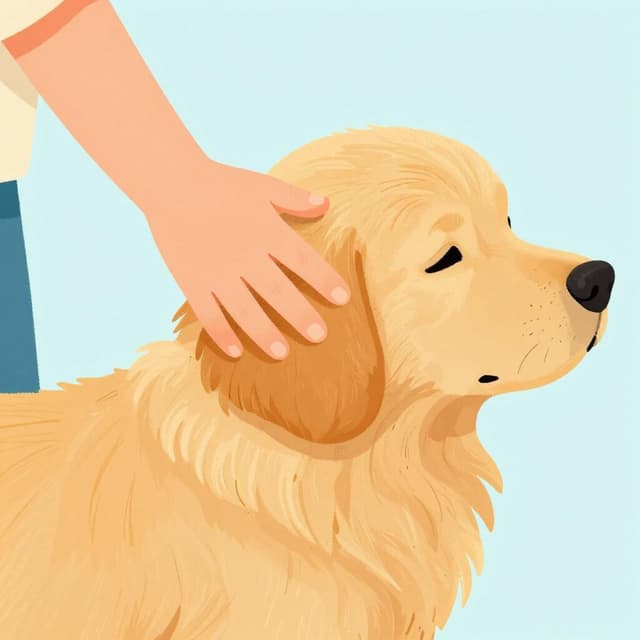
acariciar — to pet
Use 'acaricie' (yo/él/ella/usted) or 'acaricies' (tú) for wishes, doubts, or emotions about petting.
Formy acariciar Tryb Subj. teraźniejszy
Kiedy używać Tryb Subj. teraźniejszy
The present subjunctive is used after expressions of desire, doubt, emotion, or uncertainty. For example, 'Espero que acaricies bien a mi perro' (I hope you pet my dog well) or 'Dudo que acaricie al gato' (I doubt he/she pets the cat).
Uwagi dotyczące acariciar w czasie Tryb Subj. teraźniejszy
'Acariciar' is regular in the present subjunctive. The forms are derived from the 'yo' form of the present indicative ('acaricio'), dropping the -o and adding the opposite vowel endings: -e, -es, -e, -emos, -éis, -en.
Przykładowe zdania
Espero que acaricies a mi hámster.
I hope you pet my hamster.
tú
Quiero que usted acaricie a mi periquito.
I want you to pet my parakeet.
Ojalá acariciemos al nuevo cachorro.
Hopefully, we'll pet the new puppy.
nosotros
Dudo que ellos acarician al conejo.
I doubt they pet the rabbit.
ellos/ellas/ustedes
Częste błędy
Błąd: Using the indicative 'acaricias' instead of the subjunctive 'acaricies' after 'espero que'.
Poprawnie: 'Espero que acaricias' is wrong; 'Espero que acaricies' is correct.
Dlaczego: Expressions of hope, desire, and doubt trigger the subjunctive mood.
Błąd: Using the infinitive after expressions like 'quiero que'.
Poprawnie: 'Quiero que acariciar' is wrong; 'Quiero que acaricies' (or other subjunctive form) is correct.
Dlaczego: When the subject changes after 'que' (e.g., 'Yo quiero que tú...'), the verb must be in the subjunctive.
Opanuj hiszpańskie czasowniki w kontekście
Zapamiętywanie tabel to dopiero początek. Przeczytaj ponad 200 ilustrowanych i udźwiękowionych hiszpańskich historii, aby zobaczyć czasowniki takie jak 'acariciar' używane naturalnie — w czasach, których się uczysz.
Powiązane czasy
Czas teraźniejszy
yo: acaricio
Regular present forms like 'acaricio' (yo) or 'acaricia' (él/ella/usted) describe current or habitual petting.
Czas przeszły prosty
yo: acaricié
Regular preterite forms like 'acaricié' (yo) or 'acarició' (él/ella/usted) mark completed actions of petting.
Czas przeszły niedokonany
yo: acariciaba
Regular imperfect forms like 'acariciaba' (yo) or 'acariciaban' (ellos/ellas/ustedes) describe past ongoing or habitual petting.
Czas przyszły
yo: acariciaré
Regular future forms like 'acariciaré' (yo) or 'acariciarán' (ellos/ellas/ustedes) indicate future petting actions.
Tryb warunkowy
yo: acariciaría
Regular conditional forms like 'acariciaría' (yo) or 'acariciarían' (ellos/ellas/ustedes) express hypothetical petting ('would').
Tryb Subj. przeszły niedokonany
yo: acariciara
Use 'acariciara' or 'acariciase' (yo/él/ella/usted) for past hypothetical or uncertain situations involving petting.
Tryb rozkazujący (twierdzący)
yo: acaricia
Use imperative forms like 'acaricia' (tú) or 'acaricie' (usted) for direct commands with 'acariciar'.
Tryb rozkazujący (przeczący)
yo: no acaricies
Use 'no acaricies' (tú) or 'no acaricie' (usted) for negative commands with 'acariciar'.