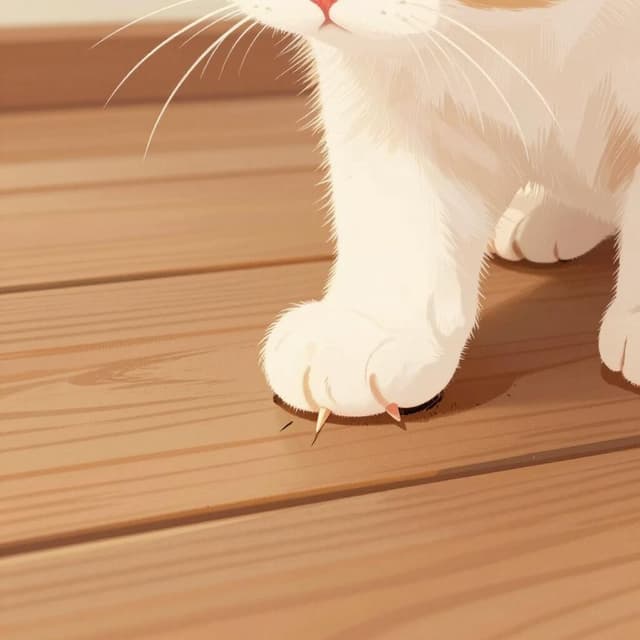
Koniugacja arañar Tryb warunkowy
arañar — to scratch
What would happen if one were to scratch.
Formy arañar Tryb warunkowy
Kiedy używać Tryb warunkowy
Use the conditional to express hypothetical situations ('would'), polite requests, or to talk about a future action from a past perspective. For 'arañar', it's about what scratching *would* do or what you *would* do if a certain condition were met.
Uwagi dotyczące arañar w czasie Tryb warunkowy
Arañar is regular in the conditional tense. The infinitive 'arañar' is the stem, and the standard conditional endings are added.
Przykładowe zdania
Si tuviera un gato, le compraría un rascador para que no arañara los muebles.
If I had a cat, I would buy it a scratching post so it wouldn't scratch the furniture.
él/ella/usted
Me pregunto si arañarías el coche si estuvieras enfadado.
I wonder if you would scratch the car if you were angry.
tú
Yo no arañaría la pared, es nueva.
I would not scratch the wall, it's new.
yo
¿Vosotros arañaríais el cristal?
Would you guys scratch the glass?
vosotros
Częste błędy
Błąd: Using the future tense instead of the conditional for 'would'.
Poprawnie: For hypothetical outcomes ('would'), use the conditional: 'arañaría', 'arañarías'.
Dlaczego: The conditional expresses hypothetical or counterfactual situations, while the future expresses certainty.
Błąd: Confusing the imperfect subjunctive with the conditional.
Poprawnie: While both can express hypotheticals, the conditional describes the *result* of a hypothetical condition ('I would scratch'), while the imperfect subjunctive often introduces the condition ('if I were...').
Dlaczego: Understanding the role of each tense in conditional sentences is key.
Opanuj hiszpańskie czasowniki w kontekście
Zapamiętywanie tabel to dopiero początek. Przeczytaj ponad 200 ilustrowanych i udźwiękowionych hiszpańskich historii, aby zobaczyć czasowniki takie jak 'arañar' używane naturalnie — w czasach, których się uczysz.
Powiązane czasy
Czas teraźniejszy
yo: araño
Scratching happening now, habitually, or generally.
Czas przeszły prosty
yo: arañé
Completed actions of scratching in the past.
Czas przeszły niedokonany
yo: arañaba
Ongoing or habitual scratching in the past.
Czas przyszły
yo: arañaré
The future action of scratching.
Tryb Subj. teraźniejszy
yo: arañe
Wishes, doubts, or emotions about scratching happening now or in the future.
Tryb Subj. przeszły niedokonany
yo: arañara
Hypothetical or past wishes/doubts about scratching.
Tryb rozkazujący (twierdzący)
yo: araña
Commands like 'scratch!' or 'let's scratch!' for arañar.
Tryb rozkazujący (przeczący)
yo: no arañes
Negative commands for arañar, like 'don't scratch!'.