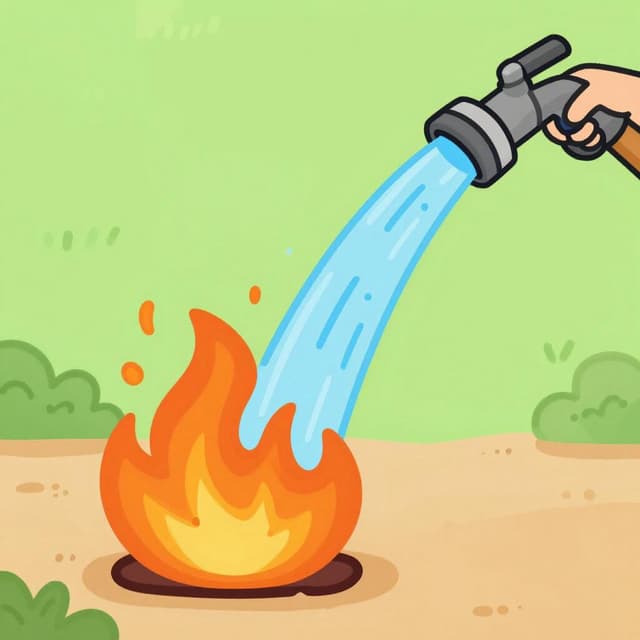
Koniugacja contrarrestar Czas teraźniejszy
contrarrestar — to counteract
Use contrarresto, contrarrestas, contrarresta, contrarrestamos, contrarrestáis, contrarrestan for actions happening now or habitually.
Formy contrarrestar Czas teraźniejszy
Kiedy używać Czas teraźniejszy
The present tense is for actions happening right now, habitual actions, or general truths. You might use it to describe how something generally works to counteract a problem, or state that you are currently countering a situation.
Uwagi dotyczące contrarrestar w czasie Czas teraźniejszy
Contrarrestar is a regular -ar verb and is regular in the present tense.
Przykładowe zdania
Yo contrarresto el estrés con meditación.
I counteract stress with meditation.
yo
¿Tú contrarrestas la fatiga con café?
Do you counteract fatigue with coffee?
tú
Este medicamento contrarresta el dolor.
This medicine counteracts pain.
él/ella/usted
Nosotros contrarrestamos los efectos secundarios con paciencia.
We counteract the side effects with patience.
nosotros
Ellos contrarrestan la mala racha con trabajo duro.
They counteract the losing streak with hard work.
ellos/ellas/ustedes
Częste błędy
Błąd: Using the infinitive 'contrarrestar' when a conjugated form is needed.
Poprawnie: Use 'contrarresto' for 'I counteract' or 'contrarresta' for 'he/she/it counteracts'.
Dlaczego: The infinitive is the base form; you need to conjugate it to match the subject and tense.
Błąd: Confusing the vosotros form 'contrarrestáis' with other forms.
Poprawnie: Remember the ending '-áis' for vosotros in the present indicative.
Dlaczego: It's a common point of confusion for learners, especially differentiating it from the él/ella/usted form 'contrarresta'.
Opanuj hiszpańskie czasowniki w kontekście
Zapamiętywanie tabel to dopiero początek. Przeczytaj ponad 200 ilustrowanych i udźwiękowionych hiszpańskich historii, aby zobaczyć czasowniki takie jak 'contrarrestar' używane naturalnie — w czasach, których się uczysz.
Powiązane czasy
Czas przeszły prosty
yo: contrarresté
The preterite of contrarrestar is regular: contrarreste, contrarrestaste, contrarrestó, contrarrestamos, contrarrestasteis, contrarrestaron.
Czas przeszły niedokonany
yo: contrarrestaba
Use contrarrestaba, contrarrestabas, contrarrestaba, contrarrestábamos, contrarrestabais, contrarrestaban for ongoing or habitual past actions.
Czas przyszły
yo: contrarrestaré
Use contrarrestaré, contrarrestarás, contrarrestará, contrarrestaremos, contrarrestaréis, contrarrestarán for future actions.
Tryb warunkowy
yo: contrarrestaría
Use contrarrestaría, contrarrestarías, contrarrestaría, contrarrestaríamos, contrarrestaríais, contrarrestarían for hypotheticals ('would').
Tryb Subj. teraźniejszy
yo: contrarreste
Use contrarreste, contrarrestes, contrarrestemos, contrarresten for wishes, doubts, emotions.
Tryb Subj. przeszły niedokonany
yo: contrarrestara
Use contrarrestara/contrarrestase forms for past hypotheticals or wishes.
Tryb rozkazujący (twierdzący)
yo: contrarresta
Use contrarresta, contrarreste, contrarrestemos, contrarresten, contrarrestad for direct commands.
Tryb rozkazujący (przeczący)
yo: no contrarrestes
Use 'no contrarrestes', 'no contrarreste', 'no contrarrestemos', 'no contrarresten', 'no contrarrestéis' for negative commands.