Koniugacja hornear Tryb Subj. przeszły niedokonany
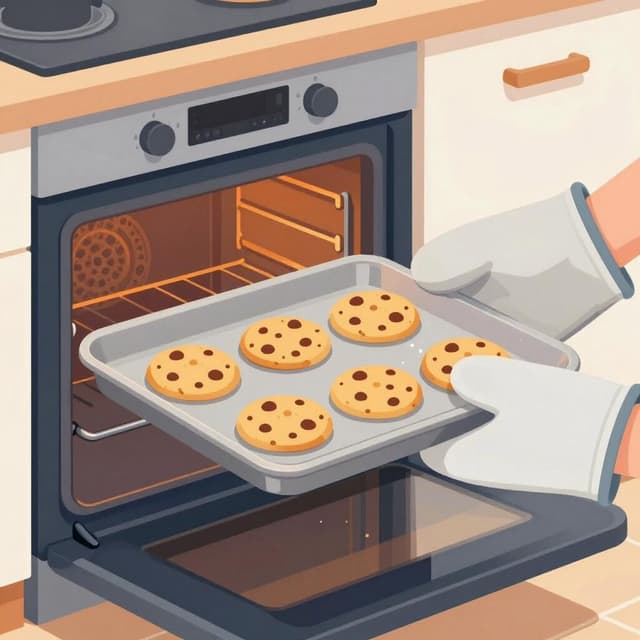
hornear — to bake
Past subjunctive uses like 'si horneara' (if I baked) or 'ojalá horneara' (I wish he/she baked).
Formy hornear Tryb Subj. przeszły niedokonany
Kiedy używać Tryb Subj. przeszły niedokonany
The imperfect subjunctive is used for hypothetical situations, wishes, doubts, or emotions in the past. For 'hornear,' you might say 'Quería que hornearas el pastel' (I wanted you to bake the cake) or 'Si horneara más a menudo, sería un gran chef' (If I baked more often, I would be a great chef).
Uwagi dotyczące hornear w czasie Tryb Subj. przeszły niedokonany
'Hornear' is regular in the imperfect subjunctive. Both the '-ra' and '-se' forms exist, but the '-ra' form (e.g., 'horneara', 'hornearas') is more common in everyday speech.
Przykładowe zdania
Si yo horneara más, mi familia estaría más feliz.
If I baked more, my family would be happier.
yo
Me pidió que no horneara nada dulce.
He asked me not to bake anything sweet.
yo
Ojalá hornearan pan fresco todos los días.
I wish they baked fresh bread every day.
ellos/ellas/ustedes
Él actuaría como si horneara profesionalmente.
He would act as if he baked professionally.
él/ella/usted
¿Tú qué harías si te dijera que hornearas mi receta?
What would you do if I told you to bake my recipe?
tú
Częste błędy
Błąd: Using the imperfect indicative instead of the imperfect subjunctive.
Poprawnie: In hypothetical clauses starting with 'si' or after expressions of doubt/desire, use the imperfect subjunctive (e.g., 'si horneara').
Dlaczego: The subjunctive mood is required for non-factual or hypothetical statements.
Błąd: Confusing the '-ra' and '-se' endings.
Poprawnie: While both are correct, 'horneara' is generally more common than 'hornease'.
Dlaczego: Regional and stylistic preferences can influence the choice between the two forms.
Opanuj hiszpańskie czasowniki w kontekście
Zapamiętywanie tabel to dopiero początek. Przeczytaj ponad 200 ilustrowanych i udźwiękowionych hiszpańskich historii, aby zobaczyć czasowniki takie jak 'hornear' używane naturalnie — w czasach, których się uczysz.
Powiązane czasy
Czas teraźniejszy
yo: horneo
Habits and current actions: 'Horneo pan' (I bake bread) often.
Czas przeszły prosty
yo: horneé
Completed actions: 'Horneé el pastel' (I baked the cake) yesterday.
Czas przeszły niedokonany
yo: horneaba
Past habits/descriptions: 'Horneaba pan' (I used to bake bread) daily.
Czas przyszły
yo: hornearé
Will bake: 'Hornearé pan' (I will bake bread) tomorrow.
Tryb warunkowy
yo: hornearía
Would bake: 'Hornearía un pastel' (I would bake a cake) if I had time.
Tryb Subj. teraźniejszy
yo: hornee
Subjunctive used after wishes, doubts, emotions: 'Espero que hornees' (I hope you bake).
Tryb rozkazujący (twierdzący)
yo: hornea
Commands like '¡Hornea!' (you bake!) and '¡Horneen!' (you all bake!).
Tryb rozkazujący (przeczący)
yo: no hornees
Negative commands like '¡No hornees!' (don't bake!) and '¡No horneen!' (you all don't bake!).