Koniugacja machacar Czas przyszły
machacar — to crush
The future tense of machacar is regular: add endings to the infinitive (machacaré, machacarás, etc.).
Formy machacar Czas przyszły
Kiedy używać Czas przyszły
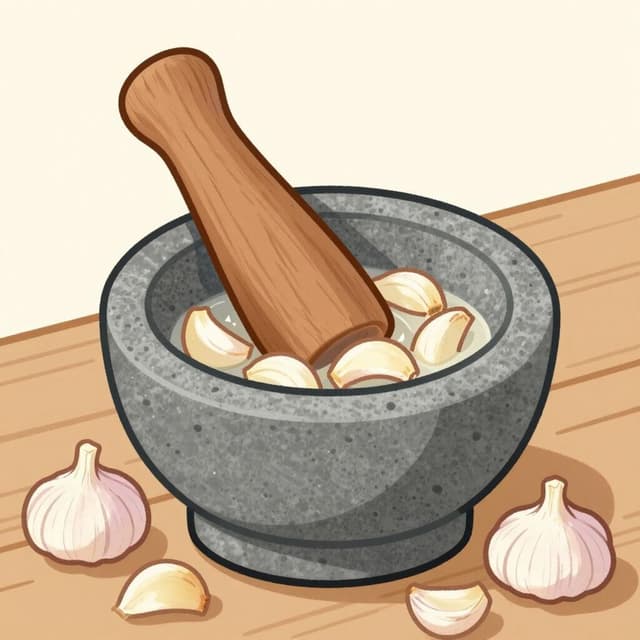
Use this to state that you will crush something in the future, whether it's a clove of garlic or a difficult exam.
Uwagi dotyczące machacar w czasie Czas przyszły
Machacar is fully regular in the future tense.
Przykładowe zdania
Machacaré las galletas para la base del pastel.
I will crush the cookies for the cake base.
yo
Si estudias así, machacarás el examen.
If you study like that, you will crush (ace) the exam.
tú
Ellos machacarán el hielo para los refrescos.
They will crush the ice for the sodas.
ellos/ellas/ustedes
Częste błędy
Błąd: Forgetting the accent on future endings.
Poprawnie: machacará
Dlaczego: All future tense forms except 'nosotros' require a written accent on the final vowel.
Opanuj hiszpańskie czasowniki w kontekście
Zapamiętywanie tabel to dopiero początek. Przeczytaj ponad 200 ilustrowanych i udźwiękowionych hiszpańskich historii, aby zobaczyć czasowniki takie jak 'machacar' używane naturalnie — w czasach, których się uczysz.
Powiązane czasy
Czas teraźniejszy
yo: machaco
The present tense of machacar is completely regular: machaco, machacas, machaca, machacamos, machacáis, machacan.
Czas przeszły prosty
yo: machaque
The preterite of machacar is regular except for the 'yo' form, which changes to 'machaqué'.
Czas przeszły niedokonany
yo: machacaba
The imperfect of machacar is regular: machacaba, machacabas, machacaba, machacábamos, machacabais, machacaban.
Tryb warunkowy
yo: machacaría
The conditional of machacar is regular: attach -ía endings to the full infinitive (machacaría, machacarías, etc.).
Tryb Subj. teraźniejszy
yo: machaque
The present subjunctive of machacar features a spelling change (c to qu) in all forms: machaque, machaques, machaque, machaquemos, machaquéis, machaquen.
Tryb Subj. przeszły niedokonany
yo: machacara
The imperfect subjunctive of machacar is regular, based on the third-person plural preterite: machacara, machacaras, machacara...
Tryb rozkazujący (twierdzący)
yo: machaca
The imperative of machacar uses the spelling change 'qu' for formal commands (machaque) and 'c' for informal (machaca).
Tryb rozkazujący (przeczący)
yo: no machaques
The negative imperative of machacar always uses the 'qu' spelling change: no machaques, no machaque, no machaquemos, etc.