Koniugacja machacar Czas przeszły prosty
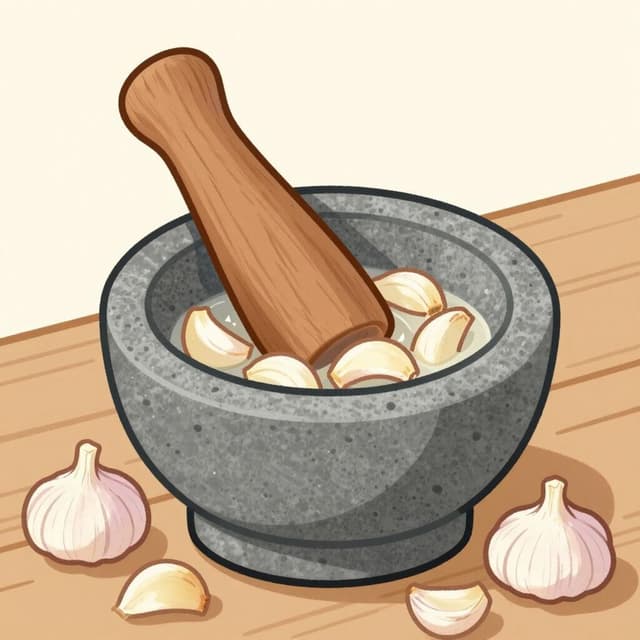
machacar — to crush
The preterite of machacar is regular except for the 'yo' form, which changes to 'machaqué'.
Formy machacar Czas przeszły prosty
Kiedy używać Czas przeszły prosty
Use the preterite to talk about a specific time you crushed something, like finishing a recipe or defeating an opponent in a past game.
Uwagi dotyczące machacar w czasie Czas przeszły prosty
Only the 'yo' form is irregular (spelling change): 'machaqué'. This ensures the 'k' sound is maintained before the 'e'.
Przykładowe zdania
Machaqué los aguacates para el guacamole.
I crushed the avocados for the guacamole.
yo
El equipo machacó al rival el domingo pasado.
The team crushed the rival last Sunday.
él/ella/usted
Ayer machacamos las uvas para el vino.
Yesterday we crushed the grapes for the wine.
nosotros
Częste błędy
Błąd: Writing 'machacé' for the 'yo' form.
Poprawnie: machaqué
Dlaczego: The letter 'c' sounds like 's/z' before 'e'. You need 'qu' to keep the hard 'k' sound from 'machacar'.
Opanuj hiszpańskie czasowniki w kontekście
Zapamiętywanie tabel to dopiero początek. Przeczytaj ponad 200 ilustrowanych i udźwiękowionych hiszpańskich historii, aby zobaczyć czasowniki takie jak 'machacar' używane naturalnie — w czasach, których się uczysz.
Powiązane czasy
Czas teraźniejszy
yo: machaco
The present tense of machacar is completely regular: machaco, machacas, machaca, machacamos, machacáis, machacan.
Czas przeszły niedokonany
yo: machacaba
The imperfect of machacar is regular: machacaba, machacabas, machacaba, machacábamos, machacabais, machacaban.
Czas przyszły
yo: machacaré
The future tense of machacar is regular: add endings to the infinitive (machacaré, machacarás, etc.).
Tryb warunkowy
yo: machacaría
The conditional of machacar is regular: attach -ía endings to the full infinitive (machacaría, machacarías, etc.).
Tryb Subj. teraźniejszy
yo: machaque
The present subjunctive of machacar features a spelling change (c to qu) in all forms: machaque, machaques, machaque, machaquemos, machaquéis, machaquen.
Tryb Subj. przeszły niedokonany
yo: machacara
The imperfect subjunctive of machacar is regular, based on the third-person plural preterite: machacara, machacaras, machacara...
Tryb rozkazujący (twierdzący)
yo: machaca
The imperative of machacar uses the spelling change 'qu' for formal commands (machaque) and 'c' for informal (machaca).
Tryb rozkazujący (przeczący)
yo: no machaques
The negative imperative of machacar always uses the 'qu' spelling change: no machaques, no machaque, no machaquemos, etc.