Koniugacja quitar Tryb rozkazujący (twierdzący)
quitar — remove
The affirmative imperative of quitar is quita (tú), quite (usted), and quitad (vosotros).
Formy quitar Tryb rozkazujący (twierdzący)
Kiedy używać Tryb rozkazujący (twierdzący)
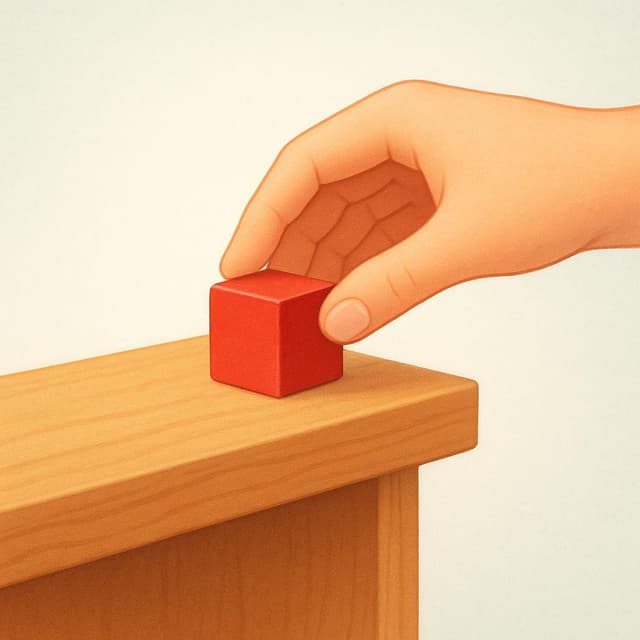
Use this for direct commands to remove something—like telling a child 'Take your hands off that' or a waiter 'Remove the plates'.
Uwagi dotyczące quitar w czasie Tryb rozkazujący (twierdzący)
Quitar is regular. The 'tú' form is identical to the present indicative 'él' form.
Przykładowe zdania
¡Quita las manos de ahí!
Take your hands off that!
tú
Quite la tapa antes de calentar el plato.
Remove the lid before heating the dish.
usted
Quitad los abrigos y entrad.
Take off your coats and come in.
vosotros
Częste błędy
Błąd: Using 'quite' for the informal tú command.
Poprawnie: Use 'quita' for tú; 'quite' is for usted.
Dlaczego: Learners often mix up the formal and informal command forms.
Opanuj hiszpańskie czasowniki w kontekście
Zapamiętywanie tabel to dopiero początek. Przeczytaj ponad 200 ilustrowanych i udźwiękowionych hiszpańskich historii, aby zobaczyć czasowniki takie jak 'quitar' używane naturalnie — w czasach, których się uczysz.
Powiązane czasy
Czas teraźniejszy
yo: quito
The present tense of quitar is regular: quito, quitas, quita, quitamos, quitáis, quitan.
Czas przeszły prosty
yo: quité
The preterite of quitar is regular: quité, quitaste, quitó, quitamos, quitasteis, quitaron.
Czas przeszły niedokonany
yo: quitaba
The imperfect of quitar follows the standard -aba pattern: quitaba, quitabas, quitaba, quitábamos, quitabais, quitaban.
Czas przyszły
yo: quitaré
The future of quitar uses the infinitive as a stem: quitaré, quitarás, quitará, quitaremos, quitaréis, quitarán.
Tryb warunkowy
yo: quitaría
The conditional of quitar is regular: quitaría, quitarías, quitaría, quitaríamos, quitaríais, quitarían.
Tryb Subj. teraźniejszy
yo: quite
The present subjunctive of quitar swaps -ar for -e: quite, quites, quite, quitemos, quitéis, quiten.
Tryb Subj. przeszły niedokonany
yo: quitara
The imperfect subjunctive of quitar uses the preterite stem: quitara, quitaras, quitara, quitáramos, quitarais, quitaran.
Tryb rozkazujący (przeczący)
yo: no quites
The negative imperative of quitar uses the present subjunctive: no quites, no quite, no quitemos, no quitéis, no quiten.