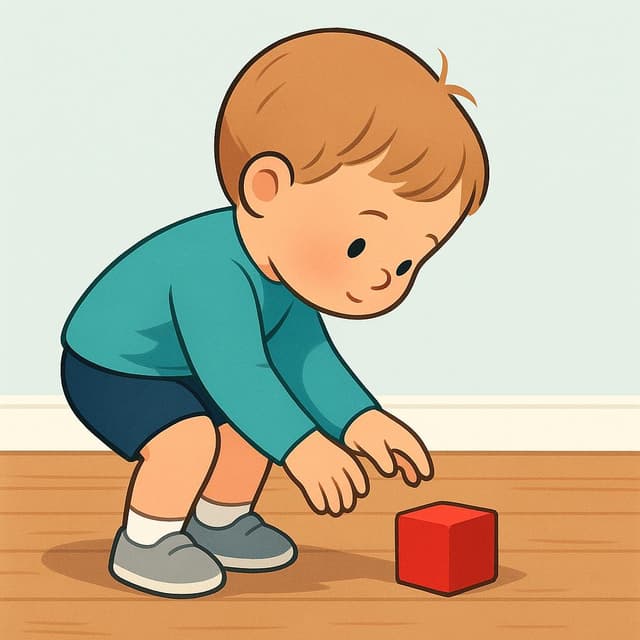
Koniugacja recoger Czas przeszły niedokonany
recoger — to pick up
The imperfect of recoger is regular: recogía, recogías, recogía, recogíamos, recogíais, recogían.
Formy recoger Czas przeszły niedokonany
Kiedy używać Czas przeszły niedokonany
Use this to describe habitual past actions (e.g., 'I used to pick up my sister') or ongoing background actions (e.g., 'I was tidying up when the phone rang').
Uwagi dotyczące recoger w czasie Czas przeszły niedokonany
Recoger is regular in the imperfect. All -er verbs in this tense use the endings -ía, -ías, -ía, etc., with an accent on the 'i'.
Przykładowe zdania
De niño, yo nunca recogía mis juguetes.
As a child, I never used to pick up my toys.
yo
Mientras ella recogía la cocina, él ponía la tele.
While she was tidying the kitchen, he turned on the TV.
él/ella/usted
Recogíamos a los abuelos todos los domingos.
We used to pick up our grandparents every Sunday.
nosotros
Częste błędy
Błąd: Forgetting the accent on the 'i' (writing 'recogia').
Poprawnie: recogía
Dlaczego: All forms of -er verbs in the imperfect require an accent on the 'i' to maintain the correct stress.
Opanuj hiszpańskie czasowniki w kontekście
Zapamiętywanie tabel to dopiero początek. Przeczytaj ponad 200 ilustrowanych i udźwiękowionych hiszpańskich historii, aby zobaczyć czasowniki takie jak 'recoger' używane naturalnie — w czasach, których się uczysz.
Powiązane czasy
Czas teraźniejszy
yo: recojo
Recoger has a spelling change in the 'yo' form (recojo) to keep the 'h' sound, but is otherwise regular.
Czas przeszły prosty
yo: recogí
The preterite of recoger is regular: recogí, recogiste, recogió, recogimos, recogisteis, recogieron.
Czas przyszły
yo: recogeré
The future of recoger is regular: recogeré, recogerás, recogerá, recogeremos, recogeréis, recogerán.
Tryb warunkowy
yo: recogería
The conditional of recoger is regular: recogería, recogerías, recogería, recogeríamos, recogeríais, recogerían.
Tryb Subj. teraźniejszy
yo: recoja
The present subjunctive of recoger uses the 'j' spelling in all forms: recoja, recojas, recoja, recojamos, recojáis, recojan.
Tryb Subj. przeszły niedokonany
yo: recogiera
The imperfect subjunctive of recoger is regular: recogiera, recogieras, recogiera, recogiéramos, recogierais, recogieran.
Tryb rozkazujący (twierdzący)
yo: recoge
The imperative uses 'recoge' (tú) and 'recoja' (usted). Note the 'j' in the formal and plural forms.
Tryb rozkazujący (przeczący)
yo: no recojas
The negative imperative always uses a 'j': no recojas, no recoja, no recojamos, no recojáis, no recojan.