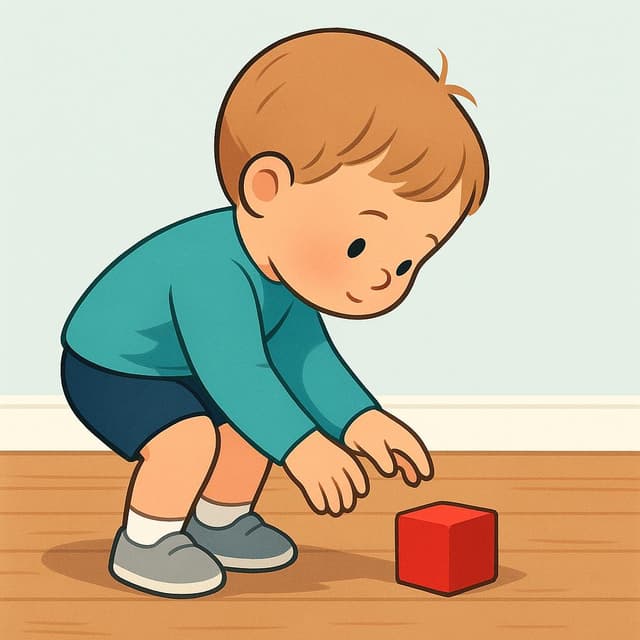
Koniugacja recoger Czas przeszły prosty
recoger — to pick up
The preterite of recoger is regular: recogí, recogiste, recogió, recogimos, recogisteis, recogieron.
Formy recoger Czas przeszły prosty
Kiedy używać Czas przeszły prosty
Use the preterite to talk about a specific time you picked someone up or finished tidying a room. It focuses on the action as a completed event.
Uwagi dotyczące recoger w czasie Czas przeszły prosty
In the preterite, recoger is completely regular. Unlike the present tense, the 'g' remains a 'g' throughout because it is followed by 'i' or 'e'.
Przykładowe zdania
Recogí a mi hermano del aeropuerto ayer.
I picked up my brother from the airport yesterday.
yo
¿Recogiste tu habitación por fin?
Did you finally tidy up your room?
tú
Recogieron todos los juguetes después de la fiesta.
They picked up all the toys after the party.
ellos/ellas/ustedes
Częste błędy
Błąd: Using 'recojí' with a 'j'.
Poprawnie: Recogí
Dlaczego: Learners often over-apply the 'g' to 'j' spelling change from the present tense. In the preterite, the 'g' stays because 'gi' already makes the 'h' sound.
Opanuj hiszpańskie czasowniki w kontekście
Zapamiętywanie tabel to dopiero początek. Przeczytaj ponad 200 ilustrowanych i udźwiękowionych hiszpańskich historii, aby zobaczyć czasowniki takie jak 'recoger' używane naturalnie — w czasach, których się uczysz.
Powiązane czasy
Czas teraźniejszy
yo: recojo
Recoger has a spelling change in the 'yo' form (recojo) to keep the 'h' sound, but is otherwise regular.
Czas przeszły niedokonany
yo: recogía
The imperfect of recoger is regular: recogía, recogías, recogía, recogíamos, recogíais, recogían.
Czas przyszły
yo: recogeré
The future of recoger is regular: recogeré, recogerás, recogerá, recogeremos, recogeréis, recogerán.
Tryb warunkowy
yo: recogería
The conditional of recoger is regular: recogería, recogerías, recogería, recogeríamos, recogeríais, recogerían.
Tryb Subj. teraźniejszy
yo: recoja
The present subjunctive of recoger uses the 'j' spelling in all forms: recoja, recojas, recoja, recojamos, recojáis, recojan.
Tryb Subj. przeszły niedokonany
yo: recogiera
The imperfect subjunctive of recoger is regular: recogiera, recogieras, recogiera, recogiéramos, recogierais, recogieran.
Tryb rozkazujący (twierdzący)
yo: recoge
The imperative uses 'recoge' (tú) and 'recoja' (usted). Note the 'j' in the formal and plural forms.
Tryb rozkazujący (przeczący)
yo: no recojas
The negative imperative always uses a 'j': no recojas, no recoja, no recojamos, no recojáis, no recojan.