
Acabar de + infinitivo vs Pretérito
Use 'acabar de' for something that *just* happened. Use the preterite (past tense) for anything else in the past.
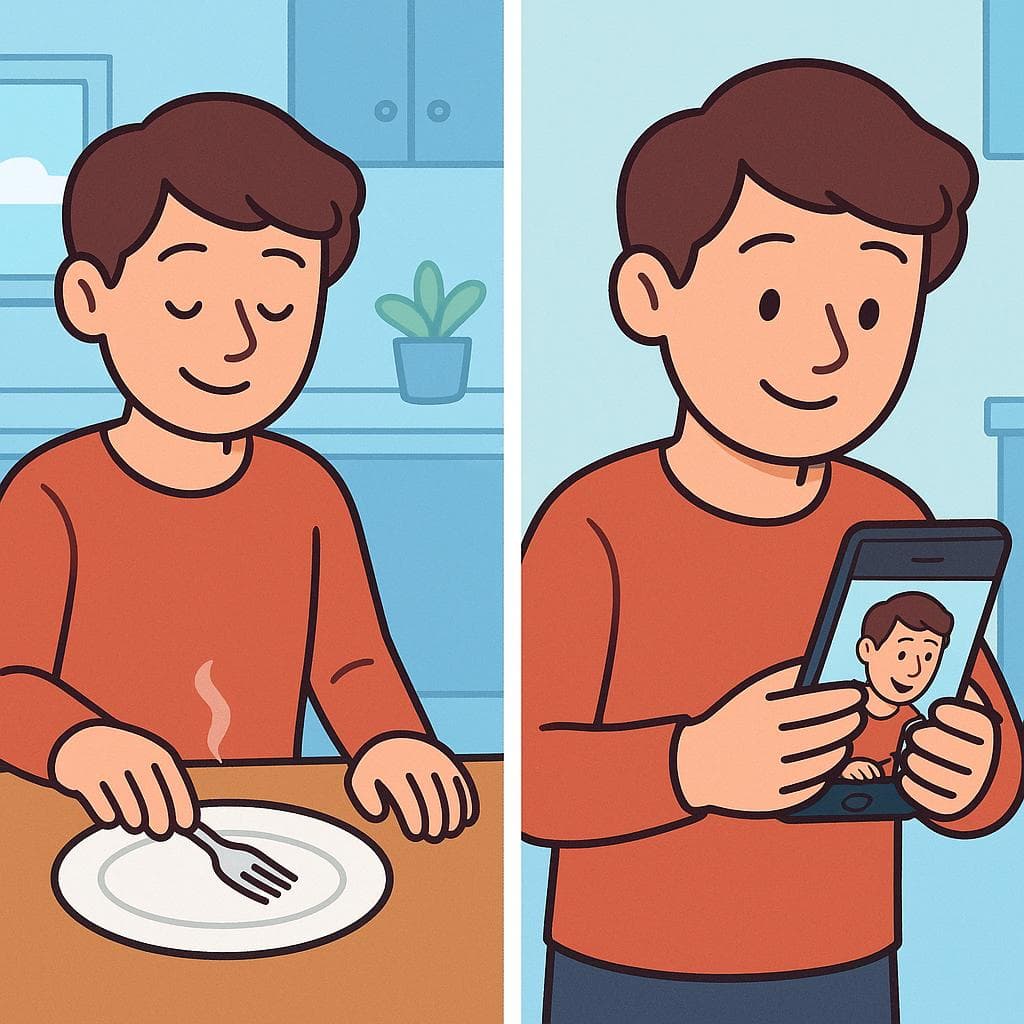
acabar de + infinitivo
To have just done something. This structure emphasizes that an action was completed in the very recent past.
ah-kah-BAR deh een-fee-nee-TEE-vohpretérito
The simple past tense (preterite). It describes completed actions in the past without the special emphasis on 'just now'.
preh-TEH-ree-tohQuick Rule
Use 'acabar de' for something that *just* happened. Use the preterite (past tense) for anything else in the past.
Think 'Acabar de' = 'A minute ago'. It's for the immediate past.
- The definition of 'just' is flexible. 'Acabo de comer' could mean 30 seconds ago or 30 minutes ago, depending on the context. It's about the feeling of recentness.
Comparison Table
| Context | acabar de + infinitivo | pretérito | Why? |
|---|---|---|---|
| Arriving somewhere | Acabo de llegar. | Llegué hace una hora. | Use 'acabar de' for 'just now'. Use preterite for a specific past time. |
| Eating a meal | Acabamos de comer. | Comimos a las dos. | 'Acabamos de' implies you just put your fork down. 'Comimos' states when the past action happened. |
| Receiving news | Me acabo de enterar. | Me enteré anoche. | 'Acabar de' is for 'I just found out'. Preterite is for finding out at a more distant past time. |
| Finishing a task | Ella acaba de enviar el email. | Ella envió el email esta mañana. | 'Acaba de' means seconds or minutes ago. 'Envió' places the action firmly in the past. |
When to Use "acabar de + infinitivo / pretérito"
acabar de + infinitivo
To have just done something. This structure emphasizes that an action was completed in the very recent past.
ah-kah-BAR deh een-fee-nee-TEE-voh
Action finished moments ago
Acabo de llegar a casa.
I just got home.
Giving very recent news
Mi hermana acaba de llamar.
My sister just called.
Explaining a current state
¿Por qué estás sin aliento? Es que acabo de correr.
Why are you out of breath? It's because I just ran.
pretérito
The simple past tense (preterite). It describes completed actions in the past without the special emphasis on 'just now'.
preh-TEH-ree-toh
Action finished earlier today
Llegué a casa esta mañana.
I got home this morning.
Action finished yesterday or before
Mi hermana llamó ayer.
My sister called yesterday.
Narrating a sequence of past events
Corrí por el parque, compré agua y volví a casa.
I ran through the park, bought water, and came back home.
Contrast Examples
With "acabar de + infinitivo":
Acabo de ver la película. ¡Hablemos de ella!
I just saw the movie. Let's talk about it!
With "pretérito":
Vi la película el fin de semana pasado.
I saw the movie last weekend.
The Difference: 'Acabo de ver' means you literally just finished it and it's fresh in your mind. 'Vi' places the event in the more distant past.
With "acabar de + infinitivo":
¡Acabo de terminar el libro! ¡Qué final!
I just finished the book! What an ending!
With "pretérito":
Terminé el libro anoche.
I finished the book last night.
The Difference: Use 'acabo de terminar' to express the immediate excitement of finishing. Use the preterite ('terminé') to simply report when the action was completed.
With "acabar de + infinitivo":
No puedo hablar ahora, acabo de empezar una reunión.
I can't talk right now, I just started a meeting.
With "pretérito":
Estuve ocupado porque empecé una reunión a las 9.
I was busy because I started a meeting at 9.
The Difference: 'Acabo de empezar' connects the recent past action to the present situation. The preterite ('empecé') describes a past event as a point in a narrative.
Common Mistakes
Acabo de comer ayer.
Comí ayer.
'Acabar de' is only for the immediate past. For specific times like 'yesterday' (ayer), you must use a past tense like the preterite.
Justo comí.
Acabo de comer.
While this is a direct translation from English 'I just ate', the natural and most common way to say this in Spanish is with 'acabar de + infinitivo'.
Quick Practice
Quick Quiz: Acabar de + infinitivo vs Pretérito
Question 1 of 2
You just got off the phone. How do you tell your friend? '___ hablar con mi mamá.'
Related Grammar
Want to understand the grammar behind this pair? Explore these lessons for a deep dive:
Preterite Tense (Regular Verbs)
The preterite is the main alternative to 'acabar de' for past actions.
Preterite Tense (Irregular Verbs)
Many common verbs have irregular preterite forms you'll need to know.
Preterite vs Imperfect Overview
This is the next major step in mastering Spanish past tenses.
Key Words
Tags
Build the instinct, not just the rule
Rules help you get it right; context makes it automatic. Read 200+ illustrated and narrated Spanish stories to see confusing pairs chosen correctly — over and over — until you stop thinking about it.
Frequently Asked Questions
Does 'acabar de' always have to mean seconds ago?
Not necessarily. It's about the speaker's perception of 'recentness'. If you say 'Acabo de leer un libro increíble', it might mean you finished it this morning, but the feeling is still fresh. However, you would never use it for something that happened yesterday or last year.
Can I use 'acabar de' in other tenses, like the imperfect?
Yes, you can! 'Acababa de llegar cuando sonó el teléfono' means 'I had just arrived when the phone rang'. It describes an action that had 'just happened' from a perspective in the past. This is a more advanced structure you'll learn later on.