
Al + Infinitive vs Cuando + Verb
Use 'al + infinitive' for a quick 'upon doing something'. Use 'cuando + verb' for a more general 'when something happens'.
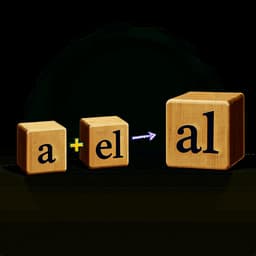
al + infinitive
A concise structure meaning 'upon' or 'on' doing something. It links two actions that happen at the same time or one right after the other.
al + een-fee-nee-TEE-vohcuando + verb
The standard and most flexible way to say 'when'. It introduces a clause that specifies the time an action occurs.
KWAN-dohQuick Rule
Use 'al + infinitive' for a quick 'upon doing something'. Use 'cuando + verb' for a more general 'when something happens'.
Think: 'Al' = At the moment of. 'Cuando' = When, in general.
- 'Al + infinitive' only works when the person doing both actions is the same. 'Cuando' can be used with different people.
Comparison Table
| Context | al + infinitive | cuando + verb | Why? |
|---|---|---|---|
| Immediate Action (Same Subject) | Al salir, apaga la luz. | Cuando salgas, apaga la luz. | Both are correct. 'Al' is more concise and emphasizes 'at the very moment of leaving'. |
| Different Subjects | (Not possible) | Cuando llegó el jefe, todos se pusieron a trabajar. | You must use 'cuando' because the subjects ('el jefe' and 'todos') are different. |
| Describing a Past State | (Not used) | Cuando vivía en España, comía paella cada semana. | 'Cuando' is perfect for setting the scene or describing a condition over a period of time in the past. |
| Future Actions | (Not used) | Cuando termine la película, iremos a cenar. | To connect a future action with 'when', you must use 'cuando' (often with a subjunctive verb). |
When to Use "al + infinitive / cuando + verb"
al + infinitive
A concise structure meaning 'upon' or 'on' doing something. It links two actions that happen at the same time or one right after the other.
al + een-fee-nee-TEE-voh
An action happening at the same time
Al entrar, saludé a todos.
Upon entering, I greeted everyone.
An immediate cause and effect
Al ver el perro, el niño sonrió.
On seeing the dog, the child smiled.
When the subject is the same for both actions
Al terminar la tarea, me fui a dormir.
Upon finishing the homework, I went to sleep.
cuando + verb
The standard and most flexible way to say 'when'. It introduces a clause that specifies the time an action occurs.
KWAN-doh + conjugated verb
A general time reference
Cuando era niño, jugaba mucho.
When I was a child, I used to play a lot.
When the subjects of the actions are different
Cuando tú llegaste, yo ya estaba comiendo.
When you arrived, I was already eating.
With any verb tense (past, present, or future)
Llámame cuando llegues.
Call me when you arrive.
Contrast Examples
With "al + infinitive":
Al llegar a casa, me quito los zapatos.
Upon arriving home, I take off my shoes.
With "cuando + verb":
Cuando llego a casa, me quito los zapatos.
When I arrive home, I take off my shoes.
The Difference: Both are correct and mean almost the same thing. 'Al llegar' is a slightly more compact and elegant way to express the immediate sequence of events.
With "al + infinitive":
(Not possible to express this idea)
With "cuando + verb":
Cuando mi hermano me dio la noticia, me puse muy feliz.
When my brother gave me the news, I became very happy.
The Difference: This is the most important difference. Because the person giving the news ('mi hermano') is different from the person getting happy ('yo'), you must use 'cuando'.
Common Mistakes
Al llegas a casa, lees un libro.
Al llegar a casa, lees un libro.
After 'al', the verb must be in its base form (the infinitive, like 'llegar'), not conjugated like 'llegas'.
Al llegar ella, yo me fui.
Cuando ella llegó, yo me fui.
You can't use 'al + infinitive' when the two actions have different subjects ('ella' and 'yo'). You must use 'cuando'.
Al yo terminar, me sentí aliviado.
Al terminar, me sentí aliviado.
You don't need a subject pronoun like 'yo' with 'al + infinitive'. The subject is understood from the main part of the sentence ('me sentí').
Quick Practice
Quick Quiz: Al + Infinitive vs Cuando + Verb
Question 1 of 3
Which sentence is correct?
Related Grammar
Want to understand the grammar behind this pair? Explore these lessons for a deep dive:
Key Words

Tags
Build the instinct, not just the rule
Rules help you get it right; context makes it automatic. Read 200+ illustrated and narrated Spanish stories to see confusing pairs chosen correctly — over and over — until you stop thinking about it.
Frequently Asked Questions
Can I always replace 'cuando' with 'al + infinitive' if the subject is the same?
Almost, but not always. 'Al + infinitive' is best for quick, immediate actions. For describing a longer state or condition in the past, like 'When I was young...', you should always use 'cuando'.
Is 'al + infinitive' very common in spoken Spanish?
Yes, it's quite common in both spoken and written Spanish. It makes your sentences sound more fluid and advanced. While 'cuando' is always a safe bet, learning to use 'al + infinitive' will make you sound more like a native speaker.