
Ante vs Delante de
Use 'ante' for figurative situations. Use 'delante de' for physical location.
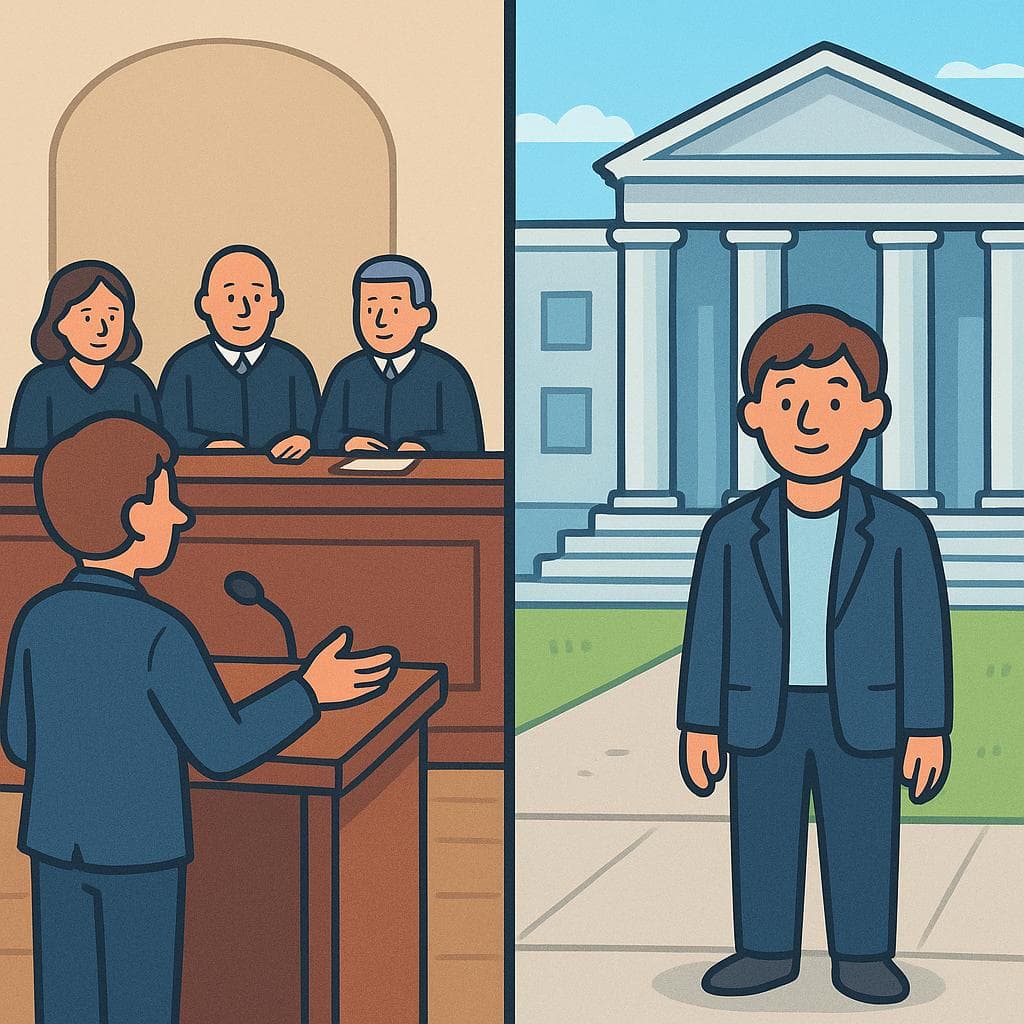
ante
Before, in the presence of, in the face of (often figurative, abstract, or formal)
AHN-tehdelante de
In front of (physical location)
deh-LAHN-teh dehQuick Rule
Use 'ante' for figurative situations. Use 'delante de' for physical location.
Think: 'Ante' is for 'in the face of' a problem. 'Delante' is for 'in front of' a door.
- You might see 'ante' used for physical location in very formal or literary writing, but in conversation, always use 'delante de'.
Comparison Table
| Context | ante | delante de | Why? |
|---|---|---|---|
| Legal/Formal Setting | Declaró ante el tribunal. | Esperó delante del tribunal. | 'Ante' for a formal appearance 'before' an authority; 'delante de' for the physical location 'in front of' the building. |
| A Problem or Danger | Mantuvo la calma ante el peligro. | Había una señal de peligro delante de él. | 'Ante' for the abstract concept of 'facing' danger; 'delante de' for a physical object in front of you. |
| Presence of People | Mostró respeto ante sus mayores. | Se sentó delante de su abuela. | 'Ante' implies a formal, respectful presence. 'Delante de' simply describes who you are physically in front of. |
When to Use "ante / delante de"
ante
Before, in the presence of, in the face of (often figurative, abstract, or formal)
AHN-teh
In the presence of an authority
Habló ante el juez.
He spoke before the judge.
When faced with a situation or problem
Ante la duda, es mejor esperar.
When in doubt (in the face of doubt), it's better to wait.
To show a reaction to something
Se emocionó ante tal regalo.
He got emotional at (in the face of) such a gift.
delante de
In front of (physical location)
deh-LAHN-teh deh
Physical position (in front of)
El coche está delante de la casa.
The car is in front of the house.
In someone's line of sight
No te pares delante de la televisión.
Don't stand in front of the television.
In someone's presence (informal)
No digas eso delante de los niños.
Don't say that in front of the kids.
Contrast Examples
With "ante":
El acusado se presentó ante el juez.
The defendant appeared before the judge.
With "delante de":
El abogado se sentó delante del juez.
The lawyer sat in front of the judge.
The Difference: 'Ante' implies a formal appearance before an authority. 'Delante de' simply describes the physical position in the room.
With "ante":
Ante la noticia, se quedó sin palabras.
In the face of the news, he was left speechless.
With "delante de":
Le dio la noticia delante de todos.
He gave him the news in front of everyone.
The Difference: 'Ante' describes the reaction to an abstract thing (the news). 'Delante de' describes the physical setting where the action happened (in front of people).
Common Mistakes
El perro está ante la puerta.
El perro está delante de la puerta.
For simple physical location ('in front of'), always use 'delante de'. 'Ante' sounds overly formal and poetic here.
Habló delante del juez.
Habló ante el juez.
While he was physically in front of the judge, the correct preposition for speaking 'before' an authority in a formal setting is 'ante'.
Quick Practice
Quick Quiz: Ante vs Delante de
Question 1 of 2
El gato se sentó ___ la chimenea para calentarse.
Related Grammar
Want to understand the grammar behind this pair? Explore these lessons for a deep dive:
Key Words

Tags
Build the instinct, not just the rule
Rules help you get it right; context makes it automatic. Read 200+ illustrated and narrated Spanish stories to see confusing pairs chosen correctly — over and over — until you stop thinking about it.
Frequently Asked Questions
Can I ever use 'ante' for physical location?
Yes, but it's very rare and sounds quite literary or formal. You might see 'se paró ante la puerta' (he stood before the door) in a novel, but in everyday speech, 'delante de la puerta' is always used. It's safest to stick to 'delante de' for physical locations.
What's the difference between 'delante de' and 'frente a'?
'Delante de' means 'in front of', implying something is between you and the object. 'Frente a' often means 'facing' or 'opposite'. For example, 'Estoy delante del cine' (I'm in front of the cinema), but 'Vivo frente al cine' (I live opposite the cinema).