
Antes de vs Delante de
Antes de = before in TIME. Delante de = in front of in SPACE.
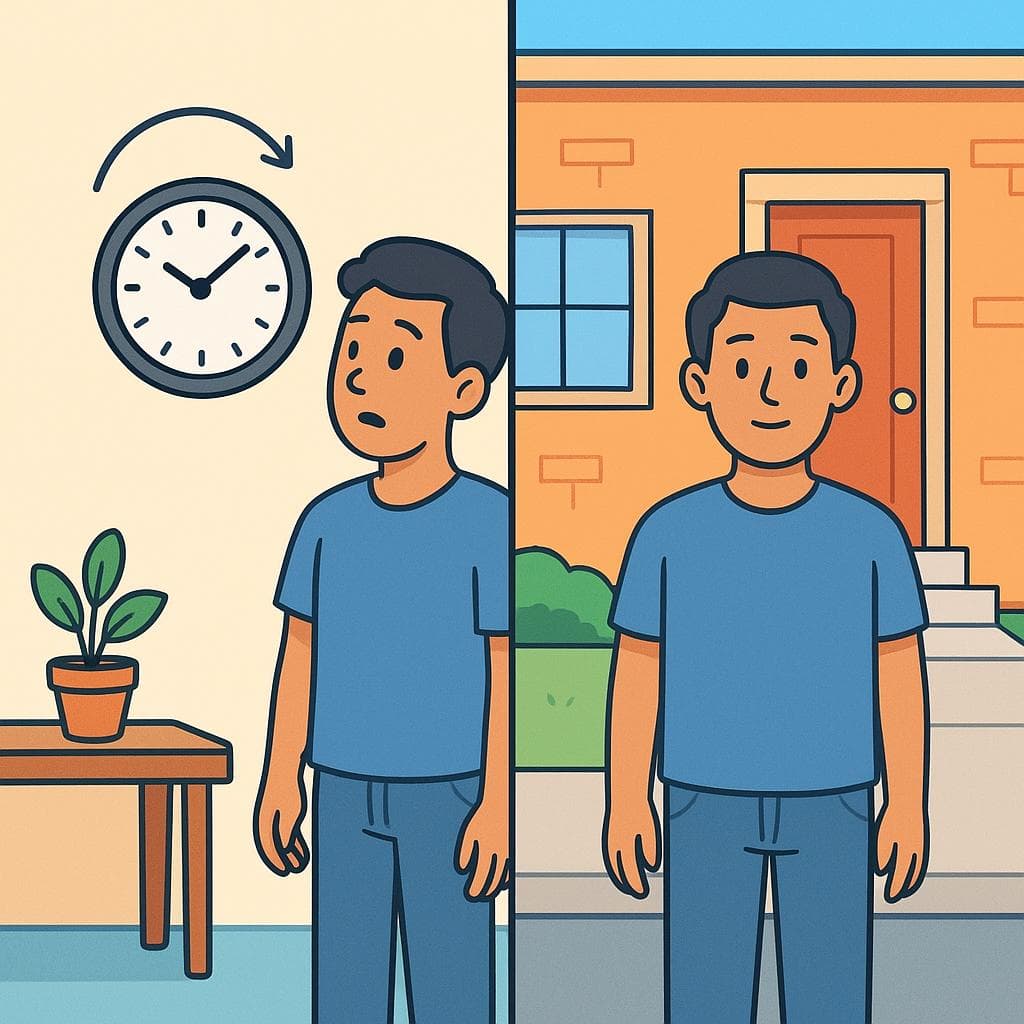
antes de
Before (referring to time, sequence, or order)
AHN-tess dehdelante de
In front of (referring to physical location or position)
deh-LAHN-teh dehQuick Rule
Antes de = before in TIME. Delante de = in front of in SPACE.
Think: Antes de = cAlendar (time). Delante de = Doorway (space).
- The English word 'before' can mean both time and space, which is the main source of confusion. Spanish is more precise and requires you to choose.
Comparison Table
| Context | antes de | delante de | Why? |
|---|---|---|---|
| Giving Directions | Gira a la izquierda antes del semáforo. | La farmacia está delante del banco. | 'Antes de' marks a point in a sequence of travel. 'Delante de' describes a static physical location. |
| Daily Routine | Siempre tomo un café antes de salir. | Dejé las llaves delante de la puerta. | 'Antes de' describes the order of your actions. 'Delante de' describes where you physically placed an object. |
| At an Event | Llegamos antes del comienzo del concierto. | Nos sentamos delante del escenario. | 'Antes de' refers to arriving at a time prior to the start. 'Delante de' refers to your physical position in the venue. |
When to Use "antes de / delante de"
antes de
Before (referring to time, sequence, or order)
AHN-tess deh
Sequence of actions
Lávate las manos antes de comer.
Wash your hands before eating.
Referring to a point in time
Necesito terminar esto antes del viernes.
I need to finish this before Friday.
Ordering events historically
Antes de la invención del coche, la gente viajaba a caballo.
Before the invention of the car, people traveled by horse.
delante de
In front of (referring to physical location or position)
deh-LAHN-teh deh
Physical position
El coche está aparcado delante de la casa.
The car is parked in front of the house.
Position in a line or queue
La chica delante de mí en la fila es muy alta.
The girl in front of me in the line is very tall.
In the presence of others
No discutas delante de los niños.
Don't argue in front of the children.
Contrast Examples
With "antes de":
Tenemos que comprar las entradas antes de que se agoten.
We have to buy the tickets before they sell out.
With "delante de":
Te espero delante del cine a las ocho.
I'll wait for you in front of the cinema at eight.
The Difference: 'Antes de' is about the timing (we must act before a certain point in time). 'Delante de' is about the physical meeting spot (our location in space).
With "antes de":
Revisa tu pedido antes de pagar.
Check your order before you pay.
With "delante de":
La persona delante de mí está pagando ahora.
The person in front of me is paying now.
The Difference: 'Antes de' gives an instruction about the sequence of events (first check, then pay). 'Delante de' describes the physical position of someone in the line.
Common Mistakes
Me cepillo los dientes delante de dormir.
Me cepillo los dientes antes de dormir.
Sleeping is an event in time, part of a sequence. Use 'antes de' to talk about the order of actions.
Hay un árbol muy grande antes de mi casa.
Hay un árbol muy grande delante de mi casa.
You are describing the physical location of the tree. Use 'delante de' for 'in front of'. ('Antes de mi casa' would mean you pass the tree just before you reach your house on a journey).
Quick Practice
Quick Quiz: Antes de vs Delante de
Question 1 of 2
Which is correct? 'Nos vemos ___ del restaurante.'
Related Grammar
Want to understand the grammar behind this pair? Explore these lessons for a deep dive:
Key Words


Tags
Build the instinct, not just the rule
Rules help you get it right; context makes it automatic. Read 200+ illustrated and narrated Spanish stories to see confusing pairs chosen correctly — over and over — until you stop thinking about it.
Frequently Asked Questions
Can I just use 'antes' and 'delante' without 'de'?
Yes, but they function differently. 'Antes' (before) and 'delante' (in front) can be used as adverbs on their own. You add 'de' when you need to connect them to a noun, like 'delante de la casa' (in front of the house) or 'antes del examen' (before the exam).
What's the difference between 'delante de' and 'enfrente de'?
They are very similar and often interchangeable for 'in front of'. 'Enfrente de' can also mean 'opposite' or 'across from'. 'Delante de' is more strictly 'in front of' in the sense of being ahead in a line or facing the same direction.