
Conmigo vs Con Mí
Always use 'conmigo'. 'Con mí' is incorrect 99% of the time.
conmigo
With me. This is the special, combined word you must use.
kohn-MEE-gohcon mí
With me. This is almost always an incorrect, literal translation from English.
kohn MEEQuick Rule
Always use 'conmigo'. 'Con mí' is incorrect 99% of the time.
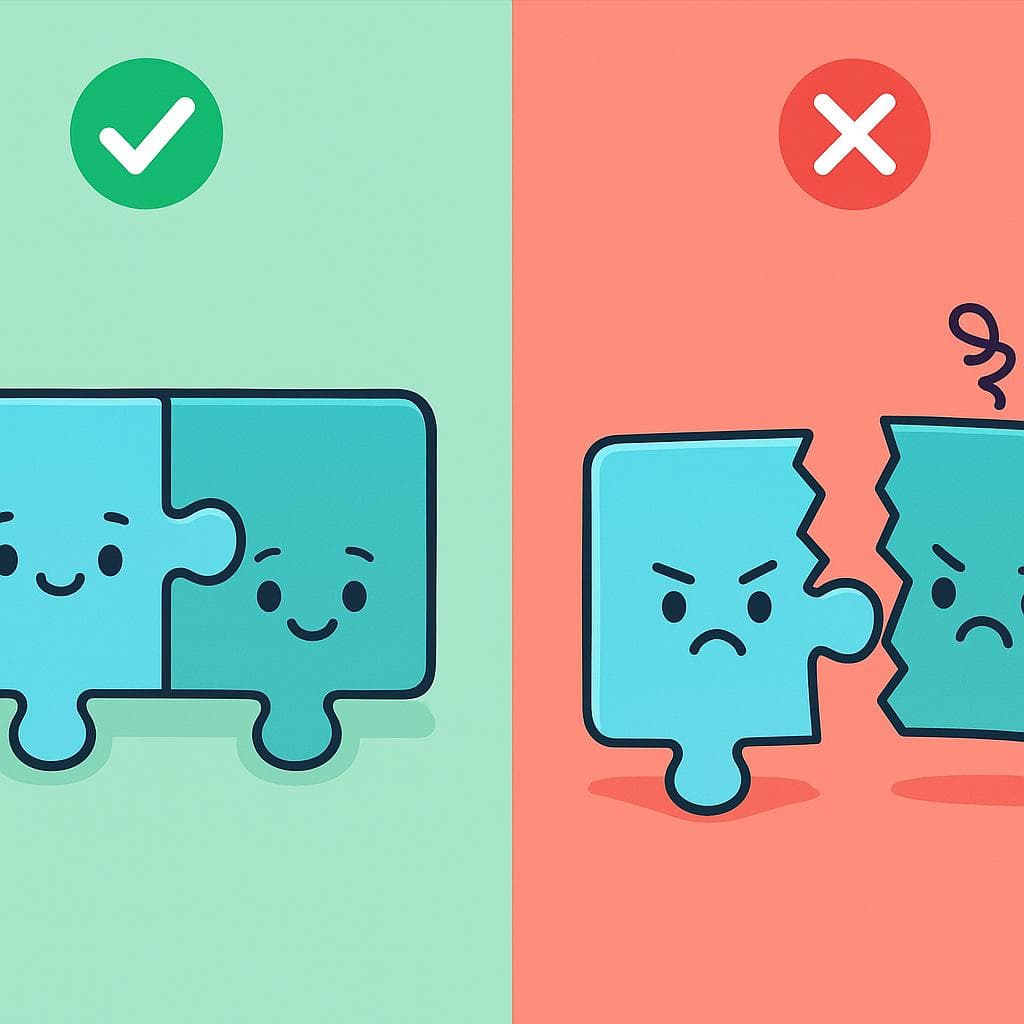
Think of 'con' and 'mí' as two words that got married and became one: 'conmigo'.
- The only common time you'll see 'con mí' is when it's followed by 'mismo', meaning 'with myself' (e.g., 'estoy enojado con mí mismo').
Comparison Table
| Context | conmigo | con mí | Why? |
|---|---|---|---|
| Everyday Invitation | ¿Vienes conmigo? | *¿Vienes con mí? | For any simple invitation, the fused word 'conmigo' is the only correct option. |
| Expressing an opinion | Para mí, es importante. / Habla conmigo. | Habló con todos menos con mí. | After other prepositions like 'para' or 'de', you use 'mí'. But after 'con', it must become 'conmigo' unless you're making a strong contrast. |
| Talking about yourself (reflexive) | Mi familia es buena conmigo. | Soy bueno con mí mismo. | 'Conmigo' is for when others interact with you. 'Con mí mismo' is for when you are interacting with yourself. |
When to Use "conmigo / con mí"
conmigo
With me. This is the special, combined word you must use.
kohn-MEE-goh
Expressing accompaniment
¿Quieres venir conmigo a la fiesta?
Do you want to come with me to the party?
Showing agreement or interaction
Ella está de acuerdo conmigo.
She agrees with me.
In any general 'with me' situation
No te preocupes, puedes contar conmigo.
Don't worry, you can count on me.
con mí
With me. This is almost always an incorrect, literal translation from English.
kohn MEE
Common mistake for 'with me'
*Habla con mí.
*Talk with me. (Incorrect)
Correct use: with 'mismo' (myself)
Tengo que ser más paciente con mí mismo.
I have to be more patient with myself.
Correct use: for very strong contrast (rare)
El problema no es contigo, es con mí.
The problem isn't with you, it's with me.
Contrast Examples
With "conmigo":
¿Estás enojado conmigo?
Are you mad at me?
With "con mí":
*¿Estás enojado con mí?
(Incorrect) Are you mad at me?
The Difference: 'Conmigo' is the non-negotiable, correct form for 'with me'. 'Con mí' sounds unnatural and is a classic beginner mistake.
With "conmigo":
Ten paciencia conmigo, estoy aprendiendo.
Be patient with me, I'm learning.
With "con mí":
Necesito tener más paciencia con mí mismo.
I need to have more patience with myself.
The Difference: Use 'conmigo' when someone else is acting towards you. Use 'con mí mismo' to talk about your own actions or feelings toward yourself.
Common Mistakes
Él quiere hablar con mí.
Él quiere hablar conmigo.
This is the most common error. The preposition 'con' and the pronoun 'mí' must combine to form 'conmigo'.
¿Puedes ir a la tienda con mí?
¿Puedes ir a la tienda conmigo?
Remember the mnemonic: 'con' and 'mí' get married to become 'conmigo'. You can't separate them in normal conversation.
Quick Practice
Quick Quiz: Conmigo vs Con Mí
Question 1 of 2
Which sentence is correct?
Related Grammar
Want to understand the grammar behind this pair? Explore these lessons for a deep dive:
Key Words



Tags
Build the instinct, not just the rule
Rules help you get it right; context makes it automatic. Read 200+ illustrated and narrated Spanish stories to see confusing pairs chosen correctly — over and over — until you stop thinking about it.
Frequently Asked Questions
Why do 'con' and 'mí' combine into 'conmigo'?
It's a historical quirk from Latin! In Latin, 'with me' was 'mecum'. Over centuries, as Spanish evolved, the 'cum' (with) moved to the front, becoming 'con-mecum', which eventually smoothed out to become 'conmigo'. The same thing happened with 'contigo' (with you).
Are there other words like 'conmigo'?
Yes! The other one you need to know is 'contigo', which means 'with you' (informal 'tú'). It follows the exact same rule: you always say 'voy contigo', never '*voy con ti'.
So I should never, ever write 'con mí'?
Almost never. For a beginner, it's safer to just assume it's always 'conmigo'. The only time you'll use 'con mí' is when you add 'mismo' right after it to say 'with myself' (e.g., 'Tengo que ser honesto con mí mismo').