
Deber vs Tener que
Deber = should (moral duty/advice). Tener que = have to (necessity/strong obligation).
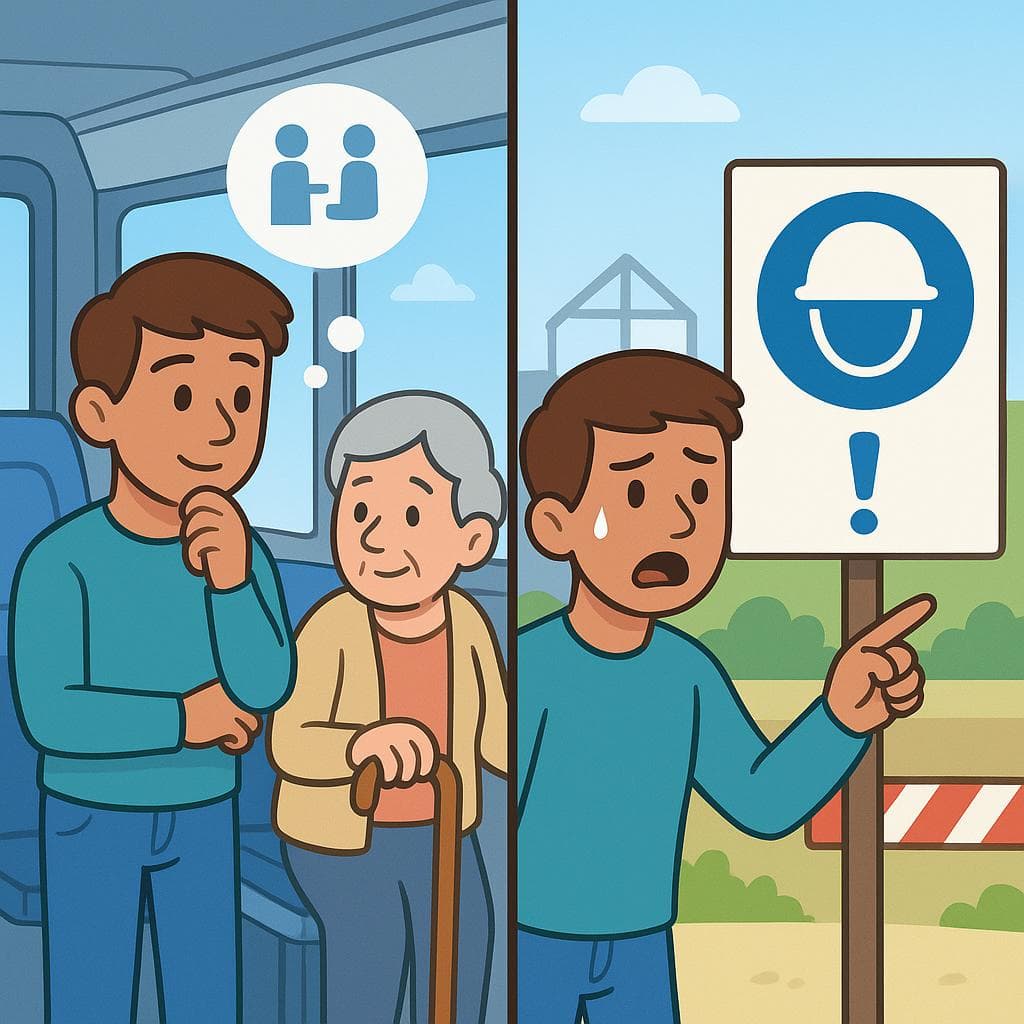
deber
To should, ought to (moral obligation, advice, suggestion)
deh-BEHRtener que
To have to (external necessity, requirement, strong obligation)
teh-NEHR kehQuick Rule
Deber = should (moral duty/advice). Tener que = have to (necessity/strong obligation).
Think: Deber for Duty, Tener que for Task.
- For strong assumptions, 'deber de' means 'must be' (e.g., 'Debe de estar cansado' -> 'He must be tired').
- In many everyday situations, especially about work, they can be used interchangeably, but 'tener que' is always a bit stronger.
Comparison Table
| Context | deber | tener que | Why? |
|---|---|---|---|
| Giving advice | Deberías llamar a tus abuelos. | Tienes que llamar a tus abuelos. | Deber is a gentle suggestion. Tener que implies it's urgent or required. |
| Work tasks | Debo terminar este informe. | Tengo que terminar este informe. | Deber implies personal responsibility. Tener que implies an external deadline or a boss's order. |
| Personal goals | Debo hacer más ejercicio. | Tengo que hacer más ejercicio. | Deber is a moral goal ('I should'). Tener que is a necessity ('My doctor said I have to'). |
| Rules | Debemos respetar a los demás. | Tenemos que usar casco aquí. | Deber for general, moral rules. Tener que for specific, enforced requirements. |
When to Use "deber / tener que"
deber
To should, ought to (moral obligation, advice, suggestion)
deh-BEHR
Moral duty or obligation
Debes decir la verdad.
You should tell the truth.
Giving advice or a suggestion
Deberías descansar un poco.
You should rest a little.
Expressing a strong assumption (with 'de')
Él debe de ser el nuevo gerente.
He must be the new manager.
tener que
To have to (external necessity, requirement, strong obligation)
teh-NEHR keh
External necessity or requirement
Tengo que ir al supermercado; no hay comida.
I have to go to the supermarket; there's no food.
Strong, unavoidable obligation
Tienes que pagar los impuestos.
You have to pay taxes.
A necessary step in a process
Para volar, tienes que comprar un billete.
In order to fly, you have to buy a ticket.
Contrast Examples
With "deber":
Deberías ir al médico.
You should go to the doctor.
With "tener que":
Tienes que ir al médico.
You have to go to the doctor.
The Difference: 'Deberías' is friendly advice. 'Tienes que' is much stronger, implying the situation is serious and there's no other choice.
With "deber":
Debo hacer mi tarea.
I should do my homework. (It's my responsibility.)
With "tener que":
Tengo que hacer mi tarea.
I have to do my homework. (It's due tomorrow.)
The Difference: 'Deber' highlights the internal sense of duty. 'Tener que' emphasizes the external pressure, like a deadline or a teacher's requirement.
Common Mistakes
Debo ir al banco porque está cerrado mañana.
Tengo que ir al banco porque está cerrado mañana.
This is a practical necessity, not a moral duty. The bank's closing time creates the obligation, so 'tener que' is the right choice.
Tienes que ser más amable con tu hermano.
Deberías ser más amable con tu hermano.
Unless you are a parent giving a command, this is advice. 'Deberías' (you should) is a much more natural and polite way to give advice than 'tienes que' (you have to).
Quick Practice
Quick Quiz: Deber vs Tener que
Question 1 of 2
My car broke down, so I ___ take the bus to work.
Related Grammar
Want to understand the grammar behind this pair? Explore these lessons for a deep dive:
Key Words


Tags
Build the instinct, not just the rule
Rules help you get it right; context makes it automatic. Read 200+ illustrated and narrated Spanish stories to see confusing pairs chosen correctly — over and over — until you stop thinking about it.
Frequently Asked Questions
Can 'deber' and 'tener que' ever mean the same thing?
Yes, they can be very close in meaning, especially when talking about general obligations like work or school. For example, 'Debo estudiar' and 'Tengo que estudiar' are often used interchangeably. However, 'tener que' always carries a stronger sense of external necessity.
What about 'hay que'? How is it different?
'Hay que' also expresses necessity, but it's impersonal. It means 'one must' or 'it's necessary to,' without specifying who must do the action. Use it for general rules or statements, like 'Hay que ser paciente' (One must be patient).