
Entero vs Completo
Entero = whole/undivided. Completo = finished/all parts included.
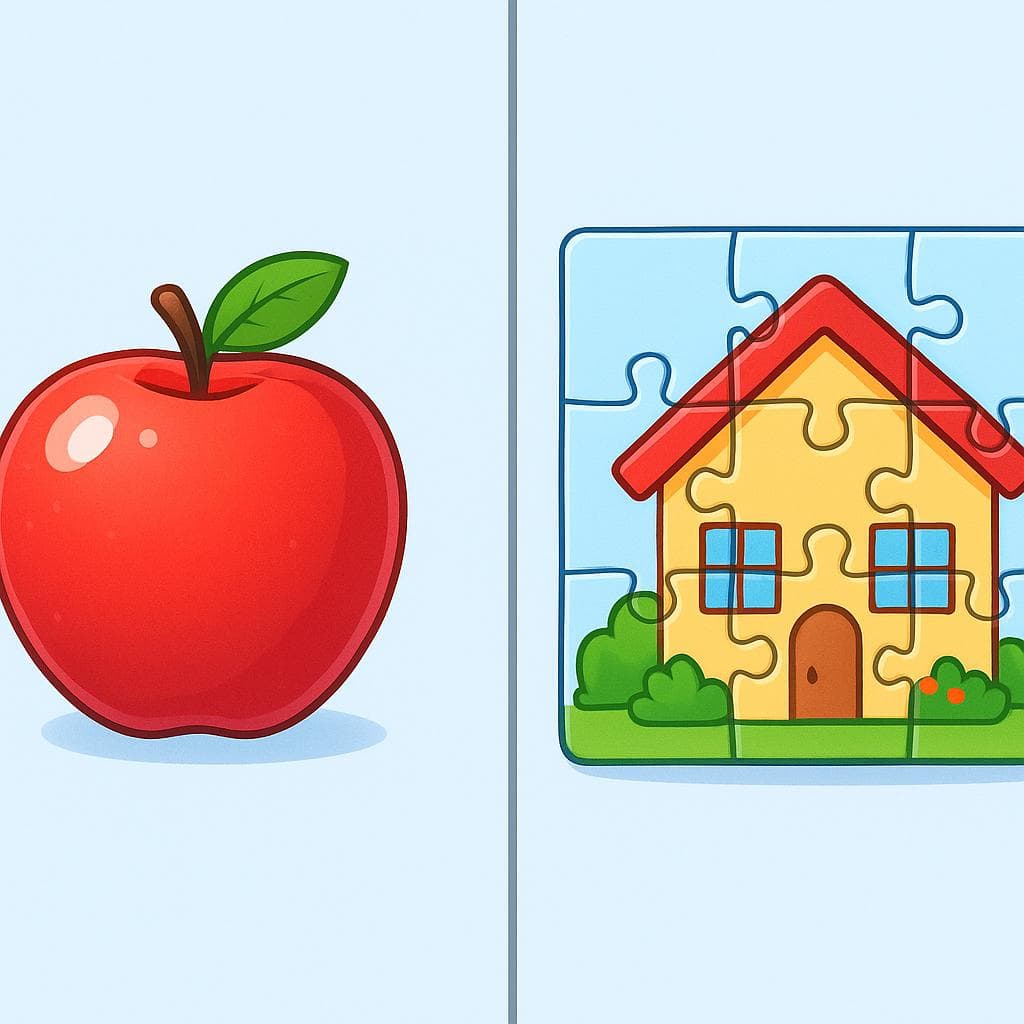
entero
Whole, entire, undivided. Use it when talking about something as a single, unbroken unit.
en-TEH-rohcompleto
Complete, finished, or having all its necessary parts. Use it for things made of multiple components or for finished tasks.
kohm-PLEH-tohQuick Rule
Entero = whole/undivided. Completo = finished/all parts included.
Think: Ent-ero = Ent-ire (one single piece). Com-pleto = Com-pleted (all the pieces are there).
- Both can describe a full duration, like 'el día entero' or 'un año completo', but 'entero' is more common for this.
- 'Completo' is used to mean 'full' for places like hotels or theaters ('El hotel está completo').
Comparison Table
| Context | entero | completo | Why? |
|---|---|---|---|
| A collection | Leí el libro entero. | Tengo la colección completa. | Entero for one whole item. Completo for a set with all its individual parts. |
| A meal | Se comió el pollo entero. | Pidió el desayuno completo. | Entero refers to the entire single chicken. Completo refers to a meal set that includes all its components (e.g., eggs, bacon, toast). |
| A task | Pinté el muro entero. | El proyecto está completo. | Entero focuses on covering the entire surface of one thing. Completo focuses on the task being finished. |
| A puzzle | El perro se tragó la pieza entera. | El rompecabezas está completo. | Entera describes a single, undivided piece. Completo describes the finished state of the puzzle, which is made of many pieces. |
When to Use "entero / completo"
entero
Whole, entire, undivided. Use it when talking about something as a single, unbroken unit.
en-TEH-roh
A single, whole object
Me comí el pastel entero.
I ate the whole cake.
Something unbroken or intact
El plato se cayó pero está entero.
The plate fell but it's in one piece.
The full duration of time
Trabajé el día entero.
I worked the whole day.
Whole numbers (integers)
Tres es un número entero.
Three is a whole number.
completo
Complete, finished, or having all its necessary parts. Use it for things made of multiple components or for finished tasks.
kohm-PLEH-toh
Having all necessary parts
La colección de libros está completa.
The book collection is complete.
A finished task or project
Mi tarea ya está completa.
My homework is now complete.
Full, no space left
Lo siento, el hotel está completo.
Sorry, the hotel is full.
Thorough or total
Fue un cambio completo de planes.
It was a complete change of plans.
Contrast Examples
With "entero":
Leí el primer libro entero en una noche.
I read the entire first book in one night.
With "completo":
Ahora que compré el último, mi colección está completa.
Now that I bought the last one, my collection is complete.
The Difference: Use 'entero' for a single, undivided item (one book). Use 'completo' for a set that now has all its individual parts (the whole series).
With "entero":
Pasé el día entero en la playa.
I spent the whole day at the beach.
With "completo":
Con esta buena noticia, mi día está completo.
With this good news, my day is complete (fulfilled).
The Difference: 'Entero' refers to the full duration of the day, from morning to night. 'Completo' refers to a feeling of fulfillment, as if nothing more is needed to make the day perfect.
Common Mistakes
La colección de Harry Potter está entera.
La colección de Harry Potter está completa.
A collection is made of multiple parts (books). Use 'completo' to say that all the parts are present. 'Entera' would imply the collection is one single object.
Mi informe está entero.
Mi informe está completo.
When a task or document is finished and has all its required sections, use 'completo'. 'Entero' doesn't fit the meaning of 'finished' or 'done'.
Quick Practice
Quick Quiz: Entero vs Completo
Question 1 of 2
Para que el rompecabezas esté ___, necesitas encontrar la última pieza.
Related Grammar
Want to understand the grammar behind this pair? Explore these lessons for a deep dive:
Key Words



Tags
Build the instinct, not just the rule
Rules help you get it right; context makes it automatic. Read 200+ illustrated and narrated Spanish stories to see confusing pairs chosen correctly — over and over — until you stop thinking about it.
Frequently Asked Questions
Can I use 'todo' instead of 'entero'?
Often, yes! 'Me comí todo el pastel' and 'Me comí el pastel entero' are very similar. 'Entero' adds a slight emphasis that it was one single, undivided cake, while 'todo' just means 'all of it'.
What's the difference between 'un juego completo' and 'un juego entero'?
'Un juego completo' means a game that has all its pieces (the board, the cards, the dice). 'Un juego entero' would be less common, but could mean you played the whole game from start to finish.