
Sino vs Pero
Sino = 'but rather' (it corrects). Pero = 'but' (it contrasts).
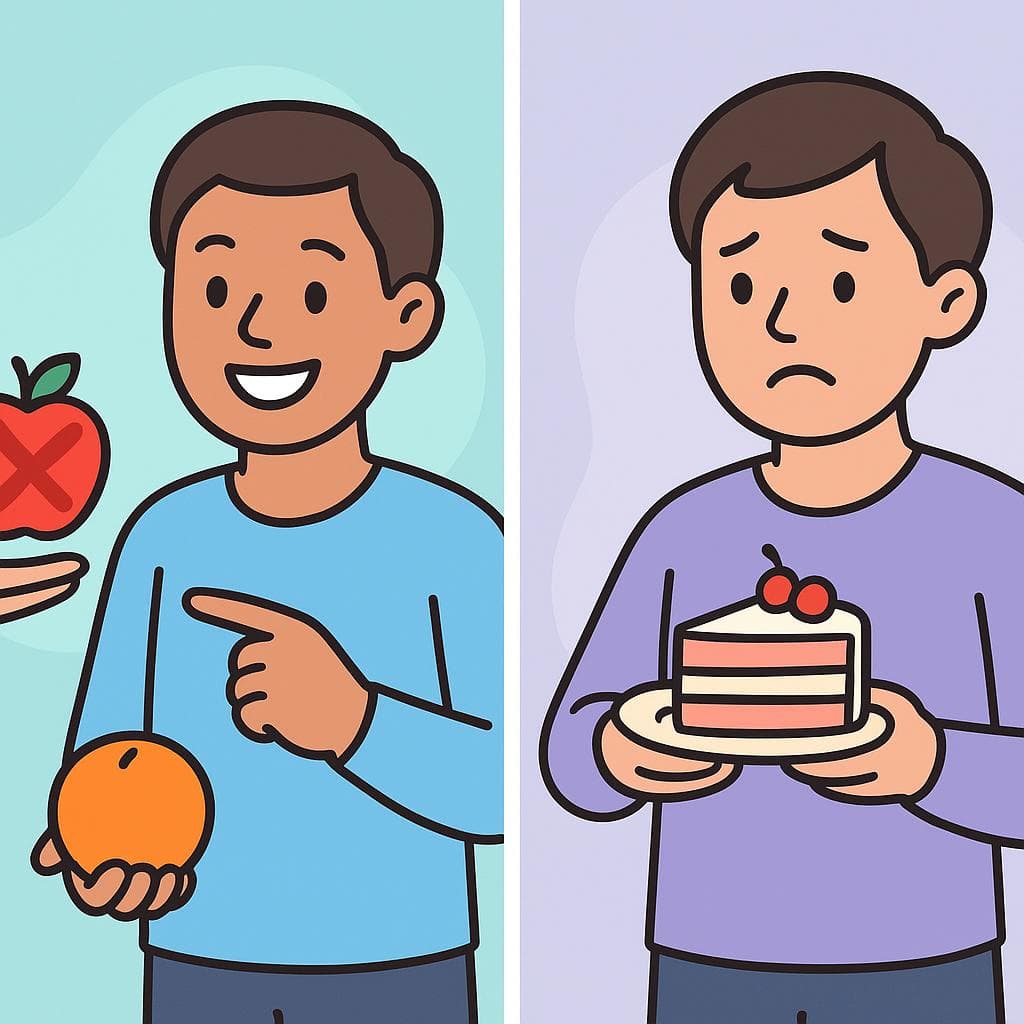
sino
'But rather' or 'but instead'. Used after a negative statement to contradict and replace it.
SEE-nopero
'But' or 'however'. Used to add contrasting information or an objection to a previous statement (which can be positive or negative).
PEH-roQuick Rule
Sino = 'but rather' (it corrects). Pero = 'but' (it contrasts).
Think: Sino says 'Not this, INSTEAD that'. Pero says 'This is true, BUT this other thing is also true.'
- When a new verb is introduced after 'sino', you must use 'sino que'. Example: 'No fui al cine, sino que me quedé en casa.'
Comparison Table
| Context | sino | pero | Why? |
|---|---|---|---|
| Basic Correction | No es un perro, sino un lobo. | Es un perro, pero no muerde. | Sino negates the first idea (dog) and replaces it (wolf). Pero accepts the first idea (dog) and adds a contrasting quality (doesn't bite). |
| Expressing Desires | No quiero viajar a Francia, sino a Italia. | Quiero viajar a Francia, pero no tengo dinero. | Sino chooses one option INSTEAD OF another. Pero states a desire and then introduces an obstacle. |
| Contrasting Actions | No estudié, sino que vi la tele. | Estudié, pero todavía estoy nervioso. | 'Sino que' replaces one action with another. 'Pero' links an action to a contrasting feeling or result. |
When to Use "sino / pero"
sino
'But rather' or 'but instead'. Used after a negative statement to contradict and replace it.
SEE-no
To correct or replace a negative idea
No es martes, sino miércoles.
It's not Tuesday, but rather Wednesday.
To offer the true alternative
No quiero té, sino café.
I don't want tea, but coffee instead.
With 'que' before a new conjugated verb
No salimos a cenar, sino que pedimos una pizza.
We didn't go out for dinner, but rather we ordered a pizza.
pero
'But' or 'however'. Used to add contrasting information or an objection to a previous statement (which can be positive or negative).
PEH-ro
To add contrasting information
Estudio mucho, pero no entiendo.
I study a lot, but I don't understand.
To introduce a limitation or problem
La película es buena, pero muy larga.
The movie is good, but very long.
To contrast with a negative statement (without replacing it)
No tengo coche, pero tengo una bicicleta.
I don't have a car, but I have a bicycle.
Contrast Examples
With "sino":
Él no es antipático, sino tímido.
He isn't unfriendly, but rather shy.
With "pero":
Él no es antipático, pero no habla mucho.
He isn't unfriendly, but he doesn't talk much.
The Difference: Sino corrects a potential misunderstanding (he's not unfriendly, he's shy). Pero accepts the first fact (he's not unfriendly) and adds a related, contrasting observation.
With "sino":
No es un problema, sino una oportunidad.
It's not a problem, but rather an opportunity.
With "pero":
Es un problema, pero tiene solución.
It's a problem, but it has a solution.
The Difference: Sino completely reframes the situation, replacing 'problem' with 'opportunity'. Pero acknowledges the problem and then adds a hopeful contrast.
Common Mistakes
La casa no es grande, pero pequeña.
La casa no es grande, sino pequeña.
When you directly contradict an adjective with its opposite ('not big, but small'), you must use 'sino' to show replacement.
No hablo español, sino lo entiendo un poco.
No hablo español, pero lo entiendo un poco.
You are not replacing the idea of 'not speaking Spanish'. You are adding a contrasting piece of information ('but I understand it a bit'). This requires 'pero'.
No fuimos al parque, sino quedamos en casa.
No fuimos al parque, sino que nos quedamos en casa.
When the clause after 'sino' has its own conjugated verb ('quedamos'), you must use the form 'sino que'.
Quick Practice
Quick Quiz: Sino vs Pero
Question 1 of 3
Choose the correct word: 'El libro es interesante, ___ un poco largo.'
Related Grammar
Want to understand the grammar behind this pair? Explore these lessons for a deep dive:
Key Words


Tags
Build the instinct, not just the rule
Rules help you get it right; context makes it automatic. Read 200+ illustrated and narrated Spanish stories to see confusing pairs chosen correctly — over and over — until you stop thinking about it.
Frequently Asked Questions
Do 'sino' and 'pero' both mean 'but'?
Yes, they can both be translated as 'but' in English, which is why they're so confusing! The key is their function. 'Pero' adds a contrast ('I like it, but...'), while 'sino' corrects or replaces a negative idea ('Not this, but rather that...').
When do I have to use 'sino que' instead of just 'sino'?
You must use 'sino que' when what follows is a full clause with its own conjugated verb. For example: 'No cocinamos (verb), sino que pedimos (verb) pizza.' If you are just replacing a noun, adjective, or infinitive, you only need 'sino': 'No es azul, sino verde (adjective).'