
Esforzarse vs Intentar
Esforzarse = the *effort* you put in. Intentar = the *attempt* you make.
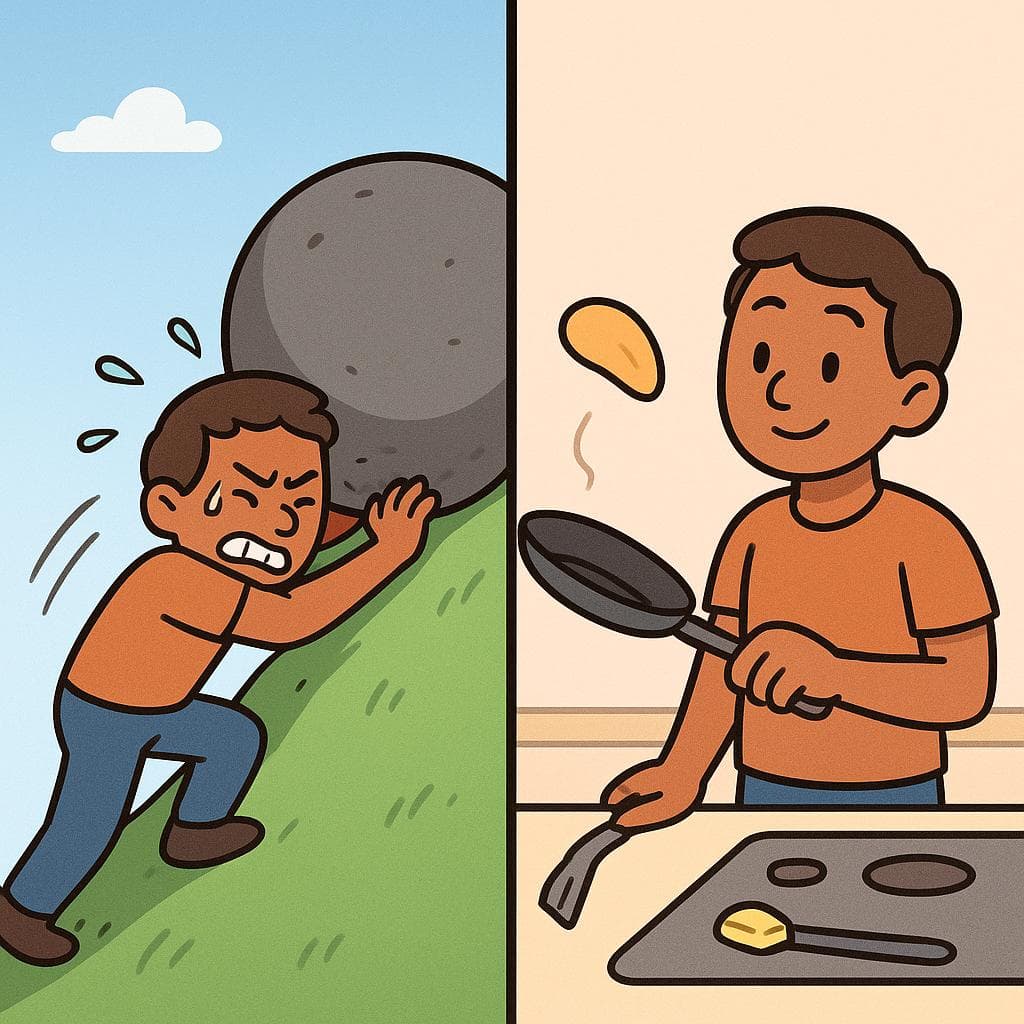
esforzarse
To make a great effort, to strive, to try hard. It focuses on the process, struggle, and dedication involved.
ehs-for-SAR-sehintentar
To try, to attempt. It focuses on the action of trying, regardless of the effort or difficulty involved.
een-ten-TARQuick Rule
Esforzarse = the *effort* you put in. Intentar = the *attempt* you make.
Think: esForzarse for the Fight (effort), inTentar for the Try (attempt).
- They can sometimes overlap, but 'esforzarse' always implies a greater struggle or dedication.
Comparison Table
| Context | esforzarse | intentar | Why? |
|---|---|---|---|
| Studying for a test | Me esforcé por sacar una buena nota. | Intenté estudiar, pero me distraje. | Esforzarse implies sustained, hard work. Intentar just describes the action of starting to study. |
| Physical action | El atleta se esfuerza para ganar. | Intentó saltar el obstáculo. | Esforzarse focuses on the ongoing struggle to win. Intentar focuses on a single attempt to jump. |
| Communication | Se esfuerza por hablar sin acento. | Intentó hablar en español en la tienda. | Esforzarse implies a long-term, difficult process. Intentar describes a specific, singular attempt. |
When to Use "esforzarse / intentar"
esforzarse
To make a great effort, to strive, to try hard. It focuses on the process, struggle, and dedication involved.
ehs-for-SAR-seh
Highlighting hard work
Me esforcé mucho para aprobar el examen.
I tried really hard to pass the exam.
Describing a struggle or challenge
Se esfuerza por entender las matemáticas.
He struggles to understand math.
Encouraging dedication
Si te esfuerzas, lo conseguirás.
If you make an effort, you'll achieve it.
intentar
To try, to attempt. It focuses on the action of trying, regardless of the effort or difficulty involved.
een-ten-TAR
A simple attempt
Intenté llamarte, pero no contestaste.
I tried to call you, but you didn't answer.
Trying something new
Voy a intentar la nueva receta de paella.
I'm going to try the new paella recipe.
Making an attempt with an uncertain outcome
Intenta levantar la caja, a ver si puedes.
Try to lift the box, let's see if you can.
Contrast Examples
With "esforzarse":
Se esfuerza por aprender a tocar la guitarra.
He strives to learn to play the guitar. (Focus on his dedication and struggle).
With "intentar":
Intenta tocar la guitarra todos los días.
He tries/attempts to play the guitar every day. (Focus on the daily action).
The Difference: Esforzarse describes the internal struggle and dedication towards the goal. Intentar describes the repeated action or attempt, which may or may not be a struggle.
With "esforzarse":
Me esforcé durante horas para arreglar el coche.
I struggled for hours to fix the car. (Highlights the hard work).
With "intentar":
Intenté arreglar el coche, pero no pude.
I tried to fix the car, but I couldn't. (States the attempt and its outcome).
The Difference: 'Esforzarse' emphasizes the long, hard work involved. 'Intentar' simply states that an attempt was made, often focusing on the result.
Common Mistakes
Intenté mucho para aprender.
Me esforcé mucho para aprender.
When you want to emphasize the *amount* of effort ('mucho'), 'esforzarse' is the natural choice. 'Intentar' focuses more on the action itself, not its intensity.
Me esfuerzo a abrir la puerta.
Intento abrir la puerta.
'Intentar' doesn't need a preposition before another verb. 'Esforzarse' is different and uses 'por' or 'para' to connect to the goal of the effort ('me esfuerzo por abrir...').
Quick Practice
Quick Quiz: Esforzarse vs Intentar
Question 1 of 2
To describe a long, difficult struggle to achieve a goal, which verb is better? 'El equipo ___ para ganar el campeonato.'
Related Grammar
Want to understand the grammar behind this pair? Explore these lessons for a deep dive:
Key Words


Tags
Build the instinct, not just the rule
Rules help you get it right; context makes it automatic. Read 200+ illustrated and narrated Spanish stories to see confusing pairs chosen correctly — over and over — until you stop thinking about it.
Frequently Asked Questions
Is 'tratar de' the same as 'intentar'?
They are very close and often interchangeable! 'Tratar de' and 'intentar' both mean 'to try'. 'Intentar' is slightly more common in everyday speech, but you can use either one to talk about making an attempt. For example, 'Intenté llamarte' and 'Traté de llamarte' mean the same thing.
Why does 'esforzarse' have 'se' on the end?
That's because it's a 'reflexive verb'. You can think of it as the effort being directed back at yourself. You are 'making yourself' put in the effort. That's why it's always 'me esfuerzo' (I make an effort), 'te esfuerzas' (you make an effort), etc.