
Future Perfect vs Conditional Perfect
Future Perfect = 'will have happened'. Conditional Perfect = 'would have happened'.
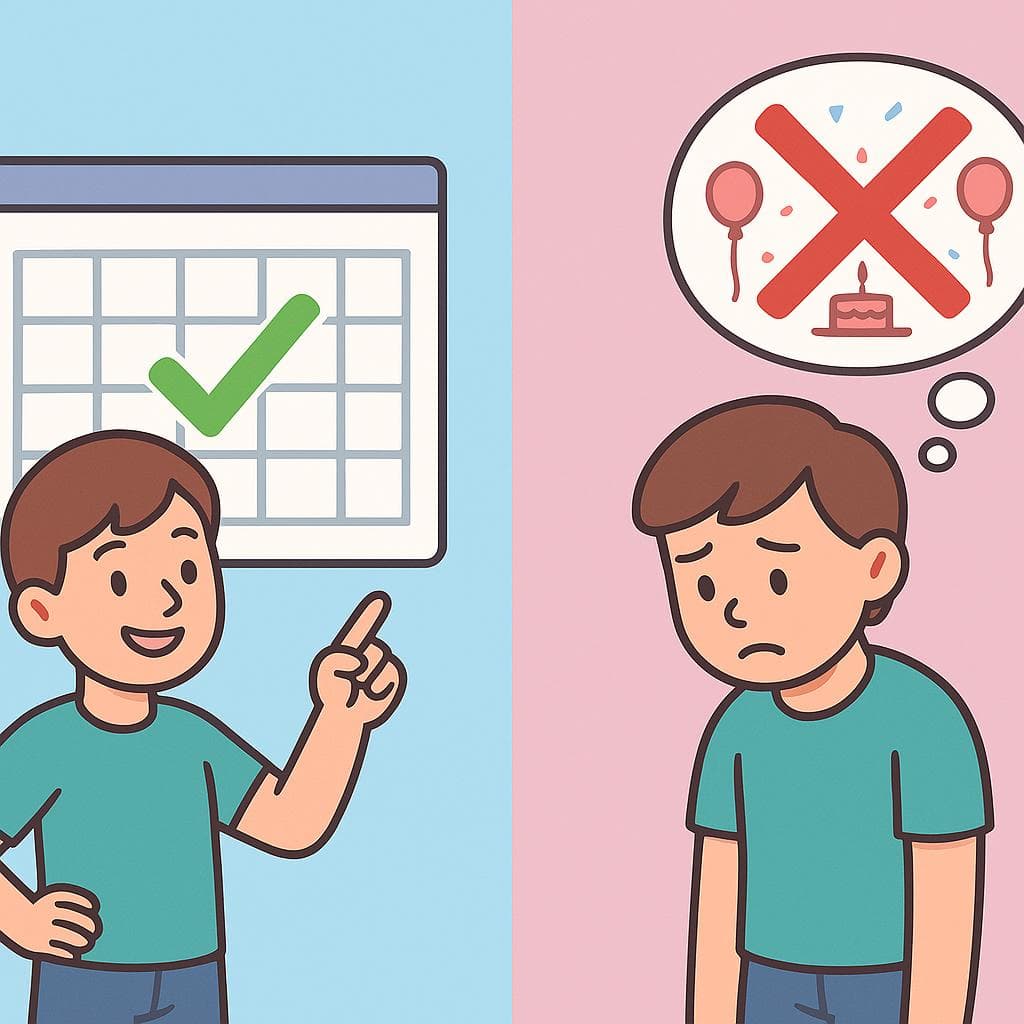
future perfect
Used for actions that 'will have' been completed by a certain point in the future. Also used to express probability about a past event.
futuro perfectoconditional perfect
Used for hypothetical actions that 'would have' happened in the past if something had been different. Also for regret or speculation about the past.
condicional perfectoQuick Rule
Future Perfect = 'will have happened'. Conditional Perfect = 'would have happened'.
Future Perfect is a Prediction about the future. Conditional Perfect is a Condition in the past.
- The Future Perfect is often used to make a guess about the recent past: '¿Dónde está Ana? - No sé, se habrá ido a casa.' (Where's Ana? - I don't know, she probably went home.)
Comparison Table
| Context | future perfect | conditional perfect | Why? |
|---|---|---|---|
| Talking about a project | Para el viernes, habré terminado el informe. | Habría terminado, pero se fue el internet. | Future Perfect sets a future deadline. Conditional Perfect gives an excuse for why it wasn't finished in the past. |
| Going to a party | ¿Crees que ya se habrán ido todos para la medianoche? | Yo habría ido a la fiesta, si me hubieras invitado. | Future Perfect guesses about a future state. Conditional Perfect talks about a past hypothetical situation that didn't occur. |
| Speculating why someone didn't arrive | No ha llegado. Se habrá olvidado de la cita. | Pensé que se habría olvidado de la cita. | Future Perfect is a guess now about the recent past. Conditional Perfect is a guess from a past perspective. |
When to Use "future perfect / conditional perfect"
future perfect
Used for actions that 'will have' been completed by a certain point in the future. Also used to express probability about a past event.
foo-TOO-roh pehr-FECK-toh
Action finished before a future deadline
Para las 8, ya habré cenado.
By 8 o'clock, I will have already eaten dinner.
Assuming something will be done in the future
Dentro de un año, habremos ahorrado suficiente dinero.
In a year, we will have saved enough money.
Guessing about a recent past event
El suelo está mojado. Habrá llovido.
The ground is wet. It must have rained.
conditional perfect
Used for hypothetical actions that 'would have' happened in the past if something had been different. Also for regret or speculation about the past.
con-dee-see-oh-NAHL pehr-FECK-toh
Hypothetical past actions (that didn't happen)
Si me hubieras dicho, te habría ayudado.
If you had told me, I would have helped you.
Expressing regret or a missed opportunity
Habríamos ido al concierto, pero no quedaban entradas.
We would have gone to the concert, but there were no tickets left.
Speculating about what could have been
En tu lugar, yo no lo habría comprado.
In your place, I wouldn't have bought it.
Contrast Examples
With "future perfect":
Cuando llegues, ya habré hecho la tarea.
When you arrive, I will have already done the homework.
With "conditional perfect":
Habría hecho la tarea, pero no entendí las instrucciones.
I would have done the homework, but I didn't understand the instructions.
The Difference: The Future Perfect is a promise of a future completed action. The Conditional Perfect is an explanation for a past *incompleted* action.
With "future perfect":
Ya es tarde. ¿Habrán llegado bien a su hotel?
It's late. I wonder if they have arrived safely at their hotel? (They probably arrived...)
With "conditional perfect":
Con ese tráfico, pensé que no habrían llegado a tiempo.
With that traffic, I thought they wouldn't have arrived on time.
The Difference: Use Future Perfect for a guess you are making *right now* about a recent past event. Use Conditional Perfect for a guess or thought you had *in the past* about another past event.
Common Mistakes
Para mañana, yo habría terminado.
Para mañana, yo habré terminado.
When setting a future deadline for a completed action, use the Future Perfect ('will have'). The Conditional Perfect ('would have') implies you won't actually finish it.
Si yo sabía, te habría llamado.
Si yo hubiera sabido, te habría llamado.
Hypothetical 'if' clauses in the past that use the Conditional Perfect almost always need the Past Subjunctive ('hubiera sabido'), not the simple past.
Quick Practice
Quick Quiz: Future Perfect vs Conditional Perfect
Question 1 of 3
Which sentence means 'By next year, I will have graduated'?
Related Grammar
Want to understand the grammar behind this pair? Explore these lessons for a deep dive:
Future Tense
Understanding the simple future helps build the foundation for the future perfect.
Conditional Tense
The simple conditional is the base for the conditional perfect.
Past Subjunctive
The conditional perfect is frequently used in 'if' clauses with the past subjunctive.
Key Words




Tags
Build the instinct, not just the rule
Rules help you get it right; context makes it automatic. Read 200+ illustrated and narrated Spanish stories to see confusing pairs chosen correctly — over and over — until you stop thinking about it.
Frequently Asked Questions
Why is the future perfect used to talk about the past?
It's a common conversational shortcut in Spanish to express a strong guess or probability about something that just happened. Think of 'Habrá llovido' (It must have rained) as a shorter way of saying 'Supongo que ha llovido' (I suppose that it has rained). It feels less certain than stating it as a fact.
Do I always need an 'if' clause to use the conditional perfect?
No, not always. While it's very common in 'if' clauses (Si hubiera..., habría...), you can also use it alone to express regret or a suggestion about the past, like 'Habrías debido llamarme' (You should have called me).