
Ir vs Irse
Ir = go TO a destination. Irse = LEAVE from a place.
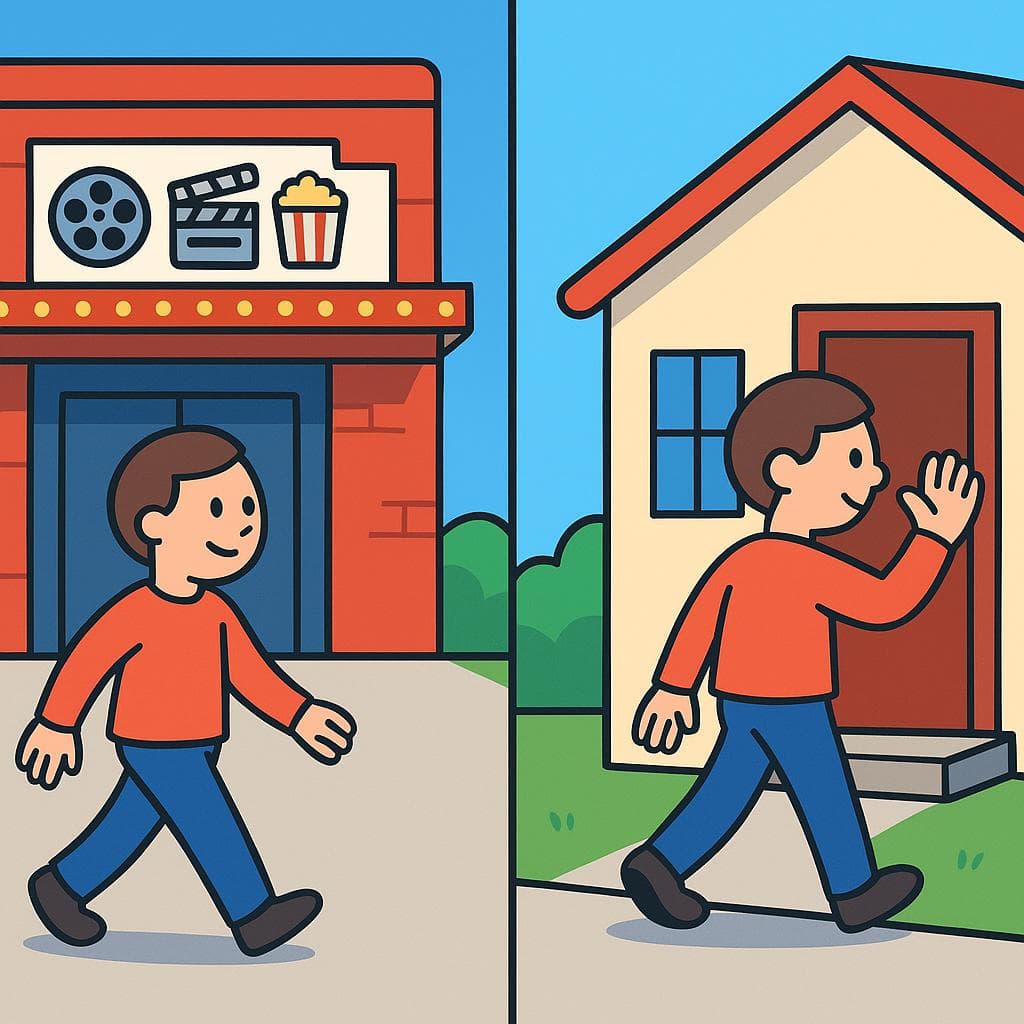
ir
To go (moving towards a specific destination)
EERirse
To go away, to leave (emphasizing the act of departure)
EER-sehQuick Rule
Ir = go TO a destination. Irse = LEAVE from a place.
Think: 'Ir' is for Arriving somewhere. 'Irse' is for Escaping somewhere.
- The phrase 'Me tengo que ir' (I have to leave) must use 'irse'. 'Tengo que ir' sounds incomplete.
- The destination is often unstated with 'irse'. 'Me voy' means 'I'm leaving' without saying where you're going.
Comparison Table
| Context | ir | irse | Why? |
|---|---|---|---|
| Stating Your Movement | Voy a la tienda. | Me voy de la casa. | 'Ir' focuses on the destination (the store). 'Irse' focuses on the point of departure (the house). |
| At a Party | Voy al baño un momento. | Nos vamos, ya es tarde. | Use 'ir' for temporary movement within a place. Use 'irse' for leaving the place for good. |
| Asking About Plans | ¿Cuándo vas a Madrid? | ¿Cuándo te vas de aquí? | 'Ir' asks about the trip TO a place. 'Irse' asks about the departure FROM a place. |
When to Use "ir / irse"
ir
To go (moving towards a specific destination)
EER
Going to a destination
Vamos a la playa.
We're going to the beach.
Future plans (ir + a + infinitive)
Voy a estudiar más.
I'm going to study more.
Asking how things are going
¿Cómo te va?
How's it going?
irse
To go away, to leave (emphasizing the act of departure)
EER-seh
Leaving a place
Me voy de la fiesta.
I'm leaving the party.
Leaving without a stated destination
Bueno, ya me voy. ¡Adiós!
Well, I'm leaving now. Bye!
To die (euphemistic)
El abuelo se fue el año pasado.
Grandfather passed away last year.
Contrast Examples
With "ir":
Voy al trabajo.
I'm going to work.
With "irse":
Ya me voy de casa.
I'm leaving home now.
The Difference: Use 'ir' to state your destination. Use 'irse' to announce your departure from your current location.
With "ir":
¿Vas a la cocina?
Are you going to the kitchen?
With "irse":
¿Ya te vas?
Are you leaving already?
The Difference: 'Ir' asks about movement to another room within the same place. 'Irse' asks if the person is leaving the event/house entirely.
With "ir":
Voy a Argentina en diciembre.
I'm going to Argentina in December.
With "irse":
Me voy a Argentina por un año.
I'm leaving for Argentina for a year.
The Difference: 'Ir' is a simple statement of travel. 'Irse' adds a sense of a more significant departure, like moving or a long-term stay.
Common Mistakes
Tengo que ir.
Me tengo que ir. / Tengo que irme.
To say 'I have to leave,' you must use the reflexive form 'irse'. 'Tengo que ir' sounds incomplete, like you're missing the destination ('I have to go... where?').
Yo voy de la oficina a las 5.
Yo me voy de la oficina a las 5.
When you emphasize that you are leaving FROM a place, you need to use 'irse'.
Quick Practice
Quick Quiz: Ir vs Irse
Question 1 of 2
You're at a friend's house and want to say 'I have to leave now.' Which is correct?
Related Grammar
Want to understand the grammar behind this pair? Explore these lessons for a deep dive:
Key Words


Tags
Build the instinct, not just the rule
Rules help you get it right; context makes it automatic. Read 200+ illustrated and narrated Spanish stories to see confusing pairs chosen correctly — over and over — until you stop thinking about it.
Frequently Asked Questions
Is it ever okay to say 'Me voy a la tienda'?
Yes, but it's less common and adds a specific nuance. 'Voy a la tienda' is the standard way to say you're going to the store. 'Me voy a la tienda' emphasizes the act of leaving your current location *in order to* go to the store. As a learner, sticking with 'ir' for destinations is the simplest and most common choice.
Why does adding 'se' change the meaning of 'ir'?
The 'se' is a reflexive pronoun. With some verbs, it means you do the action to yourself (like 'lavarse' - to wash oneself). With other verbs, like 'ir', it fundamentally changes the meaning. Think of it as creating a new, related verb: 'ir' (to go) becomes 'irse' (to go away/leave). Spanish has many verbs like this!