
Obligar vs Forzar
Obligar = make someone do their duty. Forzar = use physical force or pressure.
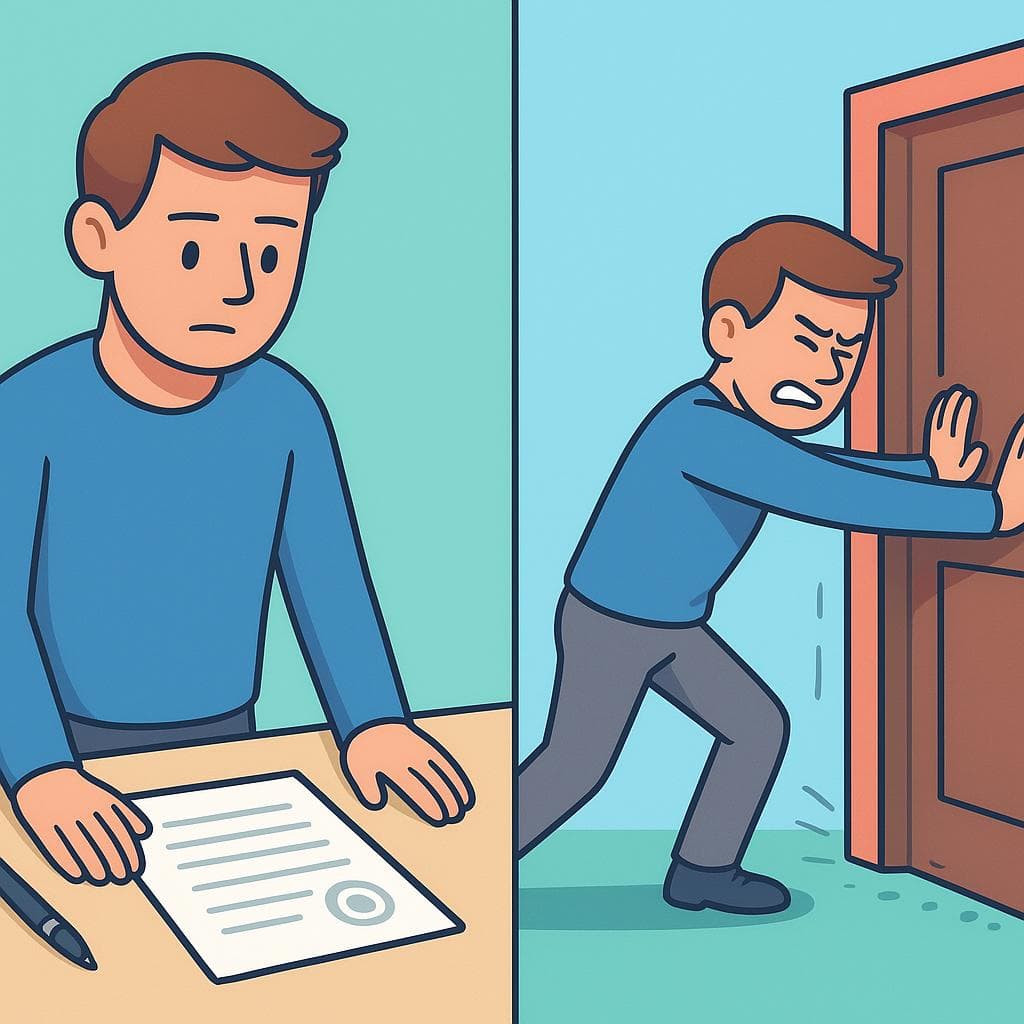
obligar
To compel or require someone to do something due to a rule, law, moral duty, or circumstances.
oh-blee-GARforzar
To make something happen using physical strength, pressure, or coercion against resistance.
for-SARQuick Rule
Obligar = make someone do their duty. Forzar = use physical force or pressure.
Think: Obligar = Obligation (a rule or duty). Forzar = Force (physical strength).
- Forzar can be used metaphorically, like 'forzar una sonrisa' (to force a smile), which isn't about physical strength but making something unnatural happen.
Comparison Table
| Context | obligar | forzar | Why? |
|---|---|---|---|
| Opening a door | La emergencia me obliga a abrir. | Tengo que forzar la puerta. | Obligar is about being compelled by a situation. Forzar is about using physical strength on the object. |
| Getting a confession | La evidencia lo obligó a confesar. | Lo forzaron a confesar. | Obligar suggests he confessed because of logical pressure. Forzar implies threats or coercion were used. |
| Making a decision | Las circunstancias me obligan a irme. | No quiero forzar una decisión. | Obligar means you are compelled by external factors. Forzar means you are actively pushing for a result. |
When to Use "obligar / forzar"
obligar
To compel or require someone to do something due to a rule, law, moral duty, or circumstances.
oh-blee-GAR
Legal or formal requirement
La ley obliga a los ciudadanos a pagar impuestos.
The law obliges citizens to pay taxes.
Moral or social duty
Mi conciencia me obliga a ayudar.
My conscience obliges me to help.
When circumstances leave no choice
La lluvia nos obligó a cancelar el pícnic.
The rain forced (obliged) us to cancel the picnic.
forzar
To make something happen using physical strength, pressure, or coercion against resistance.
for-SAR
Using physical force
Tuvieron que forzar la cerradura para abrir la puerta.
They had to force the lock to open the door.
Making something happen unnaturally
No fuerces la voz o te lastimarás.
Don't force your voice or you'll hurt yourself.
Coercing someone against their will
Lo forzaron a firmar el documento.
They forced him to sign the document.
Contrast Examples
With "obligar":
Lo obligaron a renunciar a su puesto.
They compelled him to resign from his position.
With "forzar":
Lo forzaron a salir del edificio.
They forced him to leave the building.
The Difference: Obligar implies using rules, pressure, or authority to make someone do something. Forzar implies using physical strength or direct coercion.
With "obligar":
Me siento obligado a asistir a la reunión.
I feel obligated to attend the meeting.
With "forzar":
¡No me fuerces a ir! De verdad no quiero.
Don't force me to go! I really don't want to.
The Difference: Obligar often describes an internal sense of duty or external circumstances. Forzar describes an external will being imposed on you against your own.
Common Mistakes
La ley me forza a pagar.
La ley me obliga a pagar.
Laws, rules, and duties use 'obligar'. 'Forzar' would imply the law is physically taking your money.
Forcé a mis hijos a hacer la tarea.
Obligué a mis hijos a hacer la tarea.
Unless you used physical force, 'obligar' is correct for requiring someone to do a duty like homework. 'Forzar' sounds harsh and physical.
Quick Practice
Quick Quiz: Obligar vs Forzar
Question 1 of 3
The heavy traffic ___ us to take a different route.
Related Grammar
Want to understand the grammar behind this pair? Explore these lessons for a deep dive:
Key Words



Tags
Build the instinct, not just the rule
Rules help you get it right; context makes it automatic. Read 200+ illustrated and narrated Spanish stories to see confusing pairs chosen correctly — over and over — until you stop thinking about it.
Frequently Asked Questions
Can 'forzar' ever mean the same as 'obligar'?
In some contexts, they can be very close, especially when talking about circumstances. 'Las circunstancias me obligaron/forzaron a cambiar de opinión' (The circumstances forced me to change my opinion) are both used. However, 'obligar' is generally preferred as it sounds more natural. When in doubt, stick to 'obligar' for duties/circumstances and 'forzar' for physical force.
Is 'forzar' always negative?
It often has a negative or aggressive feeling because it implies going against something's will or natural state. However, it can be neutral, like 'forzar la vista' (to strain one's eyes) or 'forzar una cerradura' (to force a lock), where it just describes a physical action.