
Pobre (before noun) vs Pobre (after noun)
Before the noun = pitiable. After the noun = penniless.
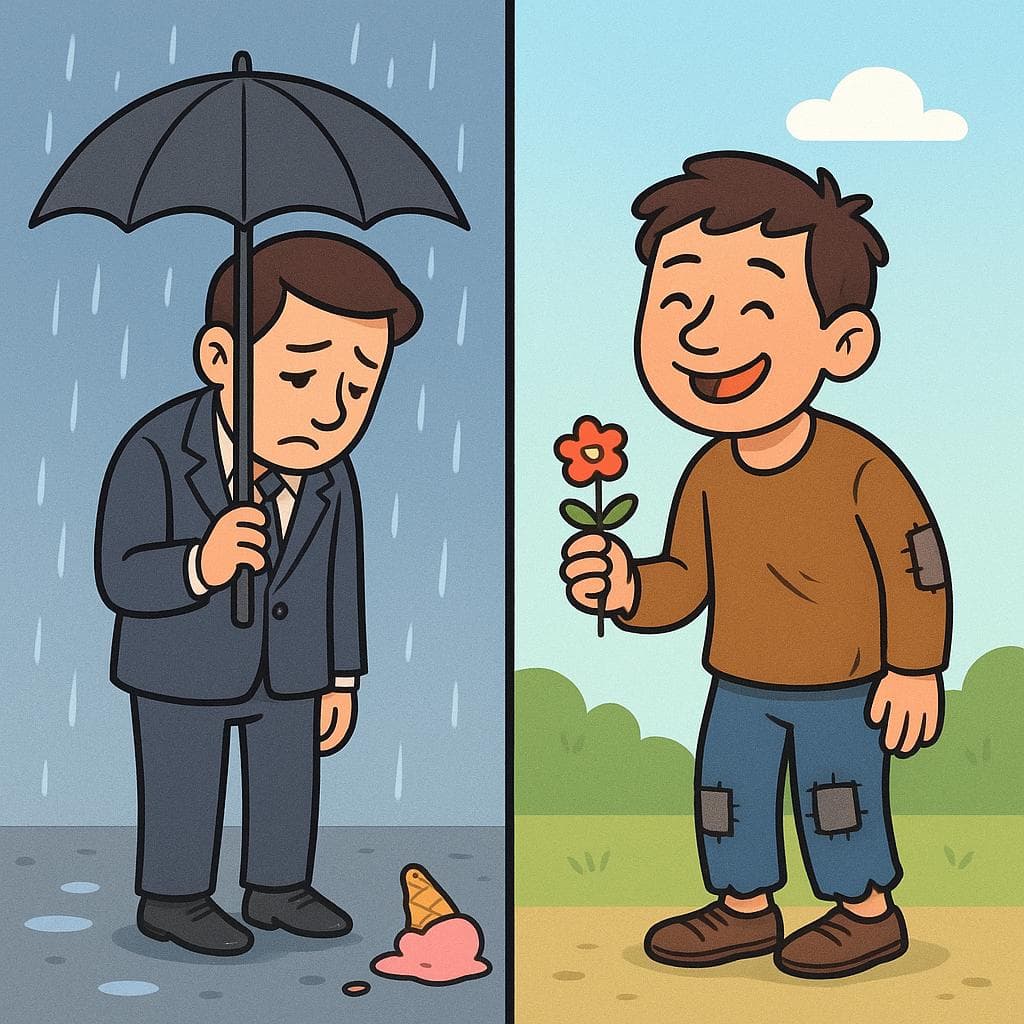
pobre (before noun)
Used BEFORE a noun to mean 'unfortunate', 'pitiable', or 'unlucky'. It expresses an emotional reaction.
POH-brehpobre (after noun)
Used AFTER a noun to mean 'poor' in the financial sense — lacking money or resources.
POH-brehQuick Rule
Before the noun = pitiable. After the noun = penniless.
Think: Before = you feel bad FOR them. After = they have bad finances.
- This is a common pattern for Spanish adjectives. The meaning of words like 'grande' (great/big) and 'viejo' (long-time/old) also changes based on placement.
Comparison Table
| Context | pobre (before noun) | pobre (after noun) | Why? |
|---|---|---|---|
| Describing a man | Un pobre hombre | Un hombre pobre | Before ('pobre hombre') means you pity him. After ('hombre pobre') means he has no money. |
| Describing a child | El pobre niño se cayó. | El niño pobre no tiene zapatos. | Before expresses sympathy for a specific event (he fell). After describes his general state of poverty (he has no shoes). |
| Describing a spirit or soul | ¡Pobre alma! | Un espíritu pobre | Before ('pobre alma') is an expression for an unfortunate soul. After ('espíritu pobre') describes a spirit that lacks richness or depth. |
When to Use "pobre (before noun) / pobre (after noun)"
pobre (before noun)
Used BEFORE a noun to mean 'unfortunate', 'pitiable', or 'unlucky'. It expresses an emotional reaction.
POH-breh
Expressing pity
La pobre mujer perdió sus llaves.
The poor (unfortunate) woman lost her keys.
Describing an unlucky person
¡Pobre de ti! Tienes que trabajar todo el fin de semana.
Poor you! You have to work all weekend.
Referring to something as lame or insignificant
Fue una pobre excusa para no venir.
It was a poor (lame) excuse for not coming.
pobre (after noun)
Used AFTER a noun to mean 'poor' in the financial sense — lacking money or resources.
POH-breh
Describing financial status
Es un barrio con muchas familias pobres.
It's a neighborhood with many poor families.
Describing a lack of resources
Era una cena muy pobre, solo pan y agua.
It was a very poor (meager) dinner, just bread and water.
Referring to low quality or content
Este es un suelo pobre en minerales.
This is soil that is poor in minerals.
Contrast Examples
With "pobre (before noun)":
Vi a una pobre mujer llorando en el parque.
I saw a poor (unfortunate) woman crying in the park.
With "pobre (after noun)":
Vi a una mujer pobre pidiendo dinero.
I saw a poor (penniless) woman asking for money.
The Difference: Before the noun focuses on your emotional reaction to her sadness. After the noun focuses on her objective financial state.
With "pobre (before noun)":
Es una pobre familia, acaban de perder su casa en un incendio.
They are a poor (pitiable) family, they just lost their house in a fire.
With "pobre (after noun)":
Es una familia pobre, luchan para pagar las facturas cada mes.
They are a poor (low-income) family, they struggle to pay the bills each month.
The Difference: Use 'pobre' before the noun to express sympathy for a tragic event. Use it after to describe their ongoing financial condition.
Common Mistakes
Donaron comida a la pobre gente.
Donaron comida a la gente pobre.
While you feel pity, the reason for the donation is their financial need. Use 'pobre' after the noun to specify a lack of money.
Mi amigo es un hombre pobre, su perro acaba de morir.
Mi amigo es un pobre hombre, su perro acaba de morir.
The focus here is the emotional pain of losing his dog, not his finances. 'Pobre hombre' conveys that you feel sorry for his sad situation.
Quick Practice
Quick Quiz: Pobre (before noun) vs Pobre (after noun)
Question 1 of 2
To describe a family that has no money, you would say:
Related Grammar
Want to understand the grammar behind this pair? Explore these lessons for a deep dive:
Key Words

Tags
Build the instinct, not just the rule
Rules help you get it right; context makes it automatic. Read 200+ illustrated and narrated Spanish stories to see confusing pairs chosen correctly — over and over — until you stop thinking about it.
Frequently Asked Questions
Is 'pobre' the only adjective that does this?
No, it's a pattern for several common Spanish adjectives! For example, 'un gran hombre' is 'a great man', but 'un hombre grande' is 'a big man'. 'Mi viejo amigo' is 'my long-time friend', but 'mi amigo viejo' is 'my elderly friend'.
Can 'pobre' mean both things at once? What if an unfortunate man is also penniless?
Absolutely. Context is key. If you say, 'Ayudé a un hombre pobre que se había caído' (I helped a poor man who had fallen), you're describing his financial state first. If you say 'Ayudé a un pobre hombre que no tenía dinero' (I helped an unfortunate man who had no money), you're leading with pity. In everyday speech, people will understand either from the full context.