
Por vs A través de
Por = moving around IN a space. A través de = passing THROUGH something from one side to the other.
por
Through, along, around, by (denotes general movement, cause, or means within an undefined space)
POHRa través de
Through, across (emphasizes movement that crosses from one side of something to the other)
ah trah-VEHS dehQuick Rule
Por = moving around IN a space. A través de = passing THROUGH something from one side to the other.
Think: Por = Pathway (moving along it). A través de = Penetration (going through it).
- When looking through a window, 'mirar por la ventana' and 'mirar a través de la ventana' are often used interchangeably.
Comparison Table
| Context | por | a través de | Why? |
|---|---|---|---|
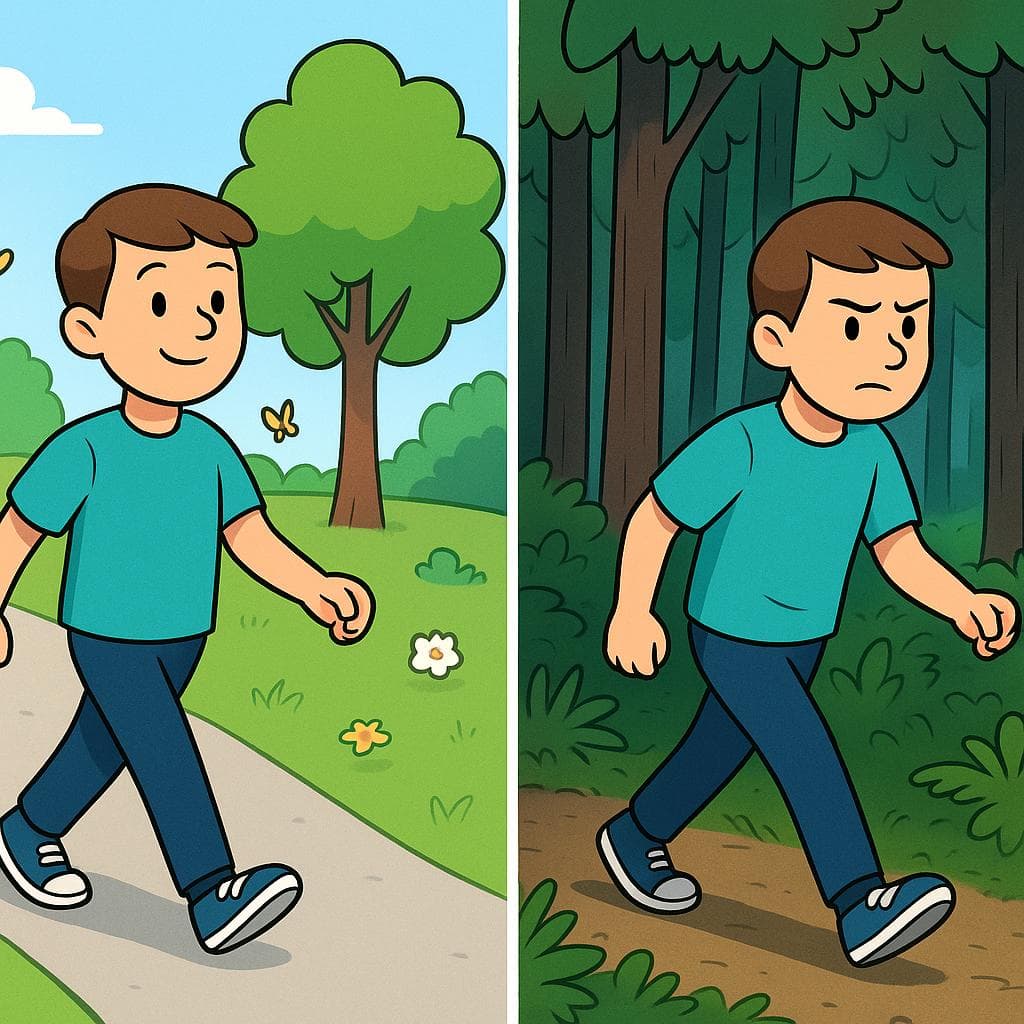
| Moving in a Forest | Caminamos por el bosque. | Caminamos a través del bosque. | Por = wandering around inside the forest. A través de = crossing the forest to get to the other side. |
| Windows | El ladrón entró por la ventana. | La luz entra a través de la ventana. | Por focuses on the window as the point of entry. A través de focuses on light penetrating the glass barrier. |
| Driving in a City | Condujimos por el centro. | Condujimos a través del centro. | Por = we drove around the downtown area. A través de = we drove across downtown to get somewhere else. |
| Figurative Meaning | Lo supe por las noticias. | Aprendí a través de la experiencia. | Por indicates the means or source. A través de suggests a process or journey over time. |
When to Use "por / a través de"
por
Through, along, around, by (denotes general movement, cause, or means within an undefined space)
POHR
General movement within an area
Paseamos por el parque.
We walked around the park.
Moving along a path
Caminamos por la calle.
We walked along the street.
Passing by a location
Pasé por tu casa esta mañana.
I passed by your house this morning.
The medium/means something is done
Te llamo por teléfono.
I'll call you by phone.
a través de
Through, across (emphasizes movement that crosses from one side of something to the other)
ah trah-VEHS deh
Passing from one side to the other
Nadamos a través del río.
We swam across the river.
Penetrating a barrier or obstacle
La luz del sol entra a través del cristal.
The sunlight comes in through the glass.
Looking through an opening or transparent object
Podía ver todo a través de la ventana.
I could see everything through the window.
Figurative movement through time or experiences
Hemos mejorado mucho a través de los años.
We have improved a lot through the years.
Contrast Examples
With "por":
Viajamos por España durante un mes.
We traveled around Spain for a month.
With "a través de":
Condujimos a través de España para llegar a Portugal.
We drove across Spain to get to Portugal.
The Difference: 'Por' implies wandering, visiting multiple places within the country. 'A través de' suggests a direct path across the country as a means to an end.
With "por":
La vi por la multitud.
I saw her somewhere in the crowd.
With "a través de":
La vi a través de la multitud.
I saw her through the crowd (as if looking through a barrier).
The Difference: 'Por' is more general, like she was located somewhere in the crowd. 'A través de' implies you had to look past or through people to see her, emphasizing the crowd as an obstacle.
Common Mistakes
La bala fue por la pared.
La bala fue a través de la pared.
When something fully penetrates an obstacle, 'a través de' is the clear choice to show it went from one side to the other.
Viajamos por el túnel para llegar a Francia.
Viajamos a través del túnel para llegar a Francia.
A tunnel has a clear entrance and exit. 'A través de' better captures this idea of passing through from one end to the other.
Quick Practice
Quick Quiz: Por vs A través de
Question 1 of 2
Which is the best fit? 'Para ver las estrellas, miramos ___ el telescopio.'
Related Grammar
Want to understand the grammar behind this pair? Explore these lessons for a deep dive:
Key Words

Tags
Build the instinct, not just the rule
Rules help you get it right; context makes it automatic. Read 200+ illustrated and narrated Spanish stories to see confusing pairs chosen correctly — over and over — until you stop thinking about it.
Frequently Asked Questions
Can I just use 'por' all the time and be understood?
In many cases, yes, people will understand you. 'Por' is very flexible. However, using 'a través de' correctly will make your Spanish sound much more precise and natural, especially when talking about penetrating a barrier or crossing a large space.
Is 'a través de' more formal than 'por'?
It can sometimes feel a bit more formal or literary, but it's very common in everyday speech. The choice isn't about formality, but about meaning. 'A través de' is simply more specific for describing movement from one side to the other.