
Quién vs Que (relative)
Use 'quién' for people after a preposition. Use 'que' for almost everything else.
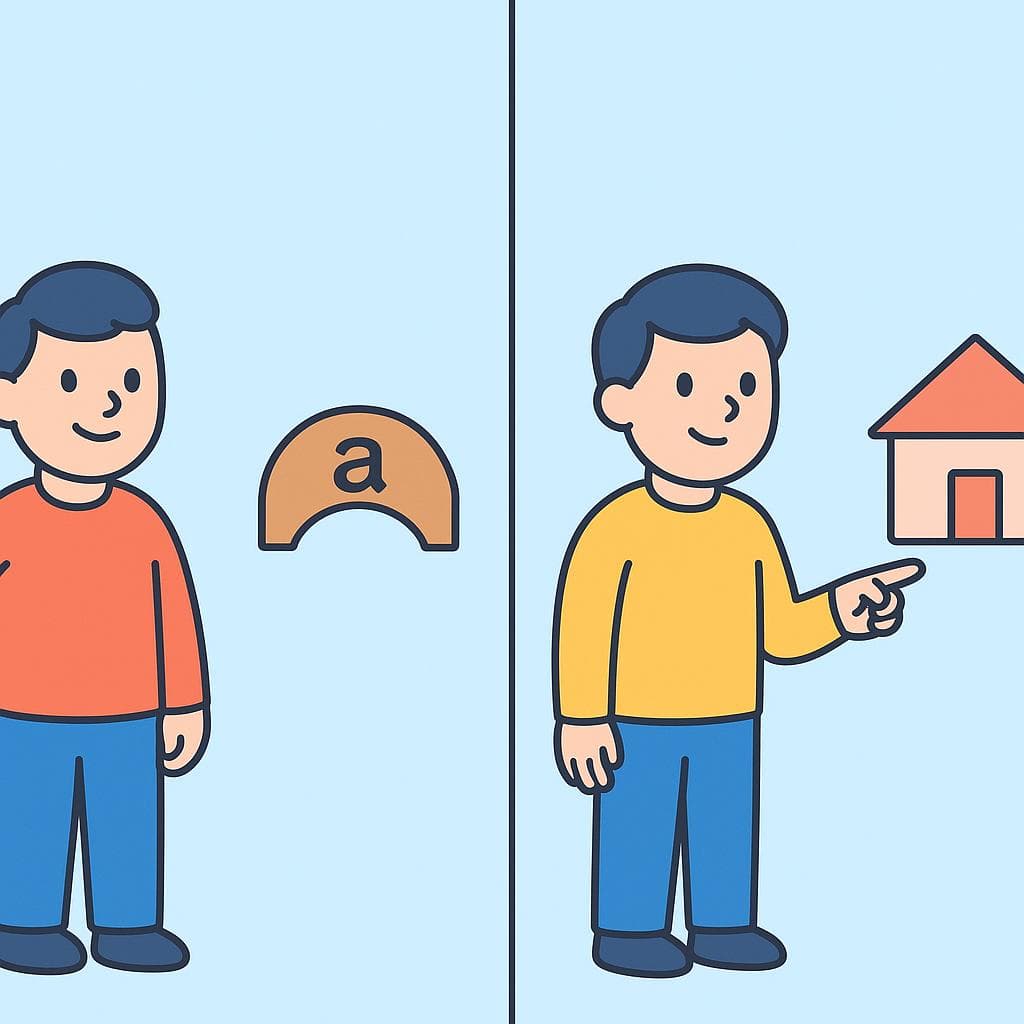
quién
Who / whom (used to refer to people, almost always after a preposition)
kyenque
That / which / who (the all-purpose connector for people and things)
kehQuick Rule
Use 'quién' for people after a preposition. Use 'que' for almost everything else.
Think: 'Quién' has a human touch (the accent), so use it for people after a little word like 'con', 'a', or 'de'.
- In clauses set off by commas (extra info), 'quién' can refer to people even without a preposition: 'Mi hermano, quien es doctor, vive aquí.'
- For things after a preposition, you use 'el que', 'la que', etc., not 'quién'.
Comparison Table
| Context | quién | que | Why? |
|---|---|---|---|
| Person (No Preposition) | (not used) | La mujer que llamó... | When referring to a person and there's no preposition, always use 'que'. |
| Person (With Preposition) | La mujer de quien te hablé... | (incorrect) | After a preposition ('de', 'con', 'a', etc.) referring to a person, you must use 'quién'. |
| Thing (No Preposition) | (not used) | El coche que compré... | 'Que' is the default for referring to things. |
| Thing (With Preposition) | (incorrect) | La caja en la que guardo fotos... | 'Quién' is never for things. Use 'que' (often with el/la) after a preposition for objects. |
When to Use "quién / que"
quién
Who / whom (used to refer to people, almost always after a preposition)
kyen
Referring to people after a preposition
La chica con quien hablé es mi prima.
The girl with whom I spoke is my cousin.
As the object of a preposition
No sé para quién es el regalo.
I don't know who the gift is for.
In clauses with extra info (set off by commas)
El Dr. Ramirez, quien es un experto, dará la charla.
Dr. Ramirez, who is an expert, will give the talk.
que
That / which / who (the all-purpose connector for people and things)
keh
Referring to people (with no preposition)
El hombre que vive aquí es mi vecino.
The man who lives here is my neighbor.
Referring to things
El libro que estoy leyendo es fascinante.
The book that I am reading is fascinating.
Referring to concepts or ideas
La idea que tuviste es genial.
The idea that you had is brilliant.
Contrast Examples
With "quién":
Mi vecina, a quien saludo cada mañana, tiene un perro.
My neighbor, whom I greet every morning, has a dog.
With "que":
Mi vecina que tiene un perro me saluda cada mañana.
My neighbor who has a dog greets me every morning.
The Difference: The preposition 'a' (because you greet *to* someone) forces the use of 'quien'. When there's no preposition, 'que' is the right choice to connect the idea.
With "quién":
¿Ves a ese chico? Es el amigo con quien fui de viaje.
See that guy? He's the friend with whom I went on a trip.
With "que":
¿Ves a ese chico? Es el amigo que se mudó a Chile.
See that guy? He's the friend who moved to Chile.
The Difference: It all comes down to the little words. The preposition 'con' requires 'quien'. No preposition means you use 'que'.
Common Mistakes
La persona con que trabajo es de Perú.
La persona con quien trabajo es de Perú.
The rule is simple: if you have a preposition ('con') pointing to a person, you need to use 'quién'.
Los amigos quienes viven en mi calle son simpáticos.
Los amigos que viven en mi calle son simpáticos.
There is no preposition here, so the default connector 'que' is the correct choice, even for people.
La silla en quien me siento es incómoda.
La silla en la que me siento es incómoda.
'Quién' is exclusively for people. For an object like a chair, you must use 'que' (or in this case, 'la que').
Quick Practice
Quick Quiz: Quién vs Que (relative)
Question 1 of 3
Choose the correct word: 'El artista de ___ te hablé va a tener una exhibición.'
Related Grammar
Want to understand the grammar behind this pair? Explore these lessons for a deep dive:
Key Words


Tags
Build the instinct, not just the rule
Rules help you get it right; context makes it automatic. Read 200+ illustrated and narrated Spanish stories to see confusing pairs chosen correctly — over and over — until you stop thinking about it.
Frequently Asked Questions
Can I use 'el que' or 'la que' instead of 'quien'?
Yes, often you can! After a preposition, using 'el que', 'la que', 'los que', or 'las que' instead of 'quien(es)' is very common and sounds perfectly natural. For example, 'La persona con la que hablé' is just as correct as 'La persona con quien hablé'.
Why does 'quién' sometimes have an accent and sometimes not?
Great question! 'Quién' with an accent is a question word ('¿Quién es?'). 'Quien' without an accent is a relative pronoun, the one we're discussing here that connects clauses. They sound the same but have different grammar jobs.
Is 'La persona que hablé con' wrong?
While you might hear this in casual speech, it's grammatically incorrect in formal Spanish. The proper structure is to place the preposition before the relative pronoun: 'La persona con quien hablé' or 'La persona con la que hablé'. It's a common mistake influenced by English sentence structure.