
Seguir + Gerund vs Continuar + Gerund
Use 'seguir' for 'still doing' (natural, common). Use 'continuar' for 'to carry on' (often after a pause, more formal).
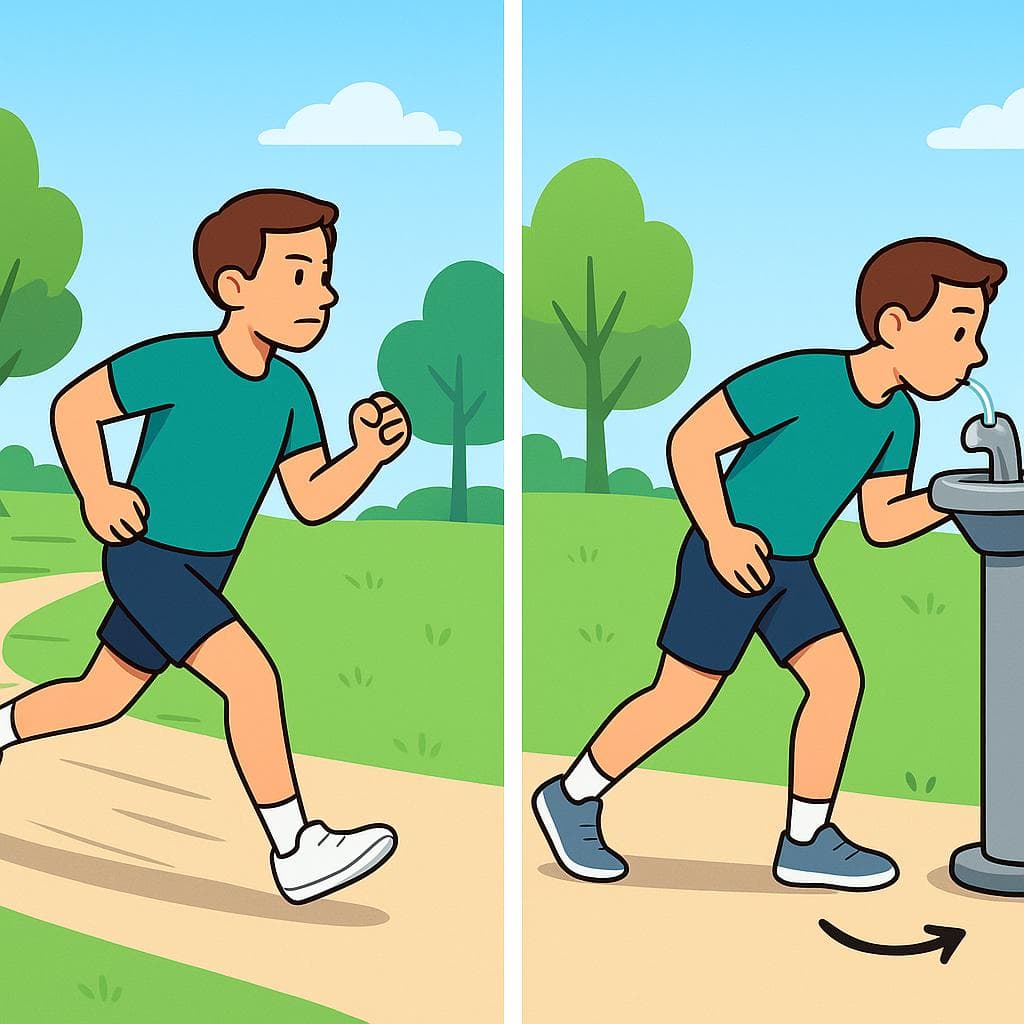
seguir + gerund
To keep doing something, to still be doing something. This is the common, everyday way to express an ongoing action.
seh-GEERcontinuar + gerund
To continue doing something. This often implies resuming an action after a pause or is used in more formal or written contexts.
kohn-tee-NWARQuick Rule
Use 'seguir' for 'still doing' (natural, common). Use 'continuar' for 'to carry on' (often after a pause, more formal).
Think: Seguir = Still. Continuar = Carry on.
- In many contexts, they are interchangeable, but 'seguir' is used about 90% of the time in everyday speech.
Comparison Table
| Context | seguir + gerund | continuar + gerund | Why? |
|---|---|---|---|
| Everyday Action | Sigo pensando en la película. | Continúo pensando en la película. | 'Seguir' is the natural, common choice. 'Continuar' is grammatically correct but sounds more formal or emphatic. |
| After an Interruption | Sigo trabajando, no me molestes. | Perdón, voy a continuar trabajando. | 'Continuar' is perfect for signaling you're resuming an action. 'Seguir' implies the action never really stopped. |
| Formal vs. Informal | ¿Sigues viviendo en Madrid? | El informe continúa explicando las causas. | 'Seguir' is the go-to for casual conversation. 'Continuar' is very common in reports, news, and formal speech. |
When to Use "seguir + gerund / continuar + gerund"
seguir + gerund
To keep doing something, to still be doing something. This is the common, everyday way to express an ongoing action.
seh-GEER + gerundio
Expressing 'still' doing something
Sigo esperando el autobús.
I'm still waiting for the bus.
Continuing an action without a clear stop
Aunque llovía, siguieron jugando.
Even though it was raining, they kept playing.
Informal, conversational questions
¿Sigues trabajando en la misma empresa?
Are you still working at the same company?
continuar + gerund
To continue doing something. This often implies resuming an action after a pause or is used in more formal or written contexts.
kohn-tee-NWAR + gerundio
Resuming an action after an interruption
Después del descanso, continuó leyendo.
After the break, he continued reading.
Formal or written language
La empresa continuará ofreciendo sus servicios.
The company will continue offering its services.
Highlighting a deliberate decision to proceed
A pesar de las dificultades, continuó con el proyecto.
Despite the difficulties, she continued with the project.
Contrast Examples
With "seguir + gerund":
El jefe siguió hablando.
The boss kept talking. (Implies he didn't stop for the interruption.)
With "continuar + gerund":
Después de la llamada, el jefe continuó hablando.
After the call, the boss continued talking. (Implies a clear stop and restart.)
The Difference: 'Seguir' suggests the action was uninterrupted or persistent, while 'continuar' clearly marks the resumption of an action after a pause.
With "seguir + gerund":
¿Sigues estudiando alemán?
Are you still studying German?
With "continuar + gerund":
¿Continúas estudiando alemán?
Do you continue to study German?
The Difference: 'Sigues' is the completely normal, conversational way to ask. 'Continúas' is grammatically correct but sounds unusually formal for a chat between friends.
With "seguir + gerund":
Seguimos luchando por nuestros derechos.
We are still fighting for our rights.
With "continuar + gerund":
Decidimos continuar luchando por nuestros derechos.
We decided to continue fighting for our rights.
The Difference: 'Seguimos' emphasizes the ongoing, current state of the struggle. 'Continuar' often highlights a conscious decision to carry on, especially in the face of an alternative.
Common Mistakes
Continúo esperando a mi amigo.
Sigo esperando a mi amigo.
While not technically wrong, using 'continuar' for a simple, everyday action like waiting sounds overly formal or stiff. 'Seguir' is the natural choice.
Él siguió a estudiar.
Él siguió estudiando.
To mean 'keep doing something', both 'seguir' and 'continuar' must be followed by the gerund (-ando/-iendo form), not the infinitive.
Quick Practice
Quick Quiz: Seguir + Gerund vs Continuar + Gerund
Question 1 of 2
You're chatting with a friend. What's the most natural way to ask if they're still living in the same apartment? '¿___ viviendo en el mismo piso?'
Related Grammar
Want to understand the grammar behind this pair? Explore these lessons for a deep dive:
Key Words


Tags
Build the instinct, not just the rule
Rules help you get it right; context makes it automatic. Read 200+ illustrated and narrated Spanish stories to see confusing pairs chosen correctly — over and over — until you stop thinking about it.
Frequently Asked Questions
If I'm not sure which one to use, which is the safer bet?
When in doubt, use 'seguir'. It's far more common in everyday conversation and will almost always sound natural. Using 'continuar' when 'seguir' is expected is a more noticeable error because it can sound overly formal or even robotic.
Are there any other verbs that work like this?
Yes! This is a type of structure called a 'verbal periphrasis'. Other common ones include 'andar + gerund' (to go around doing something), 'ir + gerund' (to be gradually doing something), and 'llevar + time + gerund' (to have been doing something for a certain amount of time).