
Soñar con vs Soñar en
Use 'soñar con' for what you dream ABOUT. Use 'soñar en' for the language you dream IN.
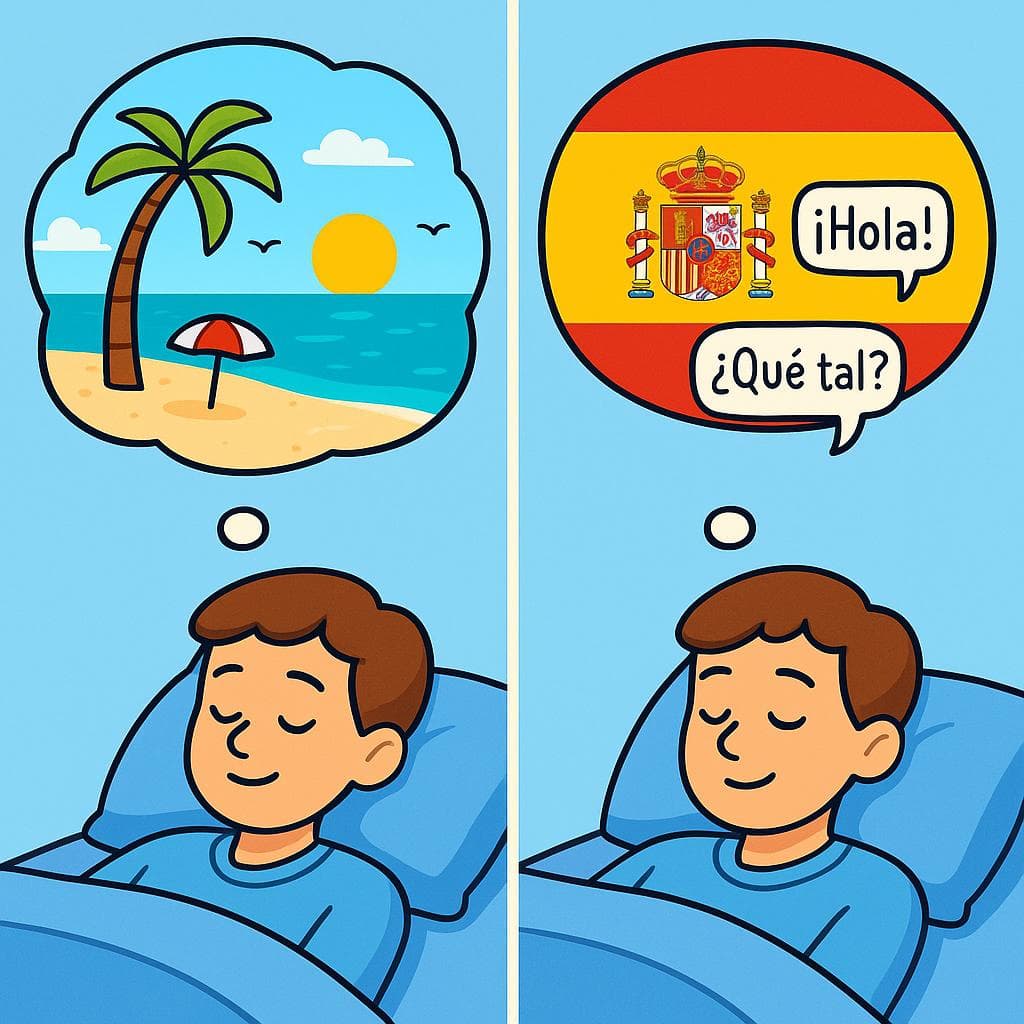
soñar con
To dream about/of something; to aspire to or long for something.
soh-NYAR konsoñar en
To dream while in a specific language or location (very rare).
soh-NYAR enQuick Rule
Use 'soñar con' for what you dream ABOUT. Use 'soñar en' for the language you dream IN.
Think: 'Con' is for the 'con'tent of your dream. 'En' is for the 'en'vironment or language.
- In modern Spanish, 'soñar con' is the default for almost everything. 'Soñar en' is extremely rare outside of dreaming 'in a language'.
Comparison Table
| Context | soñar con | soñar en | Why? |
|---|---|---|---|
| Aspirations | Sueño con viajar. | (Incorrect) | To talk about your hopes and desires, 'soñar con' is the only correct option. |
| Subject of a Dream | Soñé con la playa. | (Rare/Literary) | 'Soñar con' is the standard way to say what you dreamed about. 'Soñar en' is very old-fashioned here. |
| Language | Sueño con hablar francés. | Sueño en francés. | 'Con' for the desire (I dream OF speaking...). 'En' for the language it happens IN (I dream IN French). |
| Overall Usage | Standard & common | Rare & specific | Rule of thumb: When in doubt, use 'soñar con'. It's correct 99% of the time. |
When to Use "soñar con / soñar en"
soñar con
To dream about/of something; to aspire to or long for something.
soh-NYAR kon
Describing the subject of a dream
Anoche soñé con un perro que hablaba.
Last night I dreamed about a dog that could talk.
Expressing an aspiration or desire
Mi hermano sueña con ser piloto.
My brother dreams of being a pilot.
Dreaming about a person
A menudo sueño con mis amigos de la infancia.
I often dream about my childhood friends.
Special form for 'you' and 'me'
Soñé contigo anoche.
I dreamed about you last night.
soñar en
To dream while in a specific language or location (very rare).
soh-NYAR en
Specifying the language of a dream
Después de vivir en Madrid, a veces sueño en español.
After living in Madrid, I sometimes dream in Spanish.
Dreaming while in a location (uncommon)
No me gusta soñar en el avión porque son pesadillas.
I don't like to dream on the plane because they are nightmares.
Archaic/literary use for 'dream about'
El viejo rey soñaba en sus glorias pasadas.
The old king dreamed of his past glories.
Contrast Examples
With "soñar con":
Sueño con hablar italiano fluidamente.
I dream of speaking Italian fluently. (It's my goal.)
With "soñar en":
¡Qué raro! Anoche soñé en italiano.
How weird! Last night I dreamed in Italian. (The dream itself was in Italian.)
The Difference: This is the clearest distinction. 'Soñar con' is about your *aspiration*. 'Soñar en' is about the *language* your brain used while you were asleep.
With "soñar con":
Sueño con una vida más tranquila.
I dream of a calmer life. (This is what I long for.)
With "soñar en":
No puedo soñar en esta cama.
I can't dream in this bed. (Implies the location prevents dreaming.)
The Difference: 'Con' describes the content or desire of the dream. The use of 'en' for location is very literal and much less common.
Common Mistakes
Sueño en comprar un coche nuevo.
Sueño con comprar un coche nuevo.
For wishes, goals, or aspirations, always use the preposition 'con' after 'soñar'.
Anoche soñé en ti.
Anoche soñé contigo.
To say you dreamed 'about you', Spanish uses the special form 'contigo'. The base is 'soñar con', not 'soñar en'.
Quick Practice
Quick Quiz: Soñar con vs Soñar en
Question 1 of 2
Which is correct to express a goal? 'Él sueña ___ ser un gran chef.'
Related Grammar
Want to understand the grammar behind this pair? Explore these lessons for a deep dive:
Key Words



Tags
Build the instinct, not just the rule
Rules help you get it right; context makes it automatic. Read 200+ illustrated and narrated Spanish stories to see confusing pairs chosen correctly — over and over — until you stop thinking about it.
Frequently Asked Questions
So is it ever correct to use 'soñar en' to talk about the subject of a dream?
In very old or poetic literature, you might see it. But in modern, everyday Spanish, it would sound incorrect. For the subject or content of a dream, always use 'soñar con'.
How do I say 'I dreamed about you'?
This is a special case! You use 'soñar con', but 'con' and 'tú' (you) merge to become 'contigo'. So, the correct sentence is 'Soñé contigo'. The same happens with 'yo' (I/me): 'conmigo'.