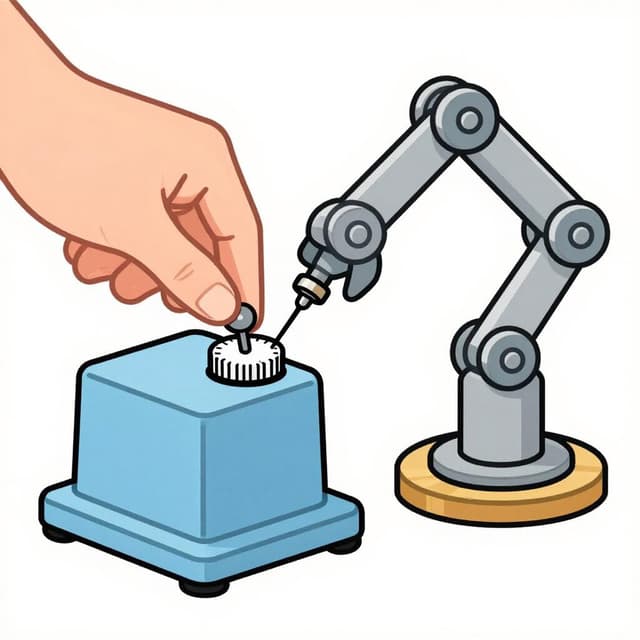
ajustar Imperfect Subjunctive Conjugation
ajustar — to adjust
The imperfect subjunctive of 'ajustar' (e.g., ajustara, ajustaras) is used for past hypotheticals or wishes.
ajustar Imperfect Subjunctive Forms
When to Use the Imperfect Subjunctive
You'll use the imperfect subjunctive to talk about hypothetical situations in the past, express wishes, or in polite requests that refer to a past condition. It's common after 'si' (if) when the result is hypothetical.
Notes on ajustar in the Imperfect Subjunctive
'Ajustar' is regular in the imperfect subjunctive. You can form it from the preterite stem 'ajust-' and adding the endings: -ara, -aras, -ara, -áramos, -arais, -aran.
Example Sentences
Si ajustara mi horario, podría ir.
If I adjusted my schedule, I could go.
yo
Me gustaría que tú ajustaras la luz un poco.
I would like you to adjust the light a bit.
tú
Ellos pensaban que ella ajustara el precio.
They thought she would adjust the price.
él/ella/usted
Ojalá nosotros ajustáramos los planes antes.
Hopefully, we would adjust the plans before.
nosotros
Sería mejor si ustedes ajustaran la configuración.
It would be better if you all adjusted the settings.
ellos/ellas/ustedes
Common Mistakes
Mistake: Using the preterite instead of the imperfect subjunctive for past hypotheticals.
Correct: For 'If I adjusted...', use 'Si ajustara...', not 'Si ajusté...'.
Why: The imperfect subjunctive is specifically for hypothetical or uncertain past situations.
Mistake: Confusing the -ra and -se forms (though -ra is more common).
Correct: Use 'ajustara' or 'ajustase'. Both are correct, but 'ajustara' is more frequent.
Why: Spanish has two sets of imperfect subjunctive endings, but the -ra set is generally preferred.
Master Spanish verbs in context
Memorizing tables only gets you so far. Read 200+ illustrated and narrated Spanish stories to see verbs like 'ajustar' used naturally — in the tenses you're learning.
Related Tenses
Present
yo: ajusto
The present tense of 'ajustar' (ajusto, ajustas, ajusta, etc.) is used for current actions, habits, and general truths.
Preterite
yo: ajusté
The preterite of 'ajustar' is regular: ajusté, ajustaste, ajustó, ajustamos, ajustasteis, ajustaron.
Imperfect
yo: ajustaba
The imperfect of 'ajustar' (ajustaba, ajustabas, ajustaba, etc.) describes ongoing or habitual past actions.
Future
yo: ajustaré
The future tense of 'ajustar' (ajustaré, ajustarás, ajustará, etc.) indicates actions that will happen later.
Conditional
yo: ajustaría
The conditional of 'ajustar' (ajustaría, ajustarías, etc.) is used for hypotheticals ('would') and polite requests.
Present Subjunctive
yo: ajuste
The present subjunctive of 'ajustar' (ajuste, ajustes, ajustemos, etc.) follows expressions of doubt, desire, emotion, or uncertainty.
Affirmative Imperative
yo: ajusta
Imperative commands for 'ajustar': ajusta (tú), ajuste (usted), ajustemos (nosotros), ajusten (ustedes), ajustad (vosotros).
Negative Imperative
yo: no ajustes
Negative commands for 'ajustar' use the present subjunctive: no ajustes (tú), no ajuste (usted), no ajustemos (nosotros), no ajusten (ustedes), no ajustéis (vosotros).