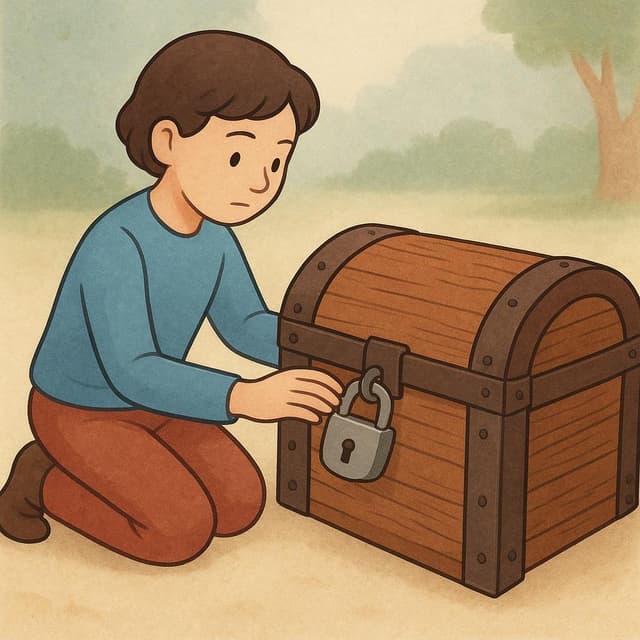
asegurarse Present Subjunctive Conjugation
asegurarse — to make sure
Expressing doubt, wishes, emotions: me asegure, te asegures, se asegure.
asegurarse Present Subjunctive Forms
When to Use the Present Subjunctive
Use the present subjunctive after expressions of doubt, desire, emotion, necessity, or uncertainty. For 'asegurarse', it's often used when you want something to happen, or you're not sure if it will. Think 'I hope he makes sure...' or 'It's important that she checks...'.
Notes on asegurarse in the Present Subjunctive
Asegurarse is regular in the present subjunctive. It follows the pattern of other '-ar' verbs: take the 'yo' form of the present indicative (me aseguro), drop the '-o' (me asegur-), and add the opposite vowel endings (-e, -es, -e, -emos, -éis, -en). Remember the reflexive pronoun goes before the verb.
Example Sentences
Espero que te asegures de cerrar la puerta.
I hope you make sure to close the door.
tú
Dudo que él se asegure de que todo esté correcto.
I doubt he'll make sure everything is correct.
él/ella/usted
Es necesario que nos aseguremos de tener suficiente comida.
It's necessary that we make sure we have enough food.
nosotros
Quiero que ustedes se aseguren de que no haya problemas.
I want you (plural) to make sure there are no problems.
ellos/ellas/ustedes
Common Mistakes
Mistake: Using the indicative instead of subjunctive: 'Espero que te aseguras...'
Correct: Espero que te asegures...
Why: Expressions of hope, doubt, or emotion trigger the subjunctive mood.
Mistake: Forgetting the reflexive pronoun: 'Espero que asegures...'
Correct: Espero que te asegures...
Why: Asegurarse is reflexive, and the pronoun is required in all forms, including the subjunctive.
Master Spanish verbs in context
Memorizing tables only gets you so far. Read 200+ illustrated and narrated Spanish stories to see verbs like 'asegurarse' used naturally — in the tenses you're learning.
Related Tenses
Present
yo: me aseguro
Now, habits, truths: me aseguro, te aseguras, se asegura.
Preterite
yo: me aseguré
Completed past actions: me aseguré, te aseguraste, se aseguró.
Imperfect
yo: me aseguraba
Past ongoing/habitual actions: me aseguraba, te asegurabas, se aseguraba.
Future
yo: me aseguraré
Future actions and probability: me aseguraré, te asegurarás, se asegurará.
Conditional
yo: me aseguraría
Hypotheticals, polite requests: me aseguraría, te asegurarías, se aseguraría.
Imperfect Subjunctive
yo: me asegurara
Past hypotheticals and wishes: me asegurara, te aseguraras, se asegurara.
Affirmative Imperative
yo: asegúrate
Asegúrate commands action directly: ¡Asegúrate!, ¡Asegurémonos!, ¡Asegúrense!
Negative Imperative
yo: no te asegures
Don't do it!: No te asegures, no nos aseguremos, no se aseguren.