cavar Preterite Conjugation
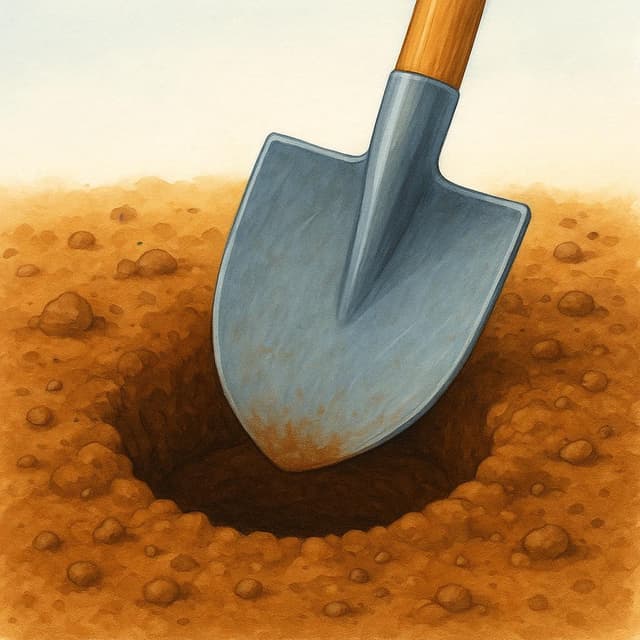
cavar — to dig
Use preterite forms like 'cavé' (yo) and 'cavaron' (ellos) for completed digging actions in the past.
cavar Preterite Forms
When to Use the Preterite
Use the preterite for actions that started and finished at a specific point in the past. For 'cavar', this means digging a hole that was completed: 'Ayer cavé un hoyo.' (Yesterday I dug a hole.) or 'Cavaron la piscina en dos días.' (They dug the pool in two days).
Notes on cavar in the Preterite
Cavar is regular in the preterite tense. All forms follow the standard -ar preterite conjugation.
Example Sentences
Yo cavé un hoyo para plantar la rosa.
I dug a hole to plant the rose.
yo
¿Tú cavaste suficiente para la base?
Did you dig enough for the base?
tú
Él cavó hasta encontrar la tubería.
He dug until he found the pipe.
él/ella/usted
Nosotros cavamos un pozo el verano pasado.
We dug a well last summer.
nosotros
Ellos cavaron toda la noche.
They dug all night.
ellos/ellas/ustedes
Common Mistakes
Mistake: Using the imperfect instead of the preterite for completed actions.
Correct: Use the preterite 'cavé' or 'cavó' for actions that were finished. Use the imperfect 'cavaba' for ongoing or habitual past digging.
Why: The imperfect describes the background or duration, while the preterite pinpoints the completion.
Mistake: Forgetting the accent on 'cavé' and 'cavó'.
Correct: The yo form is 'cavé' and the él/ella/usted form is 'cavó', both requiring an accent.
Why: These accents are crucial to distinguish the preterite forms from the present tense ('cavo') and other forms.
Master Spanish verbs in context
Memorizing tables only gets you so far. Read 200+ illustrated and narrated Spanish stories to see verbs like 'cavar' used naturally — in the tenses you're learning.
Related Tenses
Present
yo: cavo
Use the present tense like 'cavo' (yo) and 'cavan' (ellos) for current actions, habits, or general truths about digging.
Imperfect
yo: cavaba
Use the imperfect like 'cavaba' (yo) and 'cavaban' (ellos) for ongoing or habitual past actions (used to dig, was digging).
Future
yo: cavaré
Future forms like 'cavaré' (yo) and 'cavarán' (ellos) indicate actions that will happen.
Conditional
yo: cavaría
Use conditional forms like 'cavaría' (yo) and 'cavarían' (ellos) for hypothetical ('would dig') or polite requests.
Present Subjunctive
yo: cave
Use present subjunctive forms like 'cave' (yo) and 'caven' (ellos) after expressions of doubt, desire, or emotion.
Imperfect Subjunctive
yo: cavara
Use the imperfect subjunctive like 'cavara' or 'cavase' for past hypotheticals, wishes, or polite requests.
Affirmative Imperative
yo: cava
Use imperative forms like 'cava' (tú) and 'caven' (ustedes) for direct commands related to digging.
Negative Imperative
yo: no caves
Use negative commands like 'no caves' (tú) and 'no caven' (ustedes) to tell someone not to dig.